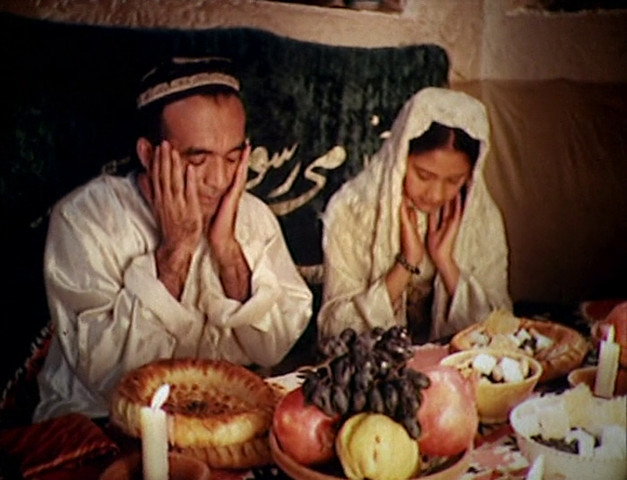

Iskander, a gentle Uzbek man, is convinced by a Russian friend to give an impromptu speech praising the Communist Revolution. Impressed by his eloquence, the Soviets make Iskander a spokesman – a precarious position in a turbulent time.Read More »
Iskander, a gentle Uzbek man, is convinced by a Russian friend to give an impromptu speech praising the Communist Revolution. Impressed by his eloquence, the Soviets make Iskander a spokesman – a precarious position in a turbulent time.Read More »
Quote:
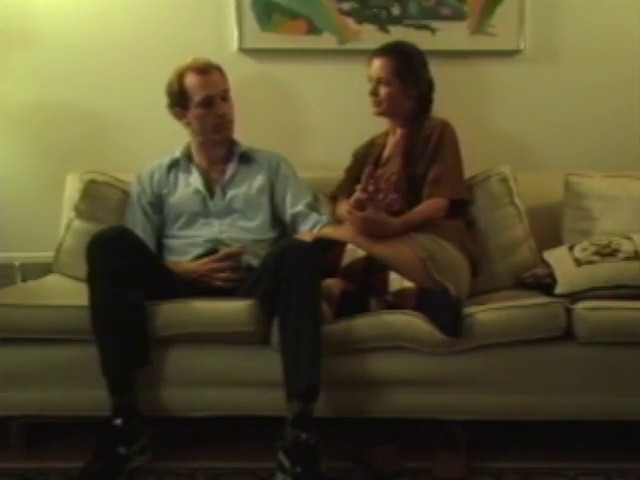
The movie is produced by EZTV, a production company and exhibition venue founded in Los Angeles in 1979 by John Dorr and other people (including Michael J. Masucci, who plays the cinema manager in Polly Perverse). How did you come in contact with them? How did your project fit into their structure?Read More »
Quote:
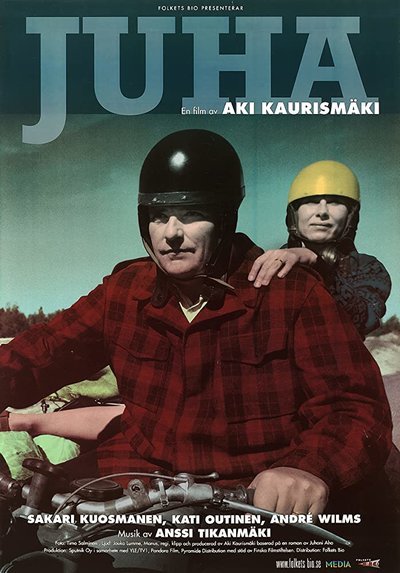
When I heard that Aki Kaurismaki was making a silent black-and-white feature, I expected something arch and postmodernist. Yet in spite of a few flashes of mordant humor, some wonderfully spare sound effects, and a few minimalist lighting schemes that suggest 50s Hollywood, this 1999 film is a moving pastiche whose strength is its sincerity and authenticity. A fallen-woman story set in the present, featuring a farm couple and an evil playboy from the city who lures the wife away, it conveys the sort of purity and innocence associated with silent cinema storytelling, including a love of nature and animals, a taste for stark melodrama, and an emotional directness in the acting–evocative at various times of Griffith in the teens and Murnau in the 20s.Read More »
Quote:
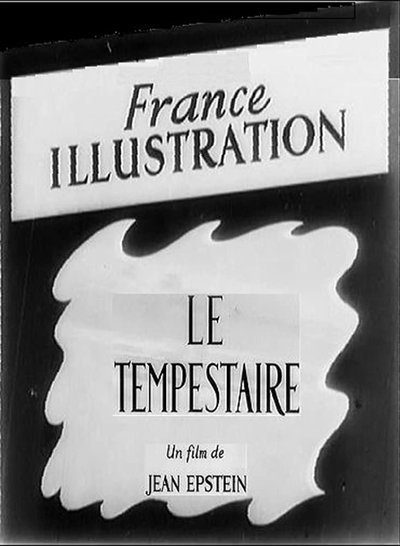
Despite her protestations and concerns over ominous signs, a young woman’s lover leaves for the sea to fish for sardines, but while he is out a terrible storm strikes. However, she finds out about Le Tempestaire, or Tempest Master, who has the power to speak to the wind and subdue it.Read More »

Quote:
Straub and Huillet invited friends to recite Stéphane Mallarmé’s 1897 poem “A Throw of the Dice Will Never Abolish Chance,” with its radically modern use of free verse, in a park alongside the wall in Père Lachaise cemetery where the last 147 men and women of the Paris Commune were lined up and shot dead in 1871.
It is not hard to understand why these ambitious filmmakers were drawn to Mallarme’s late-19th-century poem, which casts readers adrift in a sea of elusive meanings, a playfully and hermetically cubist constellation of words that can assume myriad visual, aural, and symbolic forms.Read More »

Quote:
“Maximum Shame” is an apocalyptic fetish horror musical chess sci-fi weird underground feature movie written and directed by cult filmmaker Carlos Atanes.Read More »

Quote:
The second part of Aki Kaurismäki’s “Finland” trilogy, the film follows a man who arrives in Helsinki and gets beaten up so severely he develops amnesia. Unable to remember his name or anything from his past life, he cannot get a job or an apartment, so he starts living on the outskirts of the city and slowly starts putting his life back on track.Read More »

The Lincoln Center wrote:
Straub and Huillet were frequently drawn to unfinished texts—Hölderlin’s The Death of Empedocles, Schoenberg’s Moses and Aaron—and for Class Relations, one of their supreme accomplishments, they turned to Kafka’s never-completed Amerika. “Kafka, for us,” Straub declared, “is the only major poet of industrial civilization, I mean, a civilization where people depend on their work to survive.” Kafka never did visit the America of his novel, so perhaps it’s fitting that the saga of Karl Rossmann, a teenage immigrant from Europe who arrives to a strange new land rife with swindlers and hypocrites, was largely shot in Hamburg. The style of Straub-Huillet, with their Brechtian performances, long takes, and static framing, is often characterized as “austere,” yet such a description belies the extraordinary richness of their images, the palpable weight of their direct-sound, and the invigorating clarity of their political commitment.Read More »

Straub/Huillet’s From the Cloud to the Resistance (1978) has been summarized by Straub as follows: ‘From the cloud, that is from the invention of the gods by man, to the resistance of the latter against the former as much as to the resistance against Fascism.
‘Dalla nube alla resistenza (From the Cloud to the Resistance ) (1978), based on two works by Cesare Pavese, falls into the category of History Lessons and Too Early, Too Late as well. It, too, has two parts—a twentieth-century text and a text regarding the myths of antiquity, each set in the appropriate landscape. Pavese’s The Moon and the Bonfires looks back on the violent deaths of Italian anti-Fascist resistance fighters; Dialogues with Leucò is a series of dialogues between heroes and gods, connecting myth and history and returning to an ambiguous stage in the creation of distinctions, such as that between animal and human, which are fundamental to grammar and language itself. Such a juxtaposition of political engagement with profoundly contemplative issues such as myth, nature, and meaning points to the characters of Empedocles and Antigone in the Hölderlin films.’
(Library Synopsis): Six dialogues between figures from Greek antiquity, taken from Cesare Pavese’s ‘Dialoghi con Leucò’, are followed by an episode set in modern times, taken from the same author’s novel ‘La Luna e i falò’.Read More »