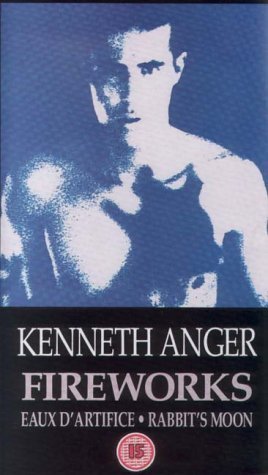
Quote: A woman dressed elegantly walks purposely through the water gardens at the Villa d’Este in Tivoli, as the music of Vivaldi’s “Winter” movement of “The Four Seasons” plays. Heavy red filters give a blue cast to the light; water plays across stone, and fountains send it into the air. No words are spoken. Baroque statuary and the sensuous flow of water are back lit. Anger calls it “water games.”Read More »
“Shot in 1974 with a Sony Porta-Pak, the crazily careering Stranded in Canton documents a cast of hard-drinking Southerners with the intimacy, ease and instability of a seasoned participants. Whiffs of Southern Gothic are not new to Mr. Eggleston’s work, but here they rise to the surface–fierce, tragic and proud.” –The New York Times Read More »
Quote:
Maverick British gay director Derek Jarman’s last film is a wordless compilation of his home movies from 1970 — six years before his debut feature “Sebastiane” — to 1986, set to a Brian Eno score. Footage ranges from casual snippets of home life to behind-the-scenes set footage, along with appearances from famous friends like William S. Burroughs and the Sex Pistols. As the years progress, the spread of AIDS begins to decimate Jarman’s social circle.Read More »
Quote: ontinuing his pattern of alternating critically praised arthouse projects with alienating personal studies, the controversial Peter Greenaway followed his unexpectedly popular The Pillow Book with 8½ Women, a playful and thoroughly obscure compendium of art history fetishism, film history, and globe-hopping comic debauchery. The results pleased few, but Greenaway fanatics will find it more rewarding than newcomers despite its glaring flaws.Read More »
Once just a girl from the provinces, Nora is now married to a successful scientist and lives together with her family within the confines of a secret and privileged Moscow institute. Nora is visited by her mother for the first time since her wedding. Her mother closely observes the atmosphere within the couple’s home, trying to work out whether her daughter is happy. During the course of their intimate conversations the complexity of their contradictory relationship is revealed.Read More »
Synopsis:
‘Tomiko is a conductor in a rural bus driven by the handsome Niitaka. Tomiko had received a letter from her best friend Tsuyako, a conductor in another bus company, just after Tsuyako was killed in a bus accident. Tsuyako wrote that she felt that her fiance and driver, Niitaka, planned to kill her. Tomiko therefore plans to take revenge on Niitaka. However Tomiko falls in love with Niitaka, even though she also suspects him of being the Tokyo bus driver serial killer, who killed his female conductors after tiring of them.’
– Will GilbertRead More »
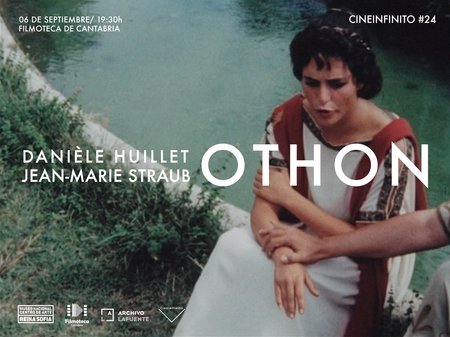
Quote: Straub-Huillet’s first color film, Othon (Les yeux ne veulent pas en tout temps se fermer, ou Peut-être qu’un jour Rome se permettra de choisir à son tour) adapts a lesser-known Corneille tragedy from 1664, which in turn was based on an episode of imperial court intrigue chronicled in Tacitus’s Histories. The costuming is classical, and the toga-clad, nonprofessional cast performs the drama’s original French text amid the ruins of Rome’s Palatine Hill while the noise of contemporary urban life hums in the background. Their lines are executed with a terrific flatness and frequently through heavy accents; the language in Othon becomes not merely an expression but a thing itself, an element whose plainness here alerts us to qualities of the work that might otherwise be subordinated. “If at every moment one can keep one’s eyes and ears open to all of this,” Straub wrote, “it’s possible to even find the film thrilling and note that everything here is information—even the purely sensual reality of the space which the actors leave empty at the end of each act.Read More »
Quote: There has never been a documentary like “Land of Look Behind”. Relatively unknown due to poor distribution and New York Film Festival skullduggery, this breathtaking film presents a unique epic vision with quasi-dramatic elements and cinematographic wizardry. The non-reggae original soundtrack is outstanding, as is the reggae music of Bob Marley and Gregory Isaacs. The great documentary filmmaker Werner Herzog has called “Look Behind” the non-fiction film that has influenced him most over the last fifteen years. Indeed, this film’s peers are the best of Herzog, Bunuel’s “Land Without Bread”, Flaherty’s “Nanook” and Leacock-Pennebaker’s “Louisiana Story”. With thoughtful viewing, one will see this moving documentary actually end with a lovely little dream sequence. No American has come close to making a film this ingenious in the last thirty yearsRead More »