2001-2010

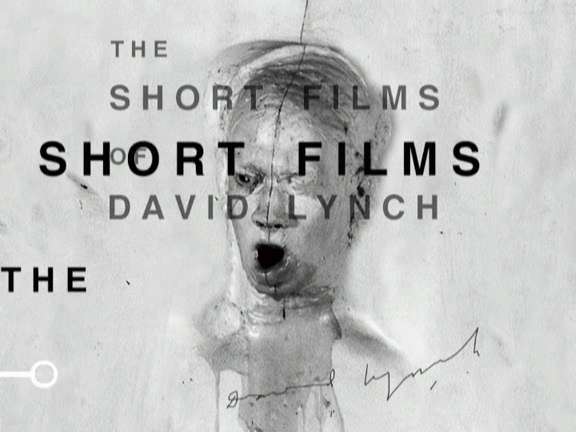
  • David Lynch – The Short Films of David Lynch (2002)

    2001-2010David LynchShort FilmUSA

    http://img217.imageshack.us/img217/5555/xgjlsx.png

    29f7c043f76a2bde437fd0d52a185152

    *** This comment may contain spoilers ***

    The Short Films of David Lynch is just the thing for all those who have enjoyed his other work. Ranging from his first, art installation Six Men Getting Sick, over the deep and visually wonderful The Grandmother, to The Cowboy and the Frenchman and Lumière and Company, this collection gives a deep insight in and nicely rounds off Lynch’s oeuvre.

    Six Men Getting Sick, a one-minute ‘scene’ originally presented in an infinite loop, and The Alphabeth clearly mirror Lynch’s background as a painter and give an idea of the visuality as well as the structural and colour quality of his art.

    Some of the unique, disturbing and fascinating elements of his later films and television series Twin Peaks are foreshadowed in his ambiguous and highly aesthetic Grandmother, his third attempt at using moving images. Be it the rapid and sometimes unsettling, disorienting cuts, the dropping of frames, dark, under-lit interiors, associative combination of images and scenes, characters moving and uttering themselves in animalic ways – Lynch succeeds in telling a story that, far from being realistically filmed, moves, rings true, refrains from offering clear answers and positions, and that is extremely close to its protagonists.Read More »

  • Justin Hennard – Moonlight by the Sea (2003)

    2001-2010CultJustin HennardSci-FiUSA

    Free Image Hosting at www.ImageShack.us

    29f7c043f76a2bde437fd0d52a185152

    “A thinking man’s futuristic sci-fi flick that picks up on Orwell’s Big Brother theme.”

    Reviewed by Dennis Schwartz

    A thinking man’s futuristic sci-fi flick that picks up on Orwell’s Big Brother theme that has the potential to become a cult fave for those who crave Midnight movies and listening to their music at full-blast. Justin Hennard is the young creative whiz behind this project, who was influenced by Kenneth Patchen’s 1941 novel “The Journal of Albion Moonlight.” It makes use of Patchen’s theme that ‘Humans are always having conversations with people who are not present.’

    It’s a work of great craftmanship, especially for a low-budget film, shot in a marvelously effective glowing black and white; the David Baker landscape drawings were very effective in creating the dreamy mood of a space flight, while Anthony Locastro’s art settings are imaginative in a goofy way. The other plus is that the ensemble cast all get into this crazy story and embody their characters in a believable though bizarre way.Read More »

  • Michelangelo Antonioni – Lo Sguardo di Michelangelo AKA Michelangelo Eye to Eye (2004)

    2001-2010ArthouseItalyMichelangelo AntonioniShort FilmSilent

    29f7c043f76a2bde437fd0d52a185152

    Quote:
    By the time Michelangelo Antonioni released Michelangelo Eye to EyeBeyond the Clouds in 1995, his keen sense of patient, intimate observation had seemed to give way to a kind of leering, gratuitous voyeurism in the film’s repeated, over-lingering shots of the female form. It is, however, precisely this painstaking attention to the voluptuousness of form and tactileness of surfaces that makes his subsequent short film, Michelangelo Eye to Eye particularly sensual and textural in its execution. Prefaced with a text description of the filmmaker’s recent health problems (in particular, a debilitating stroke that left him partially paralyzed), the film opens with a shot of a frail Antonioni emerging from the shadows as he walks in slow, awkward gait into an unpopulated hall where Michelangelo Buonarotti’s marble statue of Moses – a scaled down version of an ambitiously conceived wall tomb for Pope Julius II – is once again in display after a period of meticulous restoration. Composed of a series of detailed observations of the sculpture’s composition from several camera angles and vantage points, Antonioni continually refocuses to the shot of Moses’ opaque gaze – an image that is sublimely matched by the filmmaker’s own occluded, returned gaze as he examines the object of his attention through limpid, watery eyes. In addition to creating a thorough, meticulous, and deliberative objective study of the Renaissance sculpture’s robust physical form and timeless, universal beauty, Antonioni’s juxtaposition of his own weakened, aging frame against the larger-than-life sculpture of Moses creates an indelible, thoughtful, and poignant image on human frailty, transience, creative compromise, and the enduring legacy of – and mortal transcendence through – enlightened art.
    filmref.comRead More »

  • Kar Wai Wong, Steven Soderbergh, Michelangelo Antonioni – Eros [+Extras] (2004)

    Arthouse2001-2010ItalyKar Wai WongMichelangelo AntonioniRomanceSteven Soderbergh

    29f7c043f76a2bde437fd0d52a185152

    A three-part collaboration of auteurs Michelangelo Antonioni ,Steven Soderbergh and Wong Kar-Wai on the subject of eroticism. With, amongst others, Gong Li and Robert Downey jr.

    Totalling 108 minutes.
    1, Antonioni – “Il filo pericoloso delle cose”
    2, Soderbergh – “Equilibrium”
    3, Wong Kar-Wai – “The Hand”Read More »

  • David Cronenberg – A History of Violence [+Extras] (2005)

    2001-2010CrimeDavid CronenbergDramaUSA

    29f7c043f76a2bde437fd0d52a185152

    Description: David Cronenberg directed this screen adaptation of a graphic novel by John Wagner and Vince Locke which explores how an act of heroism unexpectedly changes a man’s life. Tom Stall (Viggo Mortensen) lives a quiet life in a small Indiana town, running the local diner with his wife, Edie (Maria Bello), and raising their two children. But the quiet is shattered one day when a pair of criminals on the run from the police walk into his diner just before closing time. After they attack one of the customers and seem ready to kill several of the people inside, Tom jumps to the fore, grabbing a gun from one of the criminals and killing the invaders. Tom is immediately hailed as a hero by his employees and the community at large, but Tom seems less than comfortable with his new notoriety. One day, a man with severe facial scars, Carl Fogarty (Ed Harris), sits down at the counter and begins addressing Tom as Joey, and begins asking him questions about the old days in Philadelphia. While Tom seems puzzled, Carl’s actions suggest that the quiet man pouring coffee at the diner may have a dark and violent past he isn’t eager to share with others — as well as some old scores that haven’t been settled.Read More »

  • Abé Mark Nornes – Japanese Documentary Film: The Meiji Era through Hiroshima (2003)

    2001-2010Abé Mark NornesBooks

    Free Image Hosting at www.ImageShack.us

    Quote:
    Among Asian countries-where until recently documentary filmmaking was largely the domain of central governments-Japan was exceptional for the vigor of its nonfiction film industry. And yet, for all its aesthetic, historical, and political interest, the Japanese documentary remains little known and largely unstudied outside of Japan. This is the first English-language study of the subject, an enlightening close look at the first fifty years of documentary film theory and practice in Japan.

    Beginning with films made by foreigners in the nineteenth century and concluding with the first two films made after Japan’s surrender in 1945, Abé Mark Nornes moves from a “prehistory of the documentary,” through innovations of the proletarian film movement, to the hardening of style and conventions that started with the Manchurian Incident films and continued through the Pacific War. Nornes draws on a wide variety of archival sources-including Japanese studio records, secret police reports, government memos, letters, military tribunal testimonies, and more-to chart shifts in documentary style against developments in the history of modern Japan.

    Abé Mark Nornes is associate professor at the University of Michigan, where he teaches in the Department of Asian Languages and Cultures and the Program in Film and Video Studies.Read More »

  • Benoît Jacquot – Au fond des bois (2010)

    2001-2010Benoît JacquotDramaFranceMystery

    29f7c043f76a2bde437fd0d52a185152

    Inspired by a true story, this atmospheric drama set in 1865 explores the ability of passion to overcome one’s sense of self as young beauty Josephine’s (Isild Le Besco) comfortable life is thrown into chaos by the hypnotic presence of a wild vagabond named Timothee (Nahuel Pérez Biscayart). After Timothee assaults her, Josephine flees with him into the woods and enters into a life of sensual abandon, until neither can tell who is in controlRead More »

  • Alexander Kluge – News From Ideological Antiquity Marx-Eisenstein-Capital [Theatrical Cut] (2010)

    Documentary2001-2010Alexander KlugeGermany

    29f7c043f76a2bde437fd0d52a185152

    Quote:
    It’s settled: we’re going to film CAPITAL on Marx’s scenario–the only logical solution.
    –Sergei Eisenstein, Oct 12, 1927.

    This is an English subtitled copy of the ‘theatrical’ or ‘cinema’ version of Alexander Kluge’s Nachrichten aus der ideologischen Antike: Marx – Eisenstein – Das Kapital or News From Ideological Antiquity: Marx – Eisenstein – Capital. The original work made for broadcast or DVD was finished in 2008 and ran 570 minutes long. This 84 minute cut prepared by Kluge for exhibition condenses this mammoth project into something like a digestible greatest hits or highlight reel. Kluge’s film is a discursive essay about and around Eisenstein’s notes on a film of Marx’s Capital–written shortly after the release of OCTOBER in 1927 and connected to his ideas for conceiving a film of Joyce’s ULYSSES. According to Helmet Merker writing on the 570 minute version, “Eighty years on, Alexander Kluge joins the party and takes up where Eisenstein failed, because neither Hollywood’s capitalists nor Moscow’s Communists were prepared to send the necessary funds his way… Scholarly stuff, wide and deep in scope, yet bold and playful. But even if your own study of Marx is no more than a faded memory, it is hugely enjoyable to watch and listen to these experts… Alexander Kluge is a great manipulator, an industrious loom, who weaves the most far-flung observations into his system. He is not filming “Das Kapital” but researching how one might find images to make Marx’s book filmable. The quest is the way is the destination… In Kluge’s hands this becomes a collage of documentary, essayistic and fictional scenes, interviews and still photos, archive images of smoking factory chimneys, time-lapse footage of pounding machines and mountains of products, diary entries and blackboards scribbled with quotes referencing constructivism and concrete poetry… Unlike Eisenstein, who was driven to desperation by the herculean task of cutting the 29 hours of “October” into a 90-minute film version and turned to drugs into the process which left him temporarily blind, Kluge cooly sticks to his guns and his nine hours. And it’s not a minute too long.”
    Kluge may have stuck to his guns but he also offered another option.

    Embedded in this film is a short film by Tom Tykwer called THE INSIDE OF THINGS
    Read More »

  • Éléonore Faucher – Gamines AKA Sisters (2009)

    2001-2010DramaÉléonore FaucherFrance

    29f7c043f76a2bde437fd0d52a185152

    Lyon, France in 1970s, Sibylle, Corinne, and Georgette are sisters who share everything, as they live with their Italian mother. Sibylle is the only blonde in the family, except for their father who abandoned them, and she feels isolated. She dreams of meeting her French father one day.

    Based on the novel of the same name by Sylvie Testud, who is also in the film.
    Read More »

Back to top button