Quote:
After a five-year hiatus from filmmaking, Piotr Szulkin returned in 1990 with “Femina”, based on a novel by Krystyna Kofta and inspired by Luis Bunuel.
The main character is Bogna, a thirty year old woman lost in her surrounding reality and unhappy in her private life. After her husband departs for a foreign scholarship, Bogna learns that her mother died. The trip to her hometown for the funeral becomes a voyage in time, during which she relives the memories of her idyllic childhood.
As beautifully mounted as any of Szulkin’s films, it’s full of delirious wide-angle imagery (at times recalling the films of Terry Gilliam and Wojciech Has). Unavailable on DVD even in Poland, this is a most unfairly neglected work by Szulkin.Read More »
1991-2000
-
Piotr Szulkin – Femina (1991)
Arthouse1991-2000Piotr SzulkinPoland -
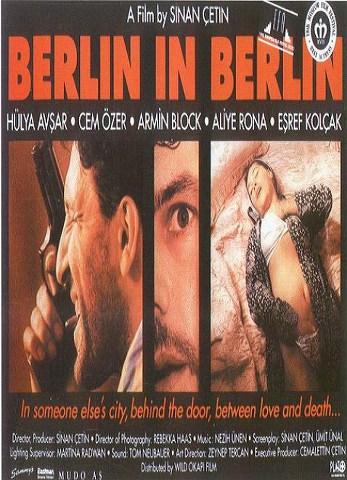
Sinan Cetin – Berlin in Berlin (1993)
Drama1991-2000Sinan CetinTurkeyA young German engineer photographs a beautiful Turkish woman without her permission. Her husband finds out and starts a fight. In the midst of the argument the German engineer accidentally kills the husband. With his burdened conscience, he goes out to Berlin’s Turkish district to find the woman. He is spotted by her relatives, and while escaping, by strange coincidence he ends up hiding in the man’s home whom he has killed. According to Turkish customs, a guest in one’s household must be treated with dignity and respect even if he is the enemy. Thus, the tension and difficulties among the Turkish family and the German engineer begin. As long as he stays he will survive, but how long can he live in the home of a man he murdered? (IMDb)Read More »
-
Karim Traïdia – De Poolse bruid AKA The Polish Bride (1998)
1991-2000DramaKarim TraidiaPolandQuote:
A young Polish woman (Hendrickx) on the run from a life as a prostitute winds up in a small town in Northern Holland. When a kindly farmer (Spijkers) finds her bruised and battered he gives her a roof over her head. Their relationship blossoms but is threatened by imminent foreclosure on the farm and by the girl’s past catching up with her. Stylish and intriguing.
This movie is a real character movie. Almost the entire movie focuses purely on just the two main characters. The characters don’t explain anything to each other about how and what. They just accept things as they are and don’t look back, even though the both of them, as implied, had issues in the past. They are definitely not at love at first but they also most certainly don’t hate each other. They slowly and steadily grow- and open up toward each other and also learn from each other, in many different ways. It doesn’t make this movie ‘just’ another unusual love-story but something that goes deeper and therefor also gets more effectively shown on the screen.Read More » -
Hirokazu Koreeda – Maboroshi no hikari (1995)
1991-2000ArthouseDramaHirokazu KoreedaJapan

Quote:
A young woman’s husband apparently commits suicide without warning or reason, leaving behind his wife and infant.Read More » -
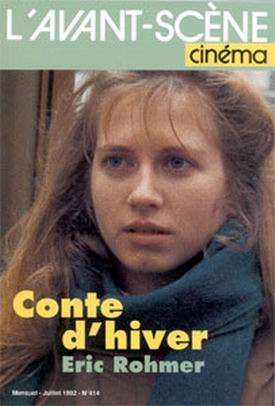
Eric Rohmer – Conte d’hiver AKA A Winter’s Tale (1992)
1991-2000ArthouseEric RohmerFranceRomance
A Winter’s Tale is the second installment in French director Eric Rohmer’s Tale of Four Seasons series. Rohmer’s intention with these films is to “focus on attractive, intelligent, self-absorbed if not entirely self-aware young women who present their dilemmas with clarity and elegance and express their feelings in inspired and witty dialogue.”
Plot: Felicie and Charles have a serious if whirlwind holiday romance. Due to a mix-up on addresses they lose contact, and five years later at Christmas-time Felicie is living with her mother in a cold Paris with a daughter as a reminder of that long-ago summer. For male companionship she oscillates between hairdresser Maxence and the intellectual Loic, but seems unable to commit to either as the memory of Charles and what might have been hangs over everything.
Read More » -
Liv Ullmann – Trolösa AKA Faithless (2000)
1991-2000DramaLiv UllmannSweden
Renowned actress-turned-director Liv Ullmann helms this bleak, nuanced film about marriage and betrayal penned by legendary filmmaker Ingmar Bergman. The story is straightforward — Marianne Vogler (Lena Endre) is a beautiful actress who is married to Markus (Thomas Hanzon), whose job as an orchestra conductor requires numerous concerts abroad, and who dotes on their young daughter Isabelle (Michelle Gylemo). Yet when Marianne has an affair with family friend David (Kirster Henriksson), a film director with a volcanic temper and little regard to those around him, the fallout destroys the marriage and brings grief and suffering to all involved, particularly Isabelle. Ullman and Bergman frame this plot with a tale about an elderly director named Bergman (Erland Josephson, who played opposite Ullman in Bergman’s landmark Scenes from a Marriage) who is trying to write a script about infidelity. In his austerely decorated house on a remote island, Bergman invites an actress, who may or may not be a figment of his imagination, to breathe life into the character of Marianne. Read More »
-
Michael Haneke – 71 Fragmente einer Chronologie des Zufalls (1994)
1991-2000AustriaDramaMichael HanekeQuote:
71 Fragments of a Chronology of Chance (German: 71 Fragmente einer Chronologie des Zufalls) is a 1994 Austrian drama film directed by Michael Haneke. It has a fragmented storyline as the title suggests, and chronicles several unrelated stories in parallel. Separate narrative lines intersect in an incident at the last of the film: a mass killing at an Austrian bank. The film is set in Vienna, October to December 1993.The film is divided into a number of variable-length “fragments” divided by black pauses, and apparently unrelated to each other. The film is characterised by quite a lot of fragments that take form of video newscasts unrelated to the main storylines. News footages of real events are shown through video monitors. Newscasts report on Bosnian War, Somali Civil War, South Lebanon conflict, Kurdish–Turkish conflict, and molestation allegations against Michael Jackson.Read More »
-
Jean-Claude Lauzon – Léolo (1992)
1991-2000DramaFranceJean-Claude LauzonQuote:
Jean-Claude Lauzon’s highly praised film tells the strange story of Léolo, a young boy from Montréal. Told from Léolo’s point-of-view, the film depicts his family of lunatics and Léolo’s attempts to deal with them. Not one individual in the boy’s life is well adjusted. His brother, after being beaten up, spends the film bulking up on growth protein. The grandfather hires half-naked girls to bite off his toenails and, in a brutal rage, almost kills Léolo. As he witnesses his family decay around him, Léolo retreats into himself and the fantasy world he has constructed. In response to the weirdness of his daily life, Léolo creates a little mental mayhem of his own which Lauzon renders in an amazing series of free-form, surreal images. Eventually, this precarious balance of reality and fantasy cracks and Léolo is hospitalized after attempting to murder his grandfather. The score by Tom Waits underscores the narrative arc of Léolo’s breakdown. On its release, the film won numerous awards including the International Fantasy Film Award for Best Director (1992) and a Genie Award for Best Original Screenplay (1992).Read More » -
Youssef Chahine – Al-Massir aka Destiny (1997)
Drama1991-2000EgyptPhilosophyYoussef Chahine

Ideas are imperishable, such is the premise of this powerful, upbeat allegory from one of Egypt’s most esteemed directors, Youssef Chahine. Ostensibly the true tale of revolutionary Muslim philosopher Averroes who lived in 12th-century Spain when Arabs ruled Anadulsia, it parallels the story of Chahine’s own experiences with Islamic fundamentalists when he released his 1994 film L’Emigre because it dared depict a sacred Muslim prophet. During that time, fundamentalists were not content to merely have the film banned, they also threatened Chahine’s life. Read More »