Synopsis
Undeniably a work of enormous scope, Jean-Luc Godard’s Histoires du cinéma eludes easy definition. An extended essay on cinema by means of cinema. A history of the cinema, and history interpreted by the cinema. An hommage and a critique. An anecdotal autobiography, illuminated by Godard’s encyclopedic wit, extending the idiom established by JLG par JLG. An epic – and non-linear – poem. A freely associative essay. A vast multi-layered musical composition. Histoires du cinéma is all of these. It is above all, a work made by a man who loves and is fascinated by the world of film.Read More »
“O be careful little eyes what you see . . .” 19 October 2001 | by Timothy Damon
This director is simply incredible. I saw Jos Stelling’s film THE POINTSMAN some years ago, and I’m not sure I would have believed a feature length film without the spoken word could be made. But he did it, and it was great! So then, would a shorter film in the same format be easier to make? You might think so. But Mark Twain once remarked (paraphrased) that he could do a 2 hour speech on most any subject with little advance preparation, but to properly do a 15 minute speech might take at least a week to properly prepare. Regardless, he has a wonderful time in a train station, mostly in the waiting room. The camera is mainly on a Casanova of a man as his gaze goes well beyond the personal boundaries of the women he is, . . . well, to put it bluntly, lusting after. It reminded me of the cartoon postcard of a slick-talking guy next to a woman asking her “Do you mind if I undress you with my eyes?” and she is thinking {‘well, I guess it’s better than having you touch me”] Whether or not this guy knows he’s gone beyond the bounds of propriety I’ll leave to your contemplation. But his come-uppance is quite delightful.Read More »
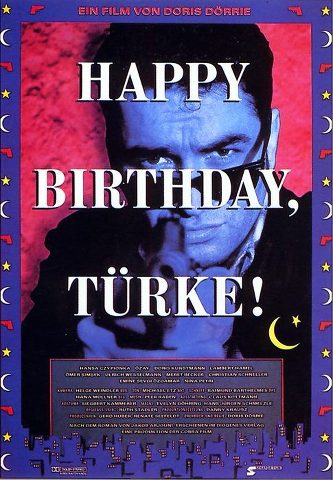
Kemal Kayankaya, a private detective, was hired by a Turkish women, Ilter, to search for his husband, Amend, who has been missing since the death of her father, Vassif. Unknownst to him, he was about to unravel the secrets of his client’s family, as well as their various dealings with the underworld and the police. Moreover, being a Turk raised in a German foster family, he has also begun to understand and accept his own ethnicity.Read More »
Les Rendez-vous de Paris [Rendez-vous in Paris] is a 1995 portmanteau French film directed by Éric Rohmer.
Three loosely connected variations on the theme of the lover’s rendezvous in Paris. The three episodes are titled “Le Rendez-vous de 7 heures” (The Rendezvous of 7 hours), in which a student discovers her boyfriend is two-timing her, “Les Bancs de Paris” (The Benches of Paris), in which an unnamed woman has a series of meetings in parks with a handsome literature teacher from the suburbs, and “Mere et enfant 1907” (Mother and Child 1907), which takes its title from a Picasso painting, and centres on an artist who is attracted by a stranger. The three stories of the film are linked by a girl singing in the streets to an accordion accompaniment – a homage to René Clair’s Sous les toits de Paris. Read More »
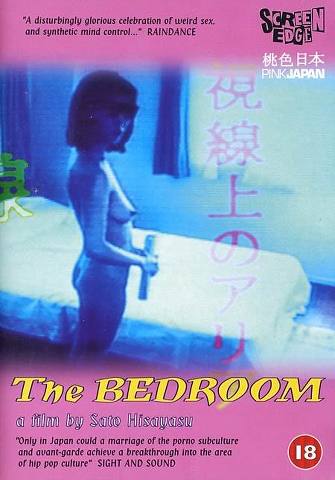
Hisayasu Sato’s THE BEDROOM is a bold, yet flawed film which manages to create an utter sense of depersonalization and loneliness, while still telling a great story. The visuals are great; blue and red light coat the bodies of the comatose girls of The Sleeping Room while giant TVs with constant static decorate the background. Sato’s spare use of music also helps to create tension in the film; the soundtrack features immense buildup that never actually climax, keeping the viewer aurally on edge. Despite the fact that the film may seem confusing at first, if the viewer is willing to actively watch the film and engage with the way Sato is telling his story, the viewer will be rewarded at the end.Read More »
Plot Outline: A young country girl comes to town and works in a brothel in order to help her fiance get the money to start his own business. “Paprika” is the name given to her by the madam.Read More »
Quote:
Though set in the French colony of St Pierre and Miquelon, the movie was filmed on Cape Breton Island, Nova Scotia. The French title La Veuve de Saint-Pierre contains wordplay. “Veuve” translates to “Widow”. In the 1800s the word was also slang for a guillotine.
The Widow of Saint-Pierre (French: La veuve de Saint-Pierre) is a 2000 film by Patrice Leconte with Juliette Binoche, Daniel Auteuil and Emir Kusturica. The film made its North American debut at the 2000 Toronto Film Festival where it won the Audience Award. It was nominated for a Golden Globe Award in 2001 for Best Foreign Language Film. The film was also nominated in 2001 for two César Awards.Read More »
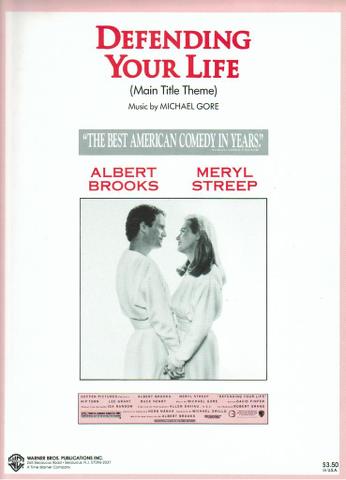
Enchanting, always funny, sometimes hilarious, and featuring a surprisingly light comic performance from the ever adaptable Meryl Streep, this is the most likeable and endearing comedy to date for writer/director/star Albert Brooks. His satirical edge, so sharp in his three previous films — Real Life (1979), Modern Romance (1981), and Lost in America (1985) — seems at first glance to have been dulled, even if his funny bone is still in perfect working order. But Brooks is still mocking the human race; it’s just that his humor has become gentler, suggesting that his longtime bitterness has evolved into a bemused, perceptive wisdom. Those who have become addicted to the Brooks oeuvre and its underlying neurotic cynicism might be dismayed that their favorite artistic pessimist has created a film that can be labeled heartwarming. But most Brooks fans will be delighted to find intact the brand of raw, naked honesty about the writer/director’s own shortcomings they expect, treated with a tender forgiveness that’s a new development to be sure, but an entirely welcome one. Peopled with memorable supporting players (particularly Rip Torn as a gruff but amiable legal eagle), and overflowing with creative ideas about the afterlife and its machinations, Defending Your Life amounts to a must-see film from one of the funniest, most under-appreciated filmmakers of our time. — Karl Williams Read More »