Silent

  • D.W. Griffith – The Lesson (1910)

    D.W. Griffith1901-1910DramaSilentUSA
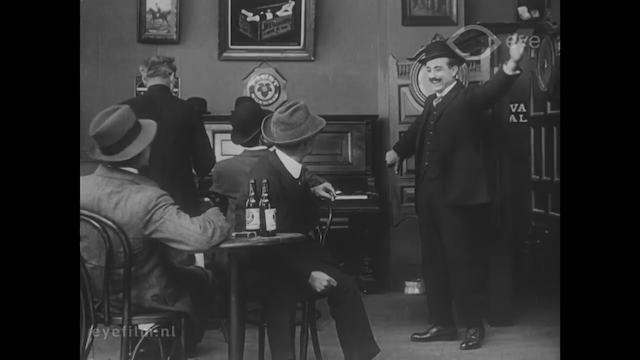
    The Lesson (1910)
    The Lesson (1910)

    The Moving Picture World, 31 December 1910 wrote:
    At one time the Biograph Company had quite a reputation for sermons. Here is one which has much of the original flavor, representing a young man disobeying the wishes of his father, a minister, to become a preacher; sinking lower and lower until just as his father dies he kills a man in a saloon brawl, and but for the plea of a sister would have been taken to prison, even as his father died. Whatever may be thought of this type of picture individually, the power it exerts upon an audience cannot be questioned. Like the horrible examples graphically shown in the goody-goody Sunday school books these films possess a fascination which cannot be denied, yet perhaps few would care to acknowledge its influence. The dramatic attractiveness in this particular instance consists in reproducing a domestic scene, unhappily too common, in some of its aspects at least, in such a way that the events seem to be transpiring before the audience. It is a graphic and impressive illustration of the commandment to honor, which means obey, one’s parents.Read More »
  • Yakov Protazanov – Nishchaya AKA The Beggar Woman (1916)

    Yakov Protazanov1911-1920DramaSilentUSSR
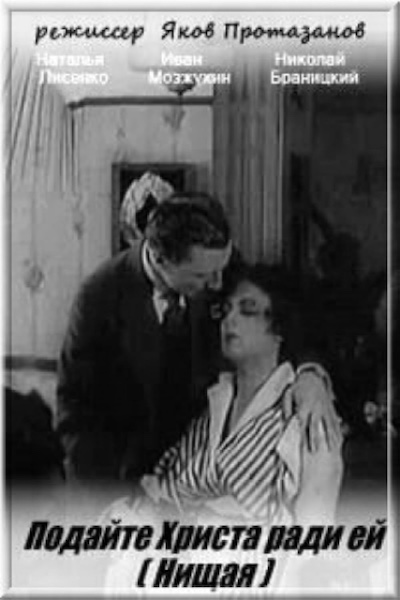
    Nishchaya (1916)
    Nishchaya (1916)

    “This Russian-made picture (distributed in the U.S. by Pathe) is typically gloomy. Prima donna Mary Mar (N.A. Lesienko) is surrounded by admirers. But a poet, Sergius (Ivan Mozukin) wants to be more to her and he proposes. So they marry, and she becomes involved in charity activities. On one of her rounds, she contracts smallpox and is quarantined. Even Sergius cannot enter the house. During her illness another opera star becomes the favorite in her stead. Mary’s face becomes horribly disfigured as a result of the smallpox and she has to auction off her belongings to pay her creditors. Finally Sergius returns. Mary is wearing a veil, and when he lifts it, he is disgusted by the sight of her. So she leaves him and becomes a beggar in the streets, while he goes to his studio and kills himself by drug overdose”
    by ~ Janiss Garza, RoviRead More »

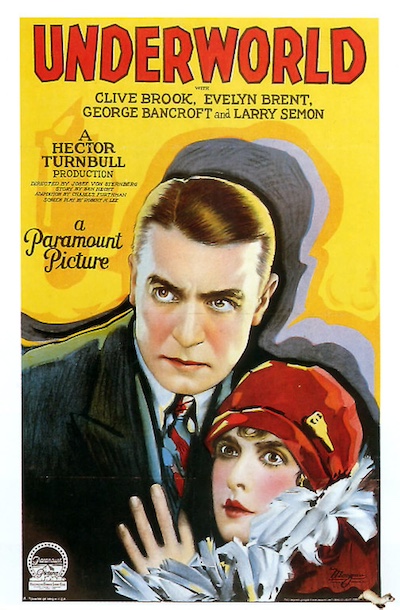
  • Josef von Sternberg & Arthur Rosson – Underworld (1927)

    Josef von Sternberg1921-1930Arthur RossonCrimeSilentUSA
    Underworld (1927)
    Underworld (1927)

    Boisterous gangster kingpin ‘Bull’ Weed rehabilitates the down-and-out ‘Rolls Royce’ Wensel, a former lawyer who has fallen into alcoholism. The two become confidants, with Rolls Royce’s intelligence aiding Weed’s schemes, but complications arise when Rolls Royce falls for Weed’s girlfriend ‘Feathers’ McCoy.

    Adding to Weed’s troubles are attempts by a rival gangster, ‘Buck’ Mulligan, to muscle in on his territory. Their antagonism climaxes with Weed killing Mulligan and he is imprisoned, awaiting a death sentence. Rolls Royce devises an escape plan, but he and Feathers face a dilemma, wondering if they should elope together and leave Bull Weed to his fate.Read More »

  • Josef von Sternberg – The Last Command (1928)

    Josef von Sternberg1921-1930DramaSilentUSA
    The Last Command (1928)
    The Last Command (1928)

    A former Imperial Russian general and cousin of the Czar ends up in Hollywood as an extra in a movie directed by a former revolutionary.Read More »

  • Josef von Sternberg – The Docks of New York (1928)

    Josef von Sternberg1921-1930CrimeSilentUSA
    The Docks of New York (1928)
    The Docks of New York (1928)

    The ship on which Bill Roberts is a stoker has just put into port, giving the crew one night ashore. The ship’s bad-tempered third engineer orders the stokers to clean up, while the engineer heads for a dockside bar, where he has a confrontation with the wife he had abandoned. Then, as Bill himself goes ashore, he sees a young woman attempt to drown herself. Bill dives in, saves her, and then, assisted by the engineer’s wife, sees that she is cared for. Bill and the rescued woman begin to enjoy one another’s company, but they must contend with the malice of the engineer, as well as a number of other complications.Read More »

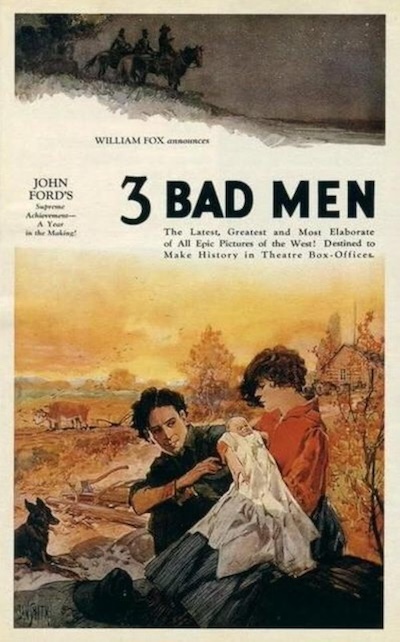
  • John Ford – 3 Bad Men (1926)

    John Ford1921-1930SilentUSAWestern
    3 Bad Men (1926)
    3 Bad Men (1926)

    Three outlaws come to the aid of a young girl after her father is killed.

    Quote:
    Bob Mastrangelo has called it “One of John Ford’s greatest silent epics.” The film possibly inspired the title for Akira Kurosawa’s 1958 film Three Bad Men in a Hidden Fortress, simply known as The Hidden Fortress in the rest of the world.Read More »

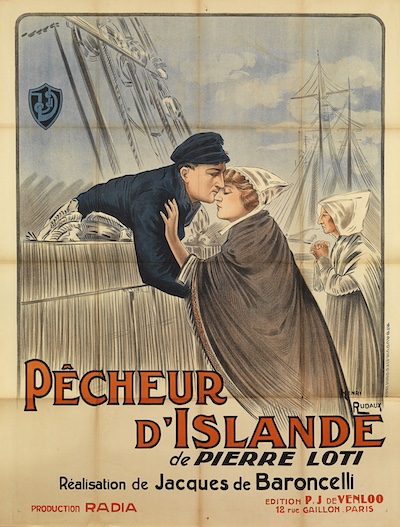
  • Jacques de Baroncelli – Pêcheur d’Islande AKA Iceland Fishermen (1924)

    Jacques de Baroncelli1921-1930DramaFranceSilent
    Pêcheur d'Islande (1924)
    Pêcheur d’Islande (1924)

    Faithfully reproduced observations of Breton fisherfolk in story of the man a local woman really loves who will not at first give himself to her because of his fondness for the sea that takes him away.Read More »

  • Ernst Lubitsch – Der Fall Rosentopf AKA The Rosentopf Case [Incomplete] (1918)

    Ernst Lubitsch1911-1920ComedyGermanyShort FilmSilent
    Der Fall Rosentopf (1918)
    Der Fall Rosentopf (1918)

    Translated from German wikipedia wrote:
    The film was shot in the UFA-Union-Filmstudios, Berlin-Tempelhof. The sets were designed by Kurt Richter. Although the National Film Archive also has designs by Paul Leni for the film, his involvement cannot be confirmed due to rediscovered film credits. The same applies to Ossi Oswalda’s involvement as an actor, as stated by Hermann G. Weinberg in 1977.
    The 1,163-meter-long film was examined by the censors in July 1918. The premiere of the film, which was announced in the Lichtbild-Bühne as Der Fall Rosenblum,[4] was on September 20, 1918 at the U.T. Friedrichstraße in Berlin.Read More »

  • Jean Epstein – La glace à trois faces AKA The Three-Sided Mirror (1927)

    Jean Epstein1921-1930ExperimentalFranceSilent
    La glace à trois faces (1927)
    La glace à trois faces (1927)

    Psychological narrative avantgarde film about a wealthy young businessman who consecutively falls in love with a classy English woman (Pearl), a Russian sculptress (Athalia), and a naive working-class girl (Lucie). Overpowered by weakness, the coward sidesteps the obligations that love affairs impose: rather than living up to his dates he takes his sports-car from an ultra-modern garage and speeds to the fashionable beaches of Deauville. On his way, he is fatally hit by a descending swallow. The film is divided into three segments each of which consists of events the woman experienced. These sequences are embedded in scenes in which each of the three women is telling and casting her mind back to her own love affair. Thus, present, future and past merge and cannot be distinguished clearly. The intertwinement of several layers of time experience, recollection, telling and showing have been regarded as a source of inspiration of Alain Resnais and this film prefigures his “L’Année dernière à Mariënbad” to a certain extent.Read More »

Back to top button