Synopsis: Dempsey Rae, a cowboy with no clear aim in life, winds up working on a spread with a hard lady owner just arrived from the East. She needs a tough new top hand and uses all her means of persuasion to get Rae to take the job. But he doesn’t like the way the other settlers are getting treated and starts to side with them, despite their introduction of the barbed wire he loathes.Read More »
Quote: The hero of Ayn Rand’s The Fountainhead is Howard Roark (Gary Cooper), a fiercely independent architect obviously patterned after Frank Lloyd Wright. Rather than compromise his ideals, Roark takes menial work as a quarryman to finance his projects. He falls in love with heiress Dominique (Patricia Neal), but ends the relationship when he has the opportunity to construct buildings according to his own wishes. Dominique marries a newspaper tycoon (Raymond Massey) who at first conducts a vitriolic campaign against the “radical” Roark, but eventually becomes his strongest supporter. Upon being given a public-housing contract on the proviso that his plans not be changed in any way, Roark is aghast to learn that his designs will be radically altered. Roark sneaks into the unfinished structure at night, makes certain no one else is around, and dynamites the project into oblivion.Read More »
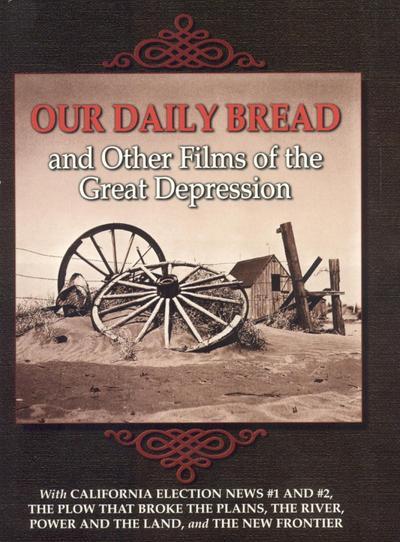
Quote: “Back to the land!” To escape the massive urban unemployment of the Depression, John Sims and his wife Mary take President Franklin D. Roosevelt’s exhortation to heart and take over an uncle’s run-down farm. But it soon becomes clear that the two city-dwellers have taken on more than they can handle. When a landless farmer pitches in, John decides to gather more unemployed into the collective. Soon the arcadian farm is filled with tradesmen, farmers, and their families. Together, they fend off foreclosure and speculators. Until a drought threatens to destroy the harvest … King Vidor made one of the first films of the New Deal era with the intention of contrasting the glamour of Hollywood with the harsh realities of American life. In reference to real institutions such as Texas’ Woodlake Community, he created a conservative social utopia in the form of a collective based on faith and a barter economy. Denounced sometimes as communist, sometimes as fascist, Our Daily Bread glorifies, above all, the American work ethic. In the lyrical tradition of poet Walt Whitman, Vidor celebrates the power of the human body, on full display in the rhythmic choreography of the final scenes.Read More »
Colonel Pepper brings his daughter, Peggy, to Hollywood from Georgia to be an actress. There she meets Billy who gets her work at Comet Studio doing comedies with him. But Peggy is discovered by High Art Studio and she leaves Billy and Comet to work there. Read More »
King Vidor wrote: “It started when I simply wrote a narration that interested me and challenged myself to fit it to a film, using existing objects in nature, without animation techniques of any kind. I did the photography myself for very little money….It represents an almost abstract attempt to illustrate philosophical thoughts and ideas with strictly photographed—not manufactured—images. What, it asks, is truth, and what is illusion? It draws its examples from obvious things like the movies’ illusory ‘motion,’ and the way railroad tracks seem to converge to a point on the horizon.”Read More »