Quote:
Two days in the life of Saul Auslander, Hungarian prisoner working as a member of the Sonderkommando at one of the Auschwitz Crematoriums who, to bury the corpse of a boy he takes for his son, tries to carry out his impossible deed: salvage the body and find a rabbi to bury it. While the Sonderkommando is to be liquidated at any moment, Saul turns away of the living and their plans of rebellion to save the remains of a son he never took care of when he was still alive.Read More »
Hungarian
-
László Nemes – Saul fia AKA Son of Saul (2015)
2011-2020DramaHungaryLászló Nemes -
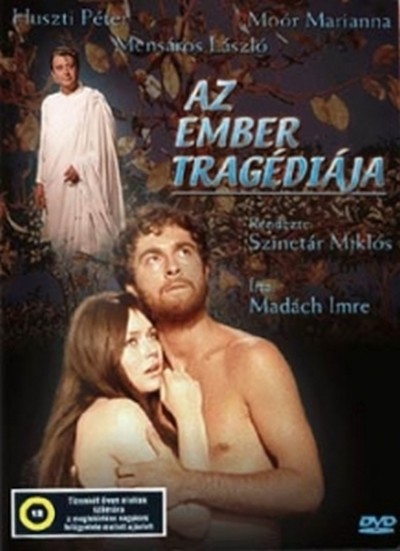
Miklós Szinetár – Az ember tragédiája AKA The Tragedy of Man (1969)
2011-2020AnimationDramaHungaryMarcell JankovicsQuote:
“The Tragedy of Man (Hungarian: Az ember tragédiája) written by Imre Madách was first published in 1861. The play is considered one of the major works in Hungarian literature and has earned a place in the national consciousness in that it is not only performed regularly in Hungary today but dialogue from the piece is often quoted and referred to.Starting with the expulsion from the Garden of Eden, the three main characters; Adam, Eve and Lucifer travels through history, playing their roles, from Ancient Egypt through the nineteenth century, into a distant and uncertain future. In each era the merits of the human race are presented by Adam, who believes in mankind and human achievement. But it is Lucifer, as the role of his servant or confidant, who exposes his dreams as ones built on injustice and misery.
Eve appears often as a temporary restorative for Adams disappointment in the failures of mankind.Read More » -
Miklós Jancsó – Szegénylegények AKA The Round-Up (1966)
1961-1970ArthouseDramaHungaryMiklós JancsóSet in a detention camp in Hungary 1869, at a time of guerrilla campaigns against the ruling Austrians, Jancsó deliberately avoids conventional heroics to focus on the persecution and dehumanization manifest in a time of conflict. Filmed in Hungary’s desolate and burning landscape, Jancsó uses his formidable technique to create a remarkable and terrifying picture of war and the abuse of power that still speaks to audiences today.Read More »
-
Pál Sándor – Szabadíts meg a gonosztól aka Deliver Us from the Devil (1979)
1971-1980ArthouseClassicsHungaryPál SándorA Hungarian masterpiece from Sándor Pál.
The film’s story take place in Budapest, in 1944 in the very end of the 2nd WW. The film’s photographer, Elemér Ragályi won prize in Montreal in 1979. Montreal, 1979.
PLOT DESCRIPTION
In this very dark comedy, the loss of a coat from a dance hall cloakroom sets off a frantic search which results in widespread death and mayhem. It is 1944, and the loss of the coat represents the family’s loss of social standing, even during a time when everyone is suffering from the Nazi occupation. The whole family is called in to search for it, and a cross-section of the social chaos of the times is exposed during their search, which involves murders and more. ~ Clarke Fountain, All Movie GuideRead More » -
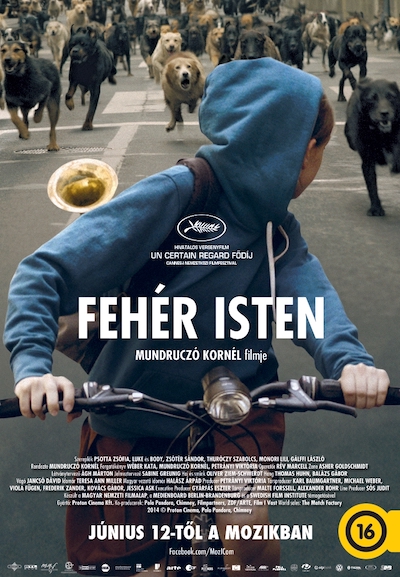
Kornél Mundruczó – Fehér Isten AKA White God (2014)
2011-2020DramaHungaryKornél MundruczóQuote:
The film follows the mixed-breed dog Hagen who moves, along with his guardian Lili, in with Lili’s father. Unwilling to pay a harsh “mongrel” fine imposed by the government, Lili’s father abandons him. Determined to find Lili again, Hagen soon attracts a large pack of half-breed followers who start a seemingly organised uprising against their human oppressors.Read More » -
Ildikó Szabó – Child Murders AKA Gyerekgyilkosságok (1993)
1991-2000DramaHungaryIldikó Szabó
Gyerekgyilkosságok (1993) 
SYNOPSIS: The title of Child Murders has a chilling double meaning. In this black and white melodrama about children, the child murders that the film’s title refers to are the million and one ways that children’s souls are ravaged by neglect, unkindness and cruelty, even though several physical deaths take place in the story. 12-year-old Zsolt lives a lonely life with his grandmother. He spends so much time taking care of his grandmother, that he has little time for much else. However, he makes friends with Juli, a homeless young gypsy woman living in an abandoned railway car. This friendship becomes known to the other children in his circle, and results in his being actively ridiculed, ostracized and beaten. When Juli has a miscarriage and Zsolt helps her dispose of the baby’s corpse, they are seen by one of the hate-filled local children, who notifies the police. The gypsy girl is taken to a prison hospital where she hangs herself. Zsolt quietly takes his revenge on the informant.Read More »
-
Márta Mészáros – Szabad lélegzet AKA Riddance (1973)
1971-1980ArthouseDramaHungaryMárta Mészáros
Jutka, a young woman who works in a factory, falls in love with Andras, a university student. She pretends to be a student, to him and to his parents, and begins to live a lie. Finally she rebels against Andras and his demands and the social conventions that forced her to live a lie.Read More »
-
György Fehér – Szürkület aka Twilight (1990)
1981-1990CrimeGyörgy FehérHungary
A former inspector on his last day with the department is called in to investigate a child murder. A suspect soon confesses to the crime, but knowing that the confession came only after the man was browbeaten in a relentless, 20-hour interrogation, the inspector’s keen police instincts tell him that the man is not the real murderer and that there is a serial killer at work, with the girl’s murder being related to other child murders that occurred in the area. However, he is alone in his assessment and the police close the case.Read More »
-
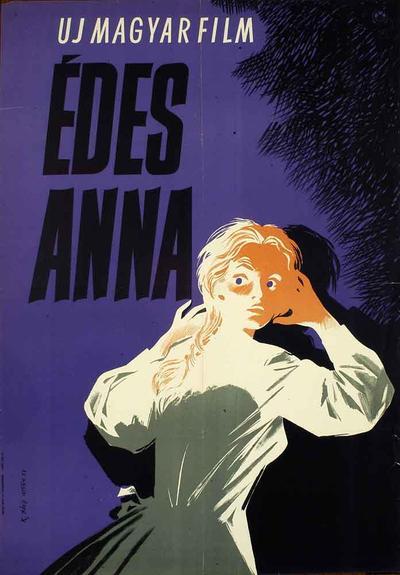
Zoltán Fábri – Édes Anna (1958)
1951-1960DramaHungaryZoltán Fábri

Plot Synopsis:
This drama by Hungarian New Cinema director Zoltan Fabri is about class exploitation and murder, and is set in 1919. Anna (Mari Torocsik) is a shy and plain young woman who works as a maid in a privileged household. She is essentially a slave without any rights to speak of, and while she is being driven to the extremity of murder because of her brutal and uncaring treatment, the Hungarian communist revolution is building up steam in the background. The microcosm, in this case, is clearly meant to illustrate the impersonal and much larger picture.This film was nominated to Golden Palm.Read More »