Hungarian

  • Zoltán Fábri – Hangyaboly AKA Ant-Hill (1971)

    1971-1980ArthouseDramaHungaryQueer Cinema(s)Zoltán Fábri
    Hangyaboly (1971)
    Hangyaboly (1971)

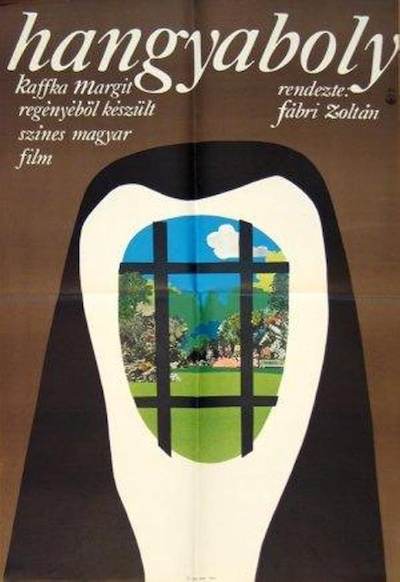
    The head of the nunnery is dying, and the members are divided in two groups as the election of the new head approaches. Led by Virginia, the younger nuns stand up for changing the strict religious dogmas and would like a modern school with genuine science, a bathroom to be built, and a freer spirit. Their candidate is sister Magdolna, who went to secular universities, too. The seminarists, led by Király Erzsi, also rebel against the older nuns’ strict discipline and the depressed atmosphere of the institution. However, Magdolna does not want to stay involved in the fight because she is deterred by Virginia’s sinful attraction towards her and the tools Virginia is using to gain victory at any price.Read More »
  • Zoltán Fábri – Dúvad AKA The Brute (1961)

    Zoltán Fábri1961-1970ArthouseDramaHungary
    Dúvad (1961)
    Dúvad (1961)

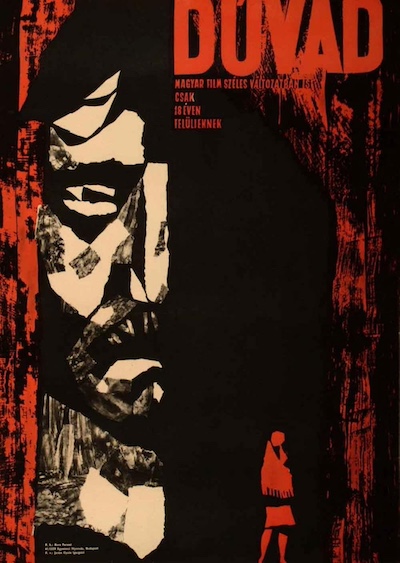
    The setting is the countryside, where an independent, landowning farmer busies himself in his free time by bedding down the women on his farm and then tossing them aside. One such ill-treated lass ends up marrying a young man who is in charge of a communal farm, a farm the womanizing “beast” of the title is later forced to join. The arrogant, formerly independent farmer does not reform his ways and is soon chasing after the young manager’s wife, the woman he dropped not that long ago.Read More »

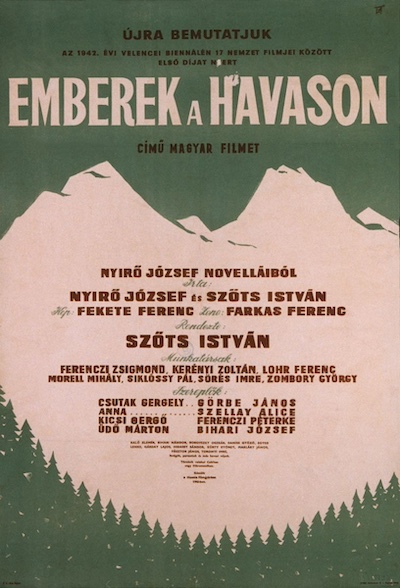
  • István Szöts – Emberek a havason AKA People on the Alps (1942)

    István Szöts1941-1950DramaHungary
    Emberek a havason (1942)
    Emberek a havason (1942)

    Quote:
    Arguably the most gifted Hungarian filmmaker of his generation, István Sz ts has been compared by critics to Ford, Vigo and Renoir. His forgotten masterpiece, People of the Mountains, is the story of a woodcutter and his family who live high in mountains of Transylvania. Forced out of their home, they are enticed into working for the very company that ejected them, only for their lives to begin to unravel one tragic misfortune after another.Read More »

  • Lívia Gyarmathy – Szökés AKA Escape from Recsk (1997)

    Lívia Gyarmathy1991-2000DramaHungaryPolitics
    Szökés (1997)
    Szökés (1997)

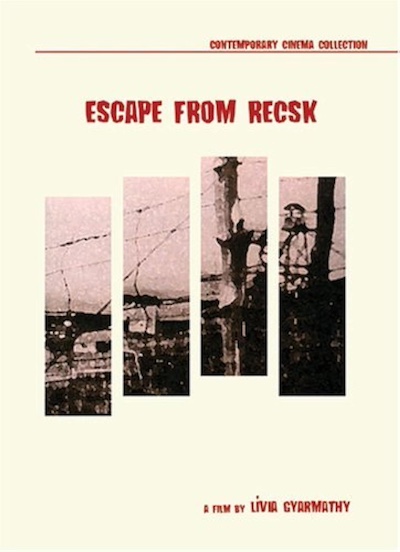
    Five years after Word War II Hungarian people are secretly arrested and taken to a labour camp without any judicial sentence. During the early 1950’s the very existence of the camp for political prisoners at Recsk was one of the Hungarian communist regime’s deepest secrets. Escape From Recsk tells the story of the only person who ever managed to escape successfully from Recsk – Hungary’s most notorious prison camp. He cherishes his hope by memorizing the names of fellow prisoners. The disclosure of the names of these prisoners in the West revealed the existence of the camp to the world and started the process that eventually led to dismantling the gulag camps in Central East Europe. Escape From Recsk captures the atmosphere of paranoia, humiliation and degradation that prevailed throughout the Stalinist gulag system. Even the guards do not trust each other in this nightmare world where betrayal is the only currency for purchasing small favours, and even life.Read More »

  • Pál Sándor – Régi idök focija aka Football of The Good Old Days (1973)

    1971-1980ComedyDramaHungary
    Régi idök focija (1973)
    Régi idök focija (1973)

    „By the middle of the 70s, partly due to television, Hungarian films had lost much of their audience. The allure of disguised social criticism – one of the secret reasons why Hungarian films were so successful at foreign festivals – started to wear off. After 1968 social criticism became pointless. The first director to open up towards the audience (along with Zoltán Fábri) was Pál Sándor. Mourning the loss of left-wing ideals of freedom he recreated the illusion of a past community. The audience responded to his grotesque, nostalgic tone and the stories where the emphasis was always placed on the microclimate of human relationships. His “retro-films” were rich in self-irony. He never analysed and never criticised, he just told a story, created a poignant atmosphere and passionate characters. (Szeressétek Odor Emíliát – Love Emilia! 1968, Régi idők focija – Football of The Good Old Days 1973, Herkulesfürdői emlék – A Strange Role 1976, Szabadíts meg a gonosztól – Deliver Us from Evil 1978).Read More »

  • Zoltán Fábri – Fábián Bálint találkozása Istennel AKA Balint Fabian Meets God (1980)

    Zoltán Fábri1971-1980DramaHungary

    Fábri linked two József Balázs novels. The Bálint Fábián story depicts the bitter peasant existence of the father of the protagonist of Hungarians with a profundity and power similar to sociographic literature of the 1930s.

    Bálint Fábián is killing people on the Italian front in 1918. At home, his sons strangle the priest who is the lover of their mother. On returning from the front, instead of discovering a robust wife Bálint finds a deranged woman. He is to be the carriage driver for the baron but during the ‘white terror’ he showed solidarity with his fellow labourers, and he returns to his sons as a shepherd. His wife dies, his sons abandon him…Read More »

  • Benedek Fliegauf – Dealer (2004)

    Benedek Fliegauf2001-2010ArthouseDramaHungary
    Dealer (2004)
    Dealer (2004)

    Quote:
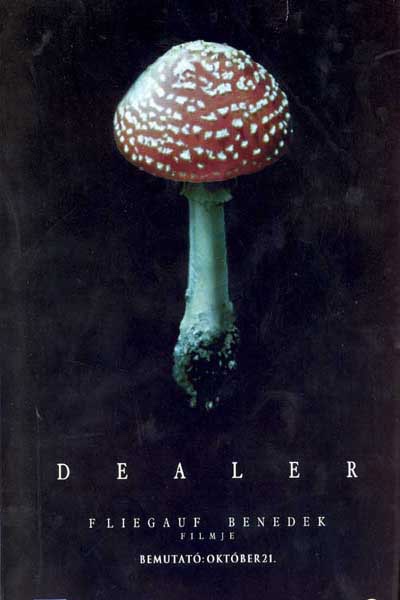
    In an impressive follow up to his debut film Forest, Benedek Fliegauf tells the uncompromising story of a day in the life of a drug dealer. His clients include the leader of a religious sect, a friend who needs a final fix, a former lover who has had his child, a student, and a black marketeer. Fliegauf’s film recreates life in a city that resembles a ghost town, an alienated world with its own priorities and realities. It is, he says ‘. an imaginary city with a strongly spiritualist atmosphere. This necropolis is the film’s real protagonist’. His subject is depression (‘a state of consciousness that saturates the life of .too many of us’) and the film provides a deeply felt testament to the realities of a painful and still little understood world. An admirer of Béla Tarr, Fliegauf similarly allows his characters to exist in extended (or real) time, with a minimalist style in which every sound or line of dialogue becomes privileged. The framing, camera movement, and sound design combine to create hypnotic film-making of a high order. It is a demanding and essential film and no mere exercise in miserabilism.Read More »

  • Géza Böszörményi & Lívia Gyarmathy – Recsk 1950-1953, egy titkos kényszermunkatábor története AKA Recsk 1950-1953: The Story Of A Secret Concentration Camp In Communist Hungary (1989)

    Lívia Gyarmathy1981-1990DocumentaryGéza BöszörményiHungaryPolitics
    Recsk 1950 1953, egy titkos kényszermunkatábor története (1989)

    This European Film Award winner documentary tells the story of Recsk, Hungary’s most notorious political prison camp, which operated between 1950 and 1953. During the early 1950’s the very existence of this camp for political prisoners at Recsk was one of the Hungarian communist regime’s deepest secrets. Hundreds of people were taken there without ever actually being sentenced by any court, and had to suffer through the brutal treatment handed down by their sadistic captors. This documentary tells the story of Recsk from both the captors’ and the prisoners’ point of view, capturing the atmosphere of paranoia, humiliation and degradation that prevailed throughout the Stalinist gulag system.Read More »

  • Imre Gyöngyössy – Virágvasárnap AKA Palm Sunday (1969)

    1961-1970DramaHungaryImre Gyöngyössy
    Virágvasárnap (1969)
    Virágvasárnap (1969)

    In 1919 mysterious men hide out in pusztaRead More »

Back to top button