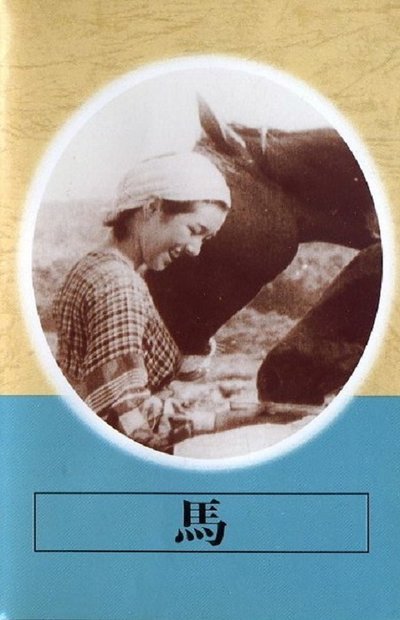
Hideko Takamine

  • Tamizo Ishida – Hana-tsumi nikki AKA Flower Picking Diary (1939)

    Tamizo Ishida1931-1940DramaJapanRomance

    Maya Grohn wrote:
    This film is based on the book Heaven and Maiko by Yoshiya Nobuko.

    It is a story of two girls with totally different family backgrounds. The family of Eiko was in the okiya business, which handled geiko (geisha), one of the highest rank okiya in Osaka. Eiko was attending the girls’ school, modeled after Wilmina Girls School (currently Osaka Jogakuin).

    One day a new girl, Sada Mitsuru moved to the school from Tokyo, Mitsuru’s father was a successful businessman and her mother a pious Christian.Read More »

  • Mikio Naruse – Hikinige aka Hit and Run (1966)

    1961-1970AsianDramaJapanMikio Naruse

    In 1966, Mikio Naruse made two films that featured elements of the suspense/thriller genre. According to IMDb, The Stranger Within a Woman came first in January. Then in April, this film was released

    Here’s Michael Kerpan’s review of the film:
    In Naruse’s next to last film, he returned to cinemascope format, but stayed with black and white film. This is once again, in terms of plot, a bit of a shocker. Soon after we meet Kuniko (a young widow, played by Hideko Takamine) and her much-beloved young only son, the boy is run over by Kinuko (played by Yoko Tsukasa the rich spoiled wife of an automobile executive). Kinuko, it turns out, was distracted at the time of the accident because her companion in the car, a hunkish younger man who is her lover, had just told her of his plan to soon begin a far-away job. Kinuko tells her husband of the accident (but not the precipitating cause), and he orders the corporate chauffeur (Yutaka Sada, who was also the unfortunate chauffeur in “High and Low”). Luckily for him, he gets off with a small fine and a suspended sentence.Read More »

  • Masaki Kobayashi – Kono hiroi sora no dokoka ni aka Somewhere Beneath The Wide Sky (1954)

    1951-1960DramaJapanMasaki KobayashiRomance

    SOMEWHERE BENEATH THE WIDE SKY (1954, aka KONO HIROI SORA NO DOKOKA NI) came near the end of Masaki Kobayashi’s formative period as a director — scripted by the sister of his mentor Keisuke Kinoshita (and scored by Kinoshita‘s brother), this drama of middle-class life in postwar Japan tells the story lower-middle-class workers in the city of Kawasaki, and their troubles and travails.Read More »

  • Keisuke Kinoshita – Karumen kokyo ni kaeru AKA Carmen Comes Home [+extras] (1951)

    1951-1960ComedyDramaJapanKeisuke Kinoshita

    Quote:
    A light-heartedly humorous take on post-war female emancipation, Carmen Comes Home is a fairly typical offering from Shochiku, a studio renowned at the time for its conservative output specialising predominantly in comedies and domestic dramas based firmly within the framework of the traditional Japanese family structure. Produced at a time when the company’s fortunes were still riding high, to celebrate their 30th anniversary studio head Shiro Kido (himself the subject of a retrospective at the Nederlands Filmmuseum in 1994) allowed director Keisuke Kinoshita to direct this light and breezy comedy drama in Fujicolor, and thus Japan’s first ever colour motion picture came to be made.Read More »

  • Kajirô Yamamoto & Akira Kurosawa – Uma aka Horse (1941)

    1941-1950Akira KurosawaAsianDramaJapan

    The story of the film is simple: A young girl in the countryside raises a young horse and develops a deep relationship to the animal. But the war is becoming part of life, so in the end she has to sacrifice her horse and sell it to the military.Read More »

  • Mikio Naruse – Onna ga kaidan wo agaru toki AKA When a Woman Ascends the Stairs (1960)

    1951-1960DramaJapanMikio Naruse

    Quote:
    This is the story of Mama, a.k.a. Keiko, a middle-aged geisha who must choose to either get married or buy a bar of her own. Her family hounds her for money, her customers for her attention, and she is continually in debt. The life of a geisha is examined as well as the way in which the system traps and sometimes kills those in it.Read More »

  • Heinosuke Gosho – Entotsu no mieru basho AKA Where Chimneys Are Seen (1953)

    1951-1960AsianClassicsDramaHeinosuke GoshoJapan

    Quote:
    Winner of the International Peace Prize at the 1953 Berlin Film Festival and considered “one of the really important postwar Japanese films, Where Chimneys Are Seen focuses primarily on the interconnected lives of two couples in a lower-middle-class neighborhood in Senju, a poor industrial section of Tokyo. The narrative is structured as a series of juxtaposed scenes that dramatize this connection and show the cause and effect of events on the couples’ lives. As part of this structure, there is the central motif of the chimneys and the kinds of “lyrical” interludes for which Gosho is famous.Read More »

  • Mikio Naruse – Tsuma no kokoro aka A Wife’s Heart (1956)

    Drama1951-1960JapanMikio Naruse

    (SPOILERS!)

    Quote:
    The best moments of A Wife’s Heart involve things not said or seen and this is most explicit in the interactions between Kiyoko (Hideko Takamine) and her bank clerk bachelor confidant Kenkichi (Toshiro Mifune). Kiyoko, along with her husband Shinji (Keiju Kobayashi), wants to open a coffee shop and so goes to Kenkichi to ask for a loan. Director Mikio Naruse never focuses on the duo’s talk of money; as filmed, their entire relationship is a series of beginnings and endings with the middles cut out. It is at first purely a business association, though after Shinji (at the manipulative behest of his matchmaker mother) gives a majority of the loan to his deadbeat brother Zenichi, Kiyoko starts to think that her feelings for Kenkichi may be more then platonic. Following through on his setup, Naruse never lets either character nakedly confess their heart’s desire. The closest they come is during a sequence, set against the backdrop of a torrential downpour, where Kenkichi utters the first few words of a thought that he will never finish. In other hands this scene might have played as masochistic repression, but Naruse allows the rainstorm to act as an expressive emotional outlet—nature thus concludes what Kenkichi cannot.Read More »

  • Mikio Naruse – Midareru AKA Yearning (1964)

    1961-1970DramaJapanMikio Naruse

    29f7c043f76a2bde437fd0d52a185152

    Slant Magazine wrote:
    At first, Yearning appears to be a typically late-Narusian offering, a low-key and observational drama that obsessively details Reiko’s day-to-day routines. In addition to keeping her small business afloat, Reiko must deal with her meddling in-laws, who have their minds set on selling the grocery store, and also attend to Koji, who inexplicably indulges in a rebellious cycle of petty crime and violence. One of Naruse’s great talents is in making the mundane mysterious so when Koji declares, seemingly out of nowhere, that he’s been in love with Reiko for years, it takes more than a few moments to acclimate to the film’s suddenly malleable emotional terrain, even though, in retrospect, it makes perfect psychological sense. It’s a shock to witness how charged and raw the duo become after Koji’s admission, and Naruse’s camera, under the guiding eye of cinematographer Jun Yasumoto, never blinks, maintaining a harsh, voyeuristic presence as the characters move, like increasingly frenzied celestial bodies, through a space made unfamiliar because of a naked confessional moment.Read More »

Back to top button