

A family struggles with the teenager son who suffers from Hikikomori phenomenon. Suddenly, he closes the door and locks himself in, shutting out a helpless father, mother and sisterRead More »
A family struggles with the teenager son who suffers from Hikikomori phenomenon. Suddenly, he closes the door and locks himself in, shutting out a helpless father, mother and sisterRead More »
Quote:
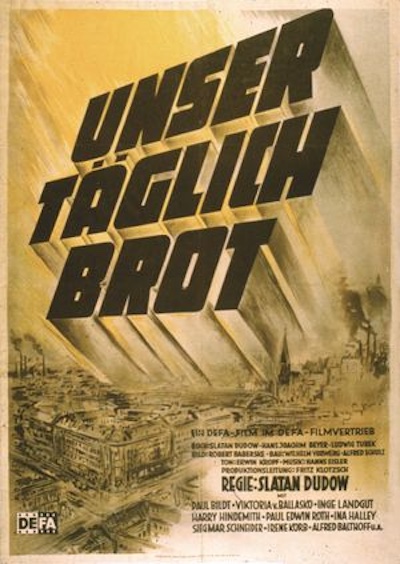
A story about a family after the Second World War. The petty bourgeois cashier Karl Weber of Berlin observes from a distance how his son Ernst participates in the building of a new socialist society. Karl does not understand Ernst’s visions, instead he confides in his other son Harry. However, Harry becomes involved in illicit business and Karl quickly realizes that it would be best to join his son Ernst in the citizen-owned factory. With this film, director Slatan Dudow (1903-1963) continued the traditions of proletarian German film from the Weimar Republic. As with his first feature film Kuhle Wampe, from a screenplay by Bertolt Brecht, Dudow wanted an art that “cultivates the viewer’s psyche.” His postwar films were intended to make the viewers realize the importance of supporting the “new order” in East Germany. Our Daily Bread became known as a premiere film of its day under the rubric of “socialist realism.” Slatan Dudow’s work was convincing mainly through his detailed descriptions of socialist everyday life. Music by Hanns Eisler was the centerpiece of contemporary review. After coming back from his exile in America, the composer created a score that challenged, thrilled, and focused. Berlin’s world of ruins is captured in almost documentary fashion.Read More »

This documentary focuses on the person and the films of one of Germany’s premiere post-war filmmakers, Wim Wenders. Wenders is a lifelong fan of American pop culture, particularly its rock music and B-movies, and his highly personalized filmmaking style is deeply influenced by both of these. He is best known for films featuring drifters and the lure of the open road and open spaces. The documentary features interviews with actors like Dennis Hopper, filmmakers (cinematographer Robby Muller) and rock musicians (e.g., Ry Cooder) and others who have worked with him over the years, as well as interviews with the director himself, who is well aware of his cinematic gifts and limitations.Read More »

Another beautiful comedy with Cleo Kretschmer & Wolfgang Fierek!
Inge, Drogistin in einer bayerischen Kleinstadt, hat ihr Herz an den Kraftfahrzeugmechaniker Hub verloren, ohne dass dieser auch nur im Entferntesten davon etwas ahnt. Inge will fürs erste auch gar nicht, dass Hub erfährt, wie es um sie steht. Nichts soll ihn ablenken von dem großen Ziel, dass er und ihr Bruder Wolfgang – Kraftfahrzeugmechaniker wie Hub – mit Verbissenheit und Energie verfolgen: den Bau einer Rennmaschine, um an einem Moto-Cross-Rennen teilnehmen zu können. Inge möchte einen Helden lieben, und so tut sie alles dafür, dass der Traum der Jungen in Erfüllung geht. Freilich kränkt es sie, dass der motorradbesessene Hub überhaupt keine Notiz von ihr nimmt. Read More »

Quote:
ELFRIEDE JELINEK: “Language Unleashed” Child prodigy, scandal writer, traitor of the fatherland, theatre fury, feminist, model lover, communist, pessimist, language terrorist, rebel, enfant terrible, defiler of the nest, brilliant, vulnerable artist, Nobel Prize winner.Read More »
Synopsis:
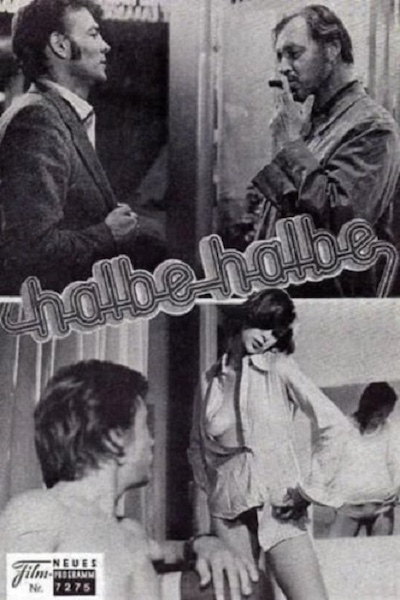
Berthold Maschkara, 36, has lost the job he would have liked to keep. Even a severance package of 30,000 marks doesn’t make him happy. When he looks for a new job, he meets Thomas, who lives in the apartment hotel next door. Thomas is ten years younger and spent seven years as an air traffic controller in the German army. During his civilian service, he needs his high school diploma, which he now wants to catch up on. He, too, has 30,000 marks at his disposal, which is his replacement for his service with the federal government. Both are in the same situation. They have to start all over again. A little start-up capital could make their future easier. But they go different ways, which cross from time to time… The film tells what they experience in the next two weeks, how they lose their money and still keep going, two outsiders who have to realize that they can’t live outside society either.Read More »

Quote:
Made during his self-imposed exile in Germany, Ingmar Bergman’s From the Life of the Marionettes offers a lacerating portrait of a destructive marriage and a complex psychological analysis of a murder. Businessman Peter nurses fantasies of killing his wife, Katarina, until a prostitute becomes his surrogate prey. In the aftermath of the crime, Peter and Katarina’s psychiatrist and others attempt to explain its roots. Jumping back and forth in time, this compelling film moves seamlessly between seduction and repulsion, and the German cast is superb.Read More »

this is a recording of Claus Peymann’s original and legendary staging of Thomas Bernhard’s most political play that broke with the austrian myth that austria
was supposedly the first victim of the nazis and caused quite an uproar among (mostly the conservative parts of the) austrian public.Read More »

According to Harun Farocki, today’s photographers working in advertising are, in a way, continuing the tradition of 17th century Flemish painters in that they depict objects from everyday life – the “still life”. The filmmaker illustrates this intriguing hypothesis with three documentary sequences which show the photographers at work creating a contemporary “still life”: a cheese-board, beer glasses and an expensive watch.Read More »