

This film was prepared as a introduction to a series of opera broadcasts on German television. It depicts the behind-the-scenes maneuverings in preparation for the annual opera festival in Bayreuth.Read More »
This film was prepared as a introduction to a series of opera broadcasts on German television. It depicts the behind-the-scenes maneuverings in preparation for the annual opera festival in Bayreuth.Read More »

From Wikipedia:
“Gates to Paradise” is a 1968 film by Polish director Andrzej Wajda. The film is set in medieval France and is based on a story by Polish writer Jerzy Andrzejewski (1960) that seeks to expose the motives behind youthful religious zeal. It was entered into the 18th Berlin International Film Festival.
In 1212, a Children’s Crusade is launched after Jakob (John Fordyce) claims to have had a vision in which it is said that the innocence of children would be able to liberate Jerusalem. A monk (Lionel Stander), returning from Jerusalem, joins the crusade and hears the children’s confessions, gradually realizing that most of them are taking part not for religious, but for more worldly reasons, like rejected love.Read More »
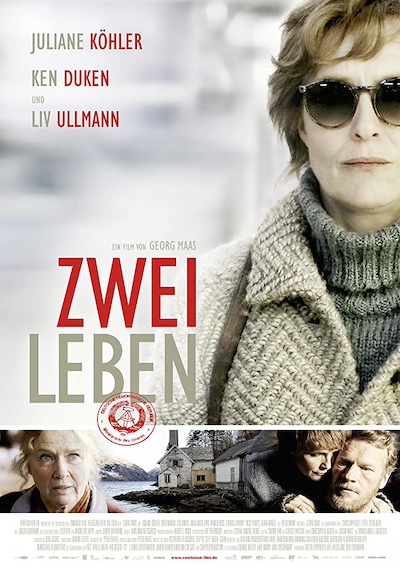
STORYLINE:
Europe 1990, the Berlin wall has just crumbled: Katrine, raised in East Germany, now living in Norway since 20 years, is a war child: the result of a love relationship between a Norwegian woman and a German occupation soldier during World War II. Katrine enjoys a happy family life, with her mother, her husband, daughter and grand-daughter. But when a lawyer asks her and her mother to witness in a trial against the Norwegian state on behalf of the war children, she resists. Gradually, a web of concealment and secrets is unveiled, until Katrine is finally stripped of everything, and her loved ones are forced to take a stand: What carries more weight, the life they have lived together, or the lie it is based on?Read More »

Quote:
Vienna in the 1950´s. A childhood captured on 8mm film, documented by 13-year-old Johanna. A childhood as it might have been. We see fragments of family life and family secrets, an apartment regularly visited by women, centered around grandmother Maria Steinwendner who holds weekly cooking clubs in her kitchen. But somehow, the women never actually seem to do any cooking.
“Papa always said you have to be quick if you want to see anything. Because everything vanishes so quickly”, Johanna says to herself as she films the dead body of a cat on the pavement. “But I don´t think that´s true. I think you just have to keep looking”. And Johanna keeps looking. Until the camera´s gaze suddenly turns on herself. (production note)Read More »

Quote:
Rock ‘n’ roll comes to Germany just ahead of the Berlin Wall in “The Red Cockatoo.” Stylish period piece is weighed down by a too-familiar love triangle, generating nostalgia for a difficult time not nearly as successfully as clear predecessor “Good Bye Lenin!”
Unlike helmer Wolfgang Becker’s “Good Bye Lenin!,” “Cockatoo” will work best for those with some knowledge of the early days of the German Democratic Republic and tension generated by the Wall throughout the country.Read More »

Documentary in two parts that blends dramatized reconstructions, personal reminisces and newsreel footage to tell the story of the flight of German refugees through occupied France to Marseille in 1940.
Quote:
Anna Segher’s novel Transit (1944) is the leitmotif of this film essay on German exiles in France and their escape to the South after Hitler marched into Paris. But Fluchtweg nach Marseille is neither adaptation nor documentary: actors recite and react to passages from the novel. Eyewitnesses speak. Documents from the Nazi era are contrasted with images of places and landscapes in which the settings of persecution and escape come back to haunt both the filmmakers and us. This is a search for evidence that interweaves facts, personal recollections, and both literary and visual reflections.
-Anke HahnRead More »

Bettina Böhler creates a memorial to the director Christoph Schlingensief on the 10th anniversary of his death, a portrait of the filmmaker’s work and influence.Read More »
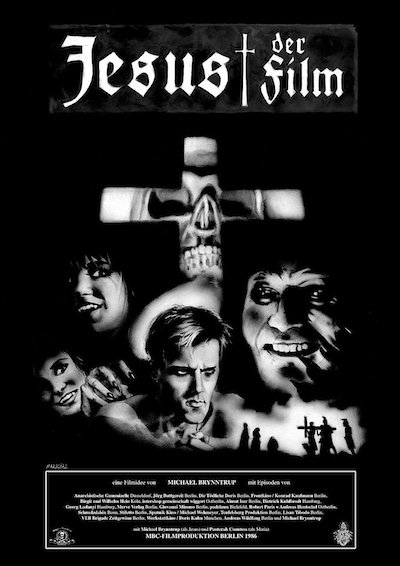
Synopsis
JESUS – THE FILM is a monumental feature film in 35 episodes, shot on Super8. The individual episodes retell the story of the New Testament and were made by a total of 22 filmmakers from East and West Germany in 12 months. The project’s own history follows the story of Jesus Christ recruiting his apostles. The film’s creator Michael Brynntrup is a central and controversial figure of Berlin’s vivid independent community. His transgressive obsessions, as well as his capability to smuggle miles of Russian Super8 film-material through East-West customs, gathered a group of believers around him. Individuals and groups from various art factions filled the holy frame, inspired by the Dadaistic idea of an ‘ecriture automatic’. From one to another, they passed ideas, material and actors, including Michael Brynntrup himself as the title character. (IMDB)Read More »

The first science fiction film of the DEFA: Futuristic comedy about a revolutionary invention.
Synopsis:
In the country “Kapitalia” Dr. Alland has made a breakthrough invention.
The profit-hungry industrialist Da Costa tries to get to it by sending a series of alluring women towards him.Read More »