French

  • Claude Misonne – Le Crabe aux pinces d’or AKA The Crab with the Golden Claws (1947)

    1941-1950AnimationBelgiumClaude MisonneCult

    29f7c043f76a2bde437fd0d52a185152

    Description: Stop-motion animated version of the classic TinTin story. Tintin is informed by the Thompsons of a case involving the ramblings of a drunken man, later killed, found with a scrap of paper from what appears to be a tin of crab-meat with the word Karaboudjan scrawled on it. His subsequent investigation and the kidnapping of a Japanese man interested in talking to him leads Tintin to a ship also called the Karaboudjan, where he is abducted by a syndicate of criminals who have been hiding opium in the crab tins. Escaping from his locked room, Tintin encounters Captain Haddock, an alcoholic who is manipulated by his first mate, Allan, and is unaware of his crew’s criminal activities. Escaping the ship in a lifeboat in an attempt to reach Spain, they are attacked by a seaplane. They hijack the plane and tie up the pilots, but a storm and Haddock’s drunken behaviour causes them to crash-land in the Sahara.Read More »
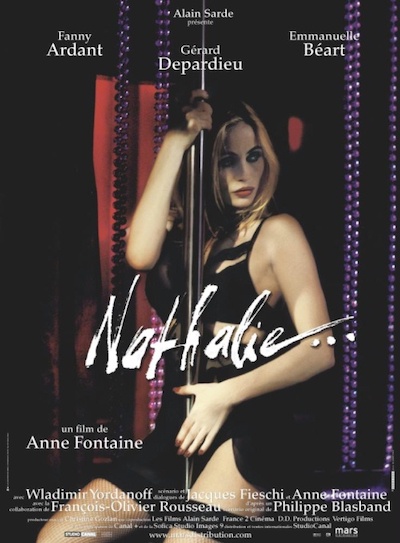
  • Anne Fontaine – Nathalie… [+Extras] (2003)

    2001-2010Anne FontaineDramaFrance

    Quote:
    A rich woman hires an elite prostitute in order to verify her husband’s faithfulness. Before long the experiment gets out of control.Read More »

  • Gérald Hustache-Mathieu – Poupoupidou (2011)

    2011-2020DramaFranceGérald Hustache-MathieuMystery


    29f7c043f76a2bde437fd0d52a185152

    Synopsis
    He is a Parisian and author of a series of best selling crime novels. She is a blonde bombshell, convinced that she is the reincarnation of Marilyn Monroe. When they meet at Mouthe, the coldest town in France, he is suffering from a bad case of writer’s block and she is dead, believed by the police to have taken an overdose of sleeping tablets. David Rousseau is unconvinced and begins his own investigation into the mysterious past of Candice Lecoeur, certain that this will provide him with the inspiration for his next novel…Read More »

  • Jean-Pierre Dardenne & Luc Dardenne – Le gamin au vélo aka The Kid with a Bike (2011)

    2011-2020BelgiumDramaJean-Pierre Dardenne and Luc Dardenne


    29f7c043f76a2bde437fd0d52a185152

    Quote:
    Abandoned by his father, a young boy is left in the hands of an unqualified childcare provider.

    Quote:
    The Kid with a Bike (French: Le Gamin au vélo) is a 2011 drama film written and directed by the Belgian brothers Jean-Pierre and Luc Dardenne, starring Cécile de France and Thomas Doret. Set in Seraing, it tells the story of an 11-year-old boy who turns to a woman after his father has abandoned him.[1] The film was produced through companies in Belgium, France and Italy. While it does not deviate from the naturalistic style of the Dardenne brothers’ earlier works, a brighter aesthetic than usual was employed, and the screenplay had a structure inspired by fairytales. Unusually for a film by the directors it also uses music. It premiered at the 2011 Cannes Film Festival and won the festival’s Grand Prix.Read More »

  • Eddy Matalon – Et avec les oreilles qu’est-ce que vous faites? [+ Extra] (1974)

    1971-1980ComedyEddy MatalonEroticaFrance

    Two friends, Arthur and Jérôme, want to make a film. After much hesitation, they give up their primary aspirations and opt for a trendy theme: eroticism! Benefiting from a tidy sum of money, all they have to do is find the ideal cast. But the tandem is far from imagining that this somewhat crazy project will completely change their existence.Read More »

  • Jean-Marie Teno – Afrique, je te plumerai AKA Africa, I Will Fleece You (1993)

    1991-2000CameroonDocumentaryJean-Marie TénoPolitics

    29f7c043f76a2bde437fd0d52a185152

    Storyline
    This documentary of repressive political realities in Cameroon begins with the 1990 publication of an open letter to President Biya calling for a national conference – and the immediate arrest of the letter’s author and publisher. The narration then examines the nation’s colonial history, beginning with the first German missionary in 1901, the establishment of schools, French occupation following World War I, the paucity of books written by and published by Cameroonians, and the repression of the CPU, a leftist organization of the 1950s and 1960s. Cameroon and its people are the lark, its feathers plucked first by colonialism and then by native strongmen: ‘Alouette, je te plumerai.’ Written by jhaileyRead More »

  • Catherine Breillat – Sale comme un ange AKA Dirty Like an Angel (1991)

    Drama1991-2000Catherine BreillatFranceRomance

    Quote:
    Sale comme un ange is another dark portrayal of human sexuality from Catherine Breillat, her fourth in a series of provocative and unequivocally personal films. What is most striking about this film is its sense of realism and the totally unromantic way in which a romantic liaison is portrayed. By showing a consensual love affair between a young woman and a much older man in a sordid, almost animalistic way, Breillat risks offending the sensibilities of her public, but her boldness works – the end result stands as one of her most haunting and poetic films.Read More »

  • Pál Fejös – Marie, légende hongroise aka Spring Shower (1932)

    1931-1940DramaFrancePál Fejös

    29f7c043f76a2bde437fd0d52a185152

    Fejos’s Spring Shower is one of the key Hungarian films of the 1930s and 1940s to explore the miserable lives led by maidservants. It tells the story of Mari, an austerely beautiful young peasant girl played by the French star, Annabella. Mari is seduced beneath a flowering tree by the admirer of one of the daughters of the prosperous family for whom she works, becomes pregnant and is cast out.Read More »

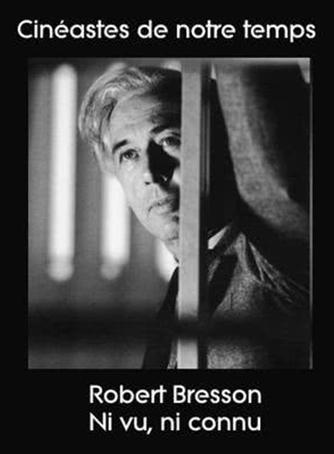
  • François Weyergans – Cinéastes de notre temps: Robert Bresson – Ni vu, ni connu (1965)

    1961-1970FranceFrançois WeyergansRobert Bresson

    29f7c043f76a2bde437fd0d52a185152

    Description: Filmed mostly in his country home in 1965, ROBERT BRESSON – WITHOUT A TRACE is a revealing discussion with Bresson. Bresson at this time had completed six of his most well known films and was in the process of shooting Au Hasard Balthazar.

    Usually a man of few words, having never before granted an interview on camera, Bresson agreed to answer the questions of a then-unknown writer François Weyergans, for the Cineaste de Notre Temps series.

    Ranging over topics from the inspiration behind his films, to his ideas on the use of sound, actors, editing and music, and the state of (the then) contemporary cinema (from James Bond to the New Wave), Bresson describes his singular approach to filmmaking.Read More »

Back to top button