

Quote:
Jean Diserens has a double life: he is both a real estate developer and a drug dealer. He is looking for new ways to make money. But his superior, Crazy Capo, does not see things the same way.Read More »
Quote:
Jean Diserens has a double life: he is both a real estate developer and a drug dealer. He is looking for new ways to make money. But his superior, Crazy Capo, does not see things the same way.Read More »

Quote:
« For the fun? For the money? Nah, for the pleasure pleasure honey! »
No more industrial porn! No more supermarket of sex!—This new Glimpse does however contain strong explicit scenes even though they have nothing to do with the sad industrial internet porn that relegates the mechanics of sex to crude functionalism.
In 2019 cinema has evolved to the stage where so called “normal” feature films are breaking new ground, enriching the narrative by including explicit scenes, directors such as Gaspar Noé, Lars von Trier, and John Cameron Mitchell, come to mind.
Glimpse is the alternative, The Third Way, here we are in the realm of contemporary art.Read More »
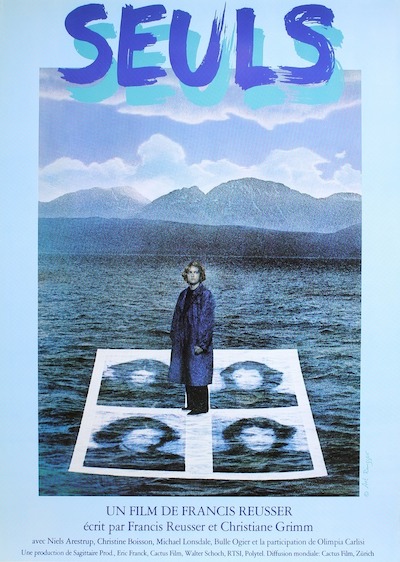
“Seuls is a film about the symbolic order of love, a sort of fantastic thriller on Oedipus…” ~Francis Reusser
Synopsis:
Jean (Niels Arestrup), the lead character in this psychological journey is torn by a search for his lost childhood, the overwhelming need to love a woman of his dreams (someone he has invented), and a struggle with his latent bisexuality. Jean finds some photos inside an automatic photo station that look like his mother who died soon after he was born. He starts to fantasize about the woman, giving her a name and identity and waiting for her to appear. During this time, he meets Carole (Christine Boisson) and has an affair with her, all the while pretending he has this other relationship with the woman in the photo. Significantly, the couple who introduce him to Carole is childless, and they eventually split up – perhaps a comment on the importance of childhood to the adult world. In the end, Carole discovers that Jean’s “other woman” has no real existence, causing a crisis that finds a symbolic expression as the last scenes close on the story.Read More »

Adolpho Arrietta was a major figure in the new cinemas that appeared in the sixties and seventies in various countries. Thus he became one of the fundamental film directors in the history of Spanish cinema. As with Buñuel, a long exile seems to have been the condition that allowed his work to keep up with the most important trends in the cinema of his era. Throughout the seventies he produced a series of “punk à la française” films, as Severo Sarduy called them, which for their originality and influence are among the most important in French cinema of that decade. In 1989 he returned to Madrid, and despite noteable intervals, which other Spanish film directors of his generation also experienced, his work proceeded. Alone, like in the era of El crimen de la pirindola but with a digital camera, he produced what for the moment is his latest film: Vacanza permanente (2006).Read More »

Thomas Lemercier on Cineuropa wrote:
Pierre is a Parisian in his fourties whose life consists of his morning coffee in a run-down apartment, his phones, his keys, his computer on the train, page 9 of the fourth version of a file, then a demonstration of robotics to some clients, in English. But through the window, are emerging the outlines of a new journey, of a recovery (he does not yet know how radical it will be), of his existence. These outlines are the snow-capped peaks and the glacier where Thomas Salvador sets the scene (and a tent) for his second feature film, The Mountain [+], revealed in the Directors’ Fortnight at the 75th Cannes Film Festival. Read More »

Louis, a nine-year-old boy from Paris, spends his summer vacation in a small town in Brittany. His mother Claire has lodged him with her girlfriend Marcelle and her husband Pelo while she’s having her second baby. There Louis makes friends with Martine, the ten-year- old girl next door, and learns from her about life.Read More »
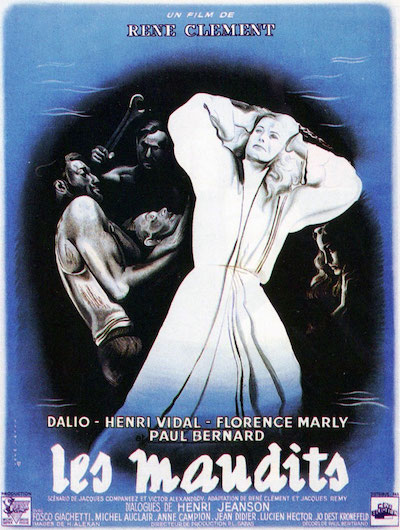
At Oslo in 1945, a French doctor, Guilbert, is abducted by a group of Nazis and taken aboard their submarine. The Germans plan to evade capture by the Allies by steering a course for South America. Guilbert finds himself in the company of several unsavoury fugitives, including a Gestapo chief, a German general, an Italian industrialist and a French journalist who collaborated with the Nazis. When news of the armistice is received, mutiny breaks out aboard the submarine.Read More »
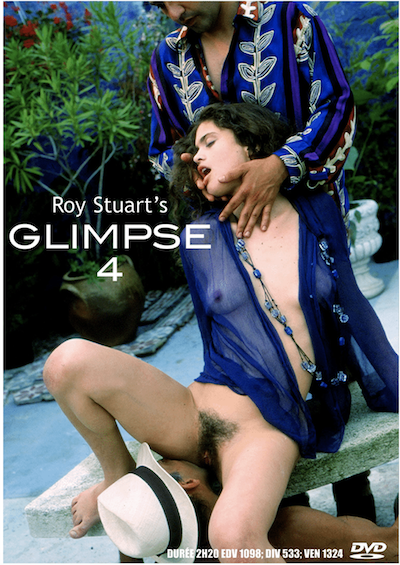
Review of Glimpse 4 by Victor Westman
Another generously-crammed club-sandwich of a Roy Stuart video, with mostly tasty ingredients spilling out in all directions and in totally variable proportions. You never know whether a leisurely scene-opening is going to lead in to a brief short or to an extended twelve minutes or more. Two-minute prototypes here include a high-heel-teetering bookshop seductress, walking in to administer mouth relief to bemused Taschen browsers (may we have a second edition, please!), and a café-scene involving Cyril, a woman friend, a waitress, peeks up skirts on a spiral staircase, and a loo engaged when most needed.Read More »

Quote:
Disc two travels back in time for two late-Twenties American shorts before heading off to France for three late-Forties/early-Fifties films, including the epic Lettrism manifesto, Jean Isidore Isou’s Venom and Eternity (also known by the far better title Treatise on Slime and Eternity, 1951). From the former group only James Watson and Melville Webber’s expressionist adaptation of The Fall of the House of Usher (1928) is of any note, while two of the three later films, Jean Mitry’s Pacific 231 (1949) and Dimitri Kirsanoff’s Arriere Saison (1950), serviceably employ techniques that had reached their fulfillment thirty years prior. Venom and Eternity is supposed to be the cherry on the cake—a rarely seen controversial feature with 34 minutes of restored footage.Read More »