A poet is hired by the owner of a wax museum in a circus to write tales about Harun al Raschid, Ivan the Terrible and Jack the Ripper. While writing, the poet and the daughter of the owner, Eva, fantasize the fantastic stories and fall in love for each other.Read More »
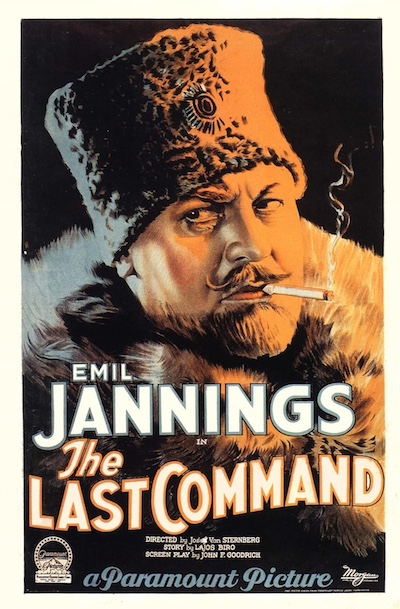
The most incendiary of Nazi Germany’s anti-British films, and one of the most audaciously cynical movies ever made. Conceived by Joseph Goebbels’ Propaganda Ministry as a propagandistic blockbuster, this lavish production leaves no stone unturned in its bitter indictment of Great Britain, which at the time (early 1941) stood alone as Germany’s wartime foe. In its historical re-enactment of the Second Boer War, Ohm Krüger depicts Britain as a relentlessly aggressive power, hell-bent on world domination; the film’s remarkable set pieces feature a scotch-swilling Queen Victoria, a cruelly conniving Cecil Rhodes and a Winston Churchill look-alike who presides over a murderous concentration camp. On the Boer side stands saintly “Uncle” Krüger, portrayed as a model of simple dignity and unerring moral right by one of the world cinema’s greatest actors, Emil Jannings. Read More »
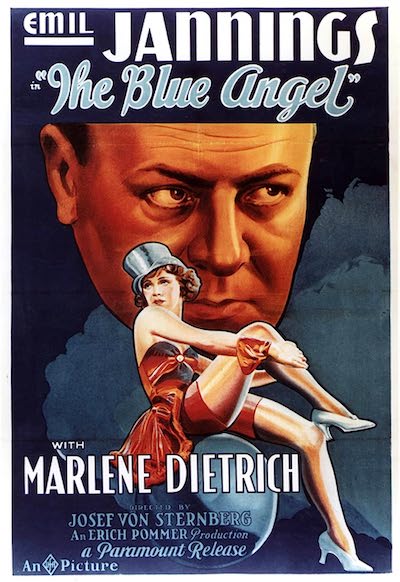
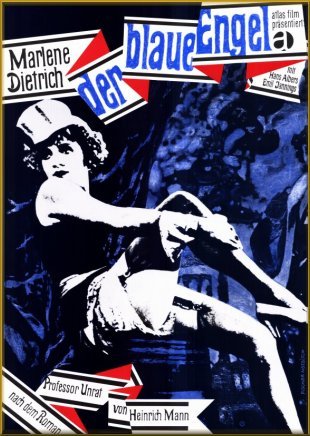
Immanuel Rath is a stuffy, disciplinarian professor who is shocked to discover his students passing around a postcard of Lola-Lola, a singer at The Blue Angel cabaret. Hoping to catch his students there, Professor Rath visits the nightclub and witnesses Lola-Lola’s performance. Entranced by her dissolute charms, he gets drunk on champagne and spends the night with her. The ensuing scandal causes him to lose control of his students and he is terminated from his position. Returning to Lola, he agrees to marry her and joins the troupe. His humiliation at having to play a clown onstage is compounded by Lola’s attraction to the strongman Mazeppa. To make matters worse, the troupe returns to the professor’s hometown, forcing him to acknowledge how far he has fallen.Read More »
Quote: In 1919, before Ernst Lubitsch was known for his famous “touch,” the master director made something like nine films–a perfect opportunity for an artist to really practice his craft. Even he had to start somewhere.
Madame du Barry was retitled Passion to avoid the anti-German sentiment after World War I. Even though it was a French title and a French story, in Europe the movie was connected to the German director Ernst Lubitsch. Lubitsch’s name appeared nowhere in the American posters or movie titles so the movie wouldn’t bomb in America.Read More »
Quote: “The rule of coal is gone. The bios plants will provide power to the world from today!” In this rediscovery of Weimar cinema, a dystopian vision of unfettered capitalism that is eerily contemporary, a coal miner makes a Faustian pact with the otherworldly Algol, an alien who teaches him how to harness the energy of his home star and become the most powerful man on earth. Together they become megalomaniacal CEOs of the “Bios-Werke,” lording over the nations of the world by monopolizing renewable energy and by turning workers into slaves.Read More »
Storyline: Prologue: The murderer “Boss” Huller – after having spent ten years in prison – breaks his silence to tell the warden his story. “Boss”, a former trapeze artist, and his wife own a cheap side-show that displays ”erotic sensations”. But he longs for his former glamorous life in the circus. When he meets the orphan Berta-Marie, he falls under her spell and leaves his wife and young son behind. He makes Berta-Marie his partner in a new trapeze number. One day, the famous trapeze artist Artinelli takes note of them and engages them for his trapeze show in Berlin. Their salto mortale becomes an immediate sensation. Calculatedly and cold, Artinelli seduces Berta-Marie and destroys “Boss'” happiness. Written by Christian TaubeRead More »
Article: from ~ by James Steffen
Immanuel Rath is a stuffy, disciplinarian professor who is shocked to discover his students passing around a postcard of Lola-Lola, a singer at The Blue Angel cabaret. Hoping to catch his students there, Professor Rath visits the nightclub and witnesses Lola-Lola’s performance. Entranced by her dissolute charms, he gets drunk on champagne and spends the night with her. The ensuing scandal causes him to lose control of his students and he is terminated from his position. Returning to Lola, he agrees to marry her and joins the troupe. His humiliation at having to play a clown onstage is compounded by Lola’s attraction to the strongman Mazeppa. To make matters worse, the troupe returns to the professor’s hometown, forcing him to acknowledge how far he has fallen.Read More »