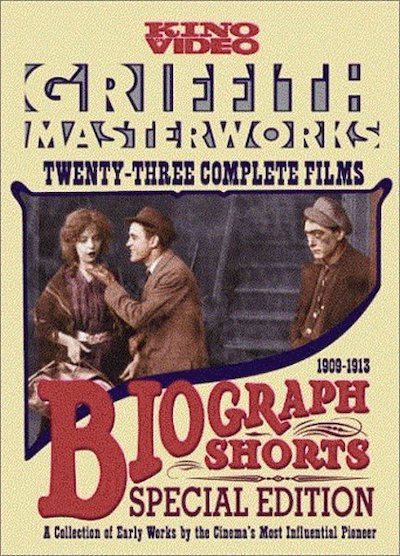

An unscrupulous and greedy capitalist speculator decides to corner the wheat market for his own profit, establishing complete control over the markets.Read More »
An unscrupulous and greedy capitalist speculator decides to corner the wheat market for his own profit, establishing complete control over the markets.Read More »
Set in an early cinema house, this comic short illustrates the problems with the gals’ hats obscuring the movie patron’s line of vision.Read More »
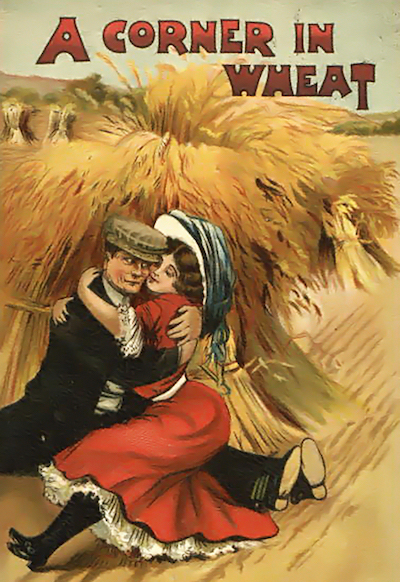
Plot: A greedy tycoon decides, on a whim, to corner the world market in wheat. This doubles the price of bread, forcing the grain’s producers into charity lines and further into poverty. The film continues to contrast the ironic differences between the lives of those who work to grow the wheat and the life of the man who dabbles in its sale for profit.Read More »

True Heart Susie is one of D.W. Griffith’s “pastoral” films, wherein plot takes second
place to characterization and romance. Lillian Gish plays Susie May Trueheart, who
so loves local boy William Jenkins (Robert Harron) that she secretly finances his
education.
As it stands, the film’s dramatic and heart-tugging value has not diminished,
not even after the passage of nearly eighty years.Read More »

Since much of this film takes place in rural Kentucky, where director D.W. Griffith grew up, it no doubt has many autobiographical touches. Since the setting was so close to his heart, that may be why this simple and winsome picture is one of Griffith’s most charming creations. With complete lack of pretension, it tells the story of John Logan Jr. (Robert Harron), an ambitious young inventor who is determined to be a success. So he heads for the big city to achieve his dream of making a toy frog that actually swims. Not that he hasn’t had opposition — his sweetheart, Jennie Timberlake (Lillian Gish, in a rare showing of her comic ability) and his parents (George Fawcett and Kate Bruce) have done everything they could to make him stay. Although he promises to return in a year’s time, John gets caught up in the temptations of the city, including a flirtation with a spirited young lady (Carol Dempster in her first credited role). Read More »
A lonely young woman lives with her strict father who forbids her to wear make-up. One day at an ice cream social, she meets a young man you seems interested in her. However, unknown to her, he is a burglar who is only interested in breaking into her father’s house. One night she is awakened by a noise. Grabbing a pistol, she enters her father’s downstairs office where she confronts a masked intruder . . . Read More »

Thwarted by his despotic uncle from continuing his love affair, a young man turns to thoughts of murder. Experiencing a series of visions, he sees murder as a normal course of events in life and kills his uncle. Tortured by his conscience, his future sanity is uncertain as he is assailed by nightmarish visions of what he has done.Read More »

Way Down East (1920) is a silent film directed by D. W. Griffith and starring Lillian Gish. It is one of four film adaptations of the melodramatic 19th century play Way Down East by Lottie Blair Parker. There were two earlier silent versions, and one sound version in 1935, starring Henry Fonda.
Griffith’s version is particularly remembered for its exciting climax in which Lillian Gish’s character is rescued from doom on an icy river. Some sources, quoting newspaper ads of the time, say a sequence was filmed in an early color process, possibly Technicolor or Prizmacolor.
Read More »