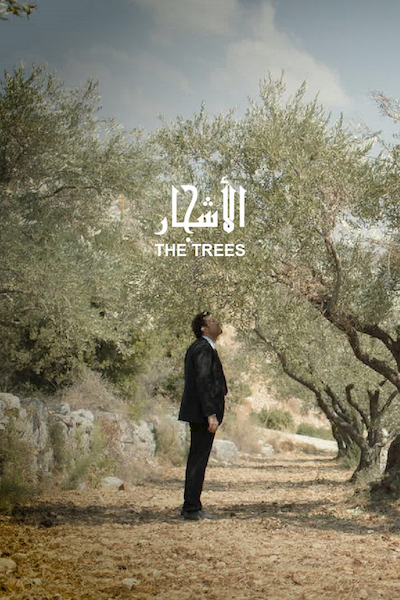

Bashir attends his father’s funeral in rural Lebanon only to discover a pathogen infecting the trees in his village. A dark comedy about tradition, grief, and the environment.Read More »
Bashir attends his father’s funeral in rural Lebanon only to discover a pathogen infecting the trees in his village. A dark comedy about tradition, grief, and the environment.Read More »

Quote:
143 RUE DU DESERT is a portrait of Malika, an elderly woman who runs a rest-stop café on the side of National 1, Algeria’s main highway. Through the various patrons who stop for eggs, coffee or tea, we become intimately acquainted with this eccentric woman, whose opinions on a variety of subject matters entertain, enlighten, and baffle in equal measure. Most of the customers know her so well that we suspect they perhaps stop not for the tea, but for her company. The film almost never leaves the inside of her small café, which serves also as her home. However, with every new shot, Ferhani manages to reveal a new fragment of this minuscule space, which keeps the film surprisingly dynamic. Ferhani does not hold sway over Malika’s representation, which is one of the most satisfying elements of the film. Malika seems aware of her character’s cinematic construction, and even dares to contradict statements about her life from one moment to the next, in a scene that is as performative as any fiction. Even though the film provides us with real-time access to this woman’s world, she retains a sense of privacy, which is the main source of the film’s mystery. (Nico Pereda)Read More »
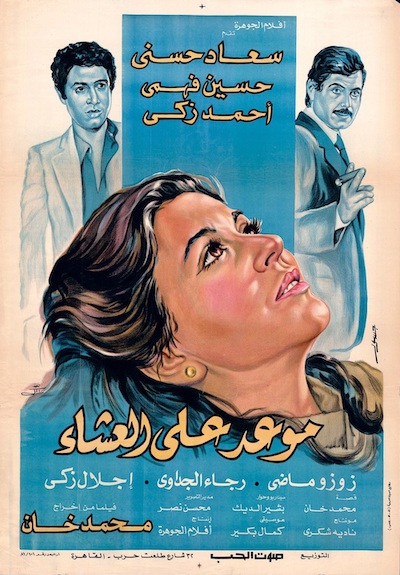
Maowid ala Ashaa is a 1981 Egyptian romance film, starring Soad Hosni and Ahmed Zaki.
This movie revolves around the story of an innocent girl (Nawal) who was married to a rich and possessive man who still wants her back after their divorce; however she meets a hair stylist (Shoukry) and falls in love with him. They get married but her first husband starts torturing Shoukry so he can leave Nawal but he refuses. Eventually, acts of revenge begins from both Nawal and her ex-husband.Read More »
Quote:
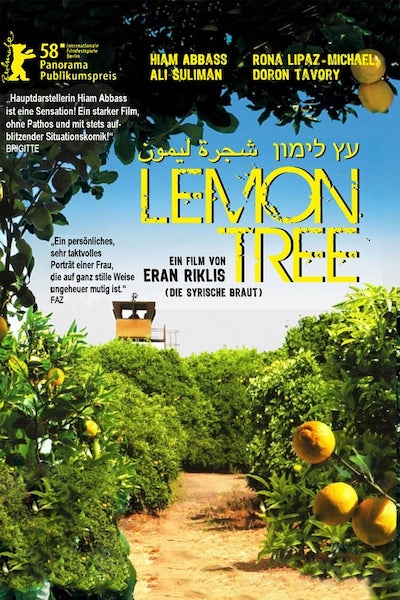
Salma, a Palestinian widow – living there for decades – , has to stand up against her new neighbor, the Israeli Defense Minister, when he moves into his new house opposite her lemon grove, on the green line border between Israel and the West Bank. The Israeli security forces are quick to declare that Salma’s trees pose a threat to the Ministers safety and issue orders to uproot them.Read More »
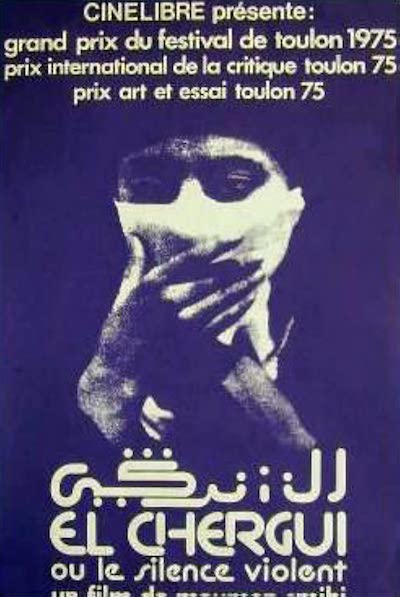
Set in the mid-1950s when Tangier was still an international zone, El Chergui presents the city on the eve of its independence, as Aïcha resorts to magical practices to try to prevent her husband from taking a second wife. Around her, a society of women creates its own form of active resistance even as the larger independence movement grows around it. Through his unique use of montage, Smihi creates arresting images that present a society torn by the contradictions of colonialism, religion, patriarchy, and resistance.Read More »

Quote:
Miloud is a barber in Darb el-Soltane, an old proletarian neighborhood in Casablanca, who struggles to maintain a semblance of dignity. Life has dealt his friend Hmida hard knocks. A countryside boy who moved to the city after his father repudiated him, he turned to petty larceny to survive, for which he served a sentence in prison. Hmida is jobless yet boisterous, while Miloud is skittish and disheartened by his friend’s objectionable activities. When a wealthy entrepreneur who wields power in the neighborhood manages to evict the barber and his wife from the shop to build a centre for Koranic instruction, Hmida incites his friend to fight back. Deemed one of Moroccan cinema’s underrated masterpieces, Hallaq Darb al-Fuqara’ is infused with disarming realist grit. Adapted from a play by Youssef Fadel, a celebrated playwright, novelist and screenwriter who hailed from Darb el-Soltane and was imprisoned for his play “The War”, the film was Mohamed Reggab’s only narrative feature. He incurred so much debt to finance the production that he even spent time in prison.Read More »

On the first day back after the summer holidays, the grand imam collapses and dies in front of his students in a prestigious university in Cairo. This marks the start of a ruthless battle for influence to take his place.Read More »

A story about an 11 year old boy, Sultan, looking for innocent love after losing his mother when he was younger. He finds an old box with his grandma’s picture and location, and decides to go all the way with his best friend to find her in a city called Alfujairah in the United Arab Emirates.Read More »

Quote:
Set in a small village in the Moroccan countryside, Alyam, Alyam tells a story culled from the lived reality of young men almost forty years ago while still remaining very much of the present day. A young man named Abdelwahed pins his dreams of a better life for himself and his family on travelling to France and finding work there. As the eldest of eight children, he becomes the principal caretaker and breadwinner for his family after his father passes away. He fills out forms and waits for his work permit to arrive. Meanwhile, Hlima, his recently widowed mother who’s reticent to let him go, tries in vain to dissuade him and enlists the help of Abdelwahed’s grandfather too. As the days flow by to the cadence of life in the countryside, marked by the hardships of farming, Abdelwahed waits. All he can do is wait. Straddling fiction and documentary, Alyam, Alyam is Ahmed El Maanouni’s first narrative feature, and the first Moroccan film ever to be selected at the Cannes Film Festival. Recently restored, the film’s splendor and finely crafted editing has become available once again for cinéphiles and new generations to discover.Read More »