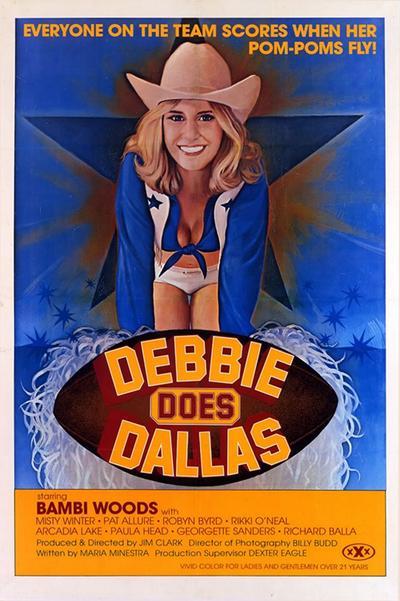

A cheerleader and her friends need to make money quickly, so they begin selling sexual services.Read More »
A cheerleader and her friends need to make money quickly, so they begin selling sexual services.Read More »

Synopsis:
In 1906, the popular Western Post newspaper sponsored a demanding cross-country horse race, attracting a motley crew of ambitious contestants. With a tempting $2,000 prize, the bold competitors–including the plucky former prostitute, Miss Jones; the ex-Rough Riders, Luke Matthews and Sam Clayton; a Mexican vaquero with a terrible toothache; the English gentleman, Sir Harry Norfolk; an ageing cowhand, and the arrogant cowboy, Carbo–will have to endure 700 miles of unforgiving desert and rugged terrain. The race is on. Who has what it takes to bite the bullet?Read More »

A film set in the front room of a Berlin commune with a large shop window leading to the street outside. The film uses an actor and an actress, a pianist (visible playing the film’s incidental music in the room next door) and occasional people on the street. Scripted action is located inside the room, unscripted on the pavement outside where passers-by occasionally stop and watch the actors in the same way that the audience is watching them on screen from a cinema or the comfort of home. The ‘intellectual/ aesthetic’ rationale for the film (in the director’s words at the time) was to: “signify the similarity of social codes in East and West; to cement – seal with a kiss (there is a central scene where the actor and actress kiss in the traditional Hollywood manner) – two systems that, despite surface differences, seduce and cajole their citizens into obedience and passivity; to emphasise the common bond of bourgeois family values and traditional role-playing prevalent in consumer capitalist and state socialist countries.” An ambitious agenda for a short film, but the serious (immaculately delivered) speeches and exchanges on personal/social positions and solutions are lightened by Woolley’s tongue-in-cheek filmic observations and the comedic role of a pianist, who provides live musical comment and life-support in the room next door. The ending, where the inmates escape from their intellectual prison to the reality of the street outside, is a simple but effective critique of the obsessive search for theoretical answers to everything that hallmarked the early 70’s. [richardwoolley.com]Read More »

Summary :
===========
This X rated feature finds a young and sexually inexperienced woman
arriving home from boarding school to find her mother having sex
with a man. Traumatized, she flees the scene and ends up in a
hippie coffee house. She smokes hashish, engages in lesbianism and
has sex with a black American medical student. Exotic dancers,
Hell’s Angels and other colorful characters are included in the young girls sexual awakening.
Read More »

Linda Loves her work, and her work is LOVE…
Linda comes to the big city in search of fun and excitement. What she finds is exploitation and abuse at the hands of a succession of sleazy guys. Searching for love, she enters into a lesbian relationship with a beautiful countess, discovers drugs and swingers’ parties and starts acting in porno movies. She also begins to write a secret diary… With a cast of some of the most stunning Euro actresses of the period, wall-to-wall sex and nudity, pot parties, porno shoots and a psychedelic soundtrack, this is a gem of 1970s exploitation cinema from Jess Franco. Street scenes shot in Benidorm (Alicante, Spain) and Las Palmas (Gran Canaria, Spain).Read More »

Quote:
Bourgeois convention is demolished in Luis Buñuel’s surrealist gem The Phantom of Liberty. Featuring an elegant soiree with guests seated at toilet bowls, poker-playing monks using religious medals as chips, and police officers looking for a missing girl who is right under their noses, this perverse, playfully absurd comedy of non sequiturs deftly compiles many of the themes that preoccupied Buñuel throughout his career—from the hypocrisy of conventional morality to the arbitrariness of social arrangements.Read More »

Quote:
Song of revolutionary hero, Valentin, sung by Jose Santollo Nasido en Santa Cruz de la Soledad; Chapala, Jalisco, Mexico.Read More »
Quote:
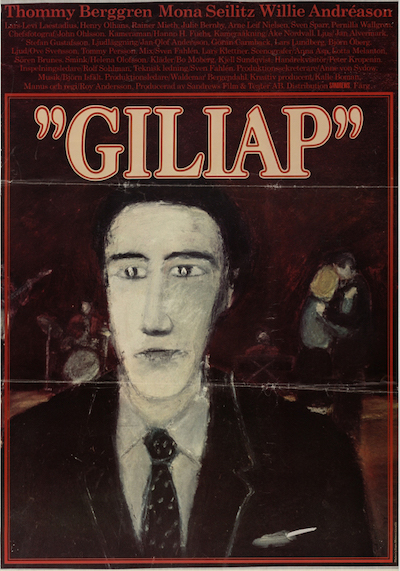
Roy Andersson premiered his second feature-length film, “Giliap”, in 1975. The film is a marked departure from “A Swedish Love Story”, and that is no accident. Success brought pressure onto Andersson to make “A Swedish Love Story II”. But he didn’t want to be someone who churned out yet another film in the same spirit, and then one more… So he changed style drastically in “Giliap”. Andersson had great hopes for the film, but it found neither a public nor positive reviews. “Giliap” did, however, win a larger reception abroad, especially in France. Yet despite its meagre successes in Sweden, the film is interesting, not least aesthetically. For here one finds the first seeds of Andersson’s distinctive film style.
In “Giliap”, actor Thommy Berggren plays a wandering day-labourer who takes employment at the fading Hotel Busarewski. The hotel is run by a wheelchair-bound misanthrope who harshly deals out orders to his staff as he reminisces about Busarewski’s former golden days.Read More »

Jutka, a young woman who works in a factory, falls in love with Andras, a university student. She pretends to be a student, to him and to his parents, and begins to live a lie. Finally she rebels against Andras and his demands and the social conventions that forced her to live a lie.Read More »