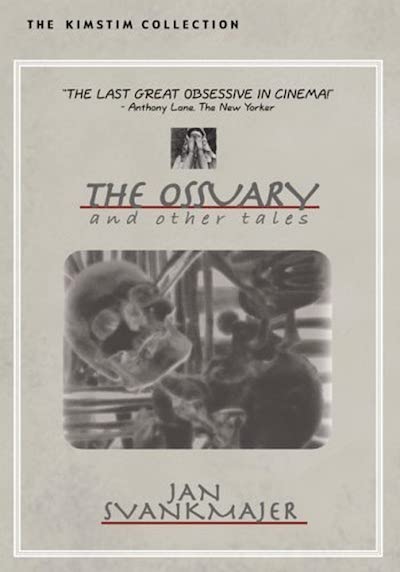

The age-old story of Don Juan, played by giant puppets.Read More »
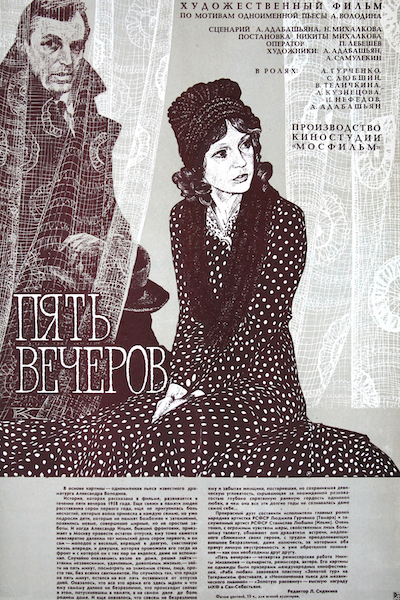
Tamara and Sasha were separated during the war. Now (1957) Sasha is visiting Moscow for five days and by chance recognizes the house where Tamara used to live. She is still living there with her nephew Slava.Read More »

Quote:
Jane Arden’s The Other Side of the Underneath is a seriously disturbing film. It is also an uncharacteristically bold one. I think that in a lot of ways it is quite similar to Bernardo Bertollucci’s Partner (1968), a film about a young revolutionary, played by Pierre Clementi, whose life changes dramatically when a double appears and foils his plan to commit suicide. In the opening scene of The Other Side, a schizophrenic woman (Sheila Allen, The Legend of Spider Forest) is pulled out of a lake and placed in an asylum.
The film is based on director Arden’s “A New Communion for Freaks, Prophets and Witches”, a play she staged with the Holocaust women’s theatre troupe. It is comprised of a number of different episodes, each exploring a specific theme – female exploitation, voyeurism, sexual deprivation, etc. The Other Side is also a reflection of its creator’s brush with madness.
The key concept behind The Other Side is intriguing. The film argues that madness is part of a cycle that leads to sanity. It also stresses that this complex process is often misunderstood by those who have never experienced madness. Cultural and societal taboos are cited amongst the main reasons for its existence.Read More »

From allmovie.com
What makes an athlete compete? How can he be made to endure the gruelling training most sports require? In this image-rich combination documentary and poetic drama, participants in sports including foot-racing, wrestling, speed-skating, swimming and gymnastics are seen in their daily lives and in all stages of training and competition. Their regimens are contrasted with the efforts of ordinary people to train some life into their limbs as they exercise to lose weight, or, as aging people, in order to stay active. In one episode, a marathon runner competing on a hot summer day in Philadelphia literally runs himself to death, and in a later dramatic re-enactment, medieval warriors hold a competitive joust. As one image piles upon another in this unique film, answers to questions about competition begin to suggest themselves.Read More »

Synopsis
Evocation of a province, the Northeast Portuguese, whose historical roots, secular, not confuse the country’s brother, the Douro league.
Children and mothers, women and children, house and land. Daily life, imagination, disappearing arts, the subsistence agriculture. Erosion. The time and distance. The absent presence of the departed to all horizons.Read More »

In 1975, the American Film Institute bestowed upon Orson Welles their third Lifetime Achievement Award. (The first went to John Ford and the second to James Cagney.) This program, which originally aired on CBS, features a host of actors and other celebrities — Frank Sinatra, Johnny Carson, Joseph Cotton and Charlton Heston — who pay tribute to Welles’ brilliant but tumultuous career.
Throughout the night, many different people speak about the filmmaking contributions Welles made throughout his career, and clips from many of Welles’ films — Citizen Kane, The Magnificent Ambersons, The Lady from Shanghai, Touch of Evil, Falstaff etc. — are shown. It’s rumored that Welles didn’t want to show up unless the AFI would let him show some clips from his then in-production but now-incomplete film, The Other Side of the Wind, so the AFI indulged him and let him show a few clips. (The last screen grab is from one of the film’s scenes.)
For Welles fans, this is a must-see event, as it’s great to see him honored by so many of his colleagues.Read More »

Quote:
Writer and pedagogue Fernand Deligny influenced a number of artists and French intellectuals. His work on autism influenced Deleuze and Guattari’s theory of the rhizome. Francois Truffaut turned to his ideas to complete Les 400 Coups. Throughout the film Deligny plays with the possibilities of the camera to live and think closer to the human subject, offering with Le Moindre Geste a unique film to the world, one of most fascinating in French cinema. Situated [visually] between mountain western and integral neorealism, the film tells the story of two teenagers, escaped prisoners of an asylum, running away through the Cevennes.Read More »

Quote:
For their 35mm Materialfilme (1976), the Heins randomly spliced together a mix of color and black and white material taken from the header and footer of commercial films. The scratches, scribbles, hand-written and commercially printed numbers and dots that adorn such footage rush past the eye until they are replaced by images consisting only of washed-out colors or scratched black and white frames. The Heins acquired this material during their years as programmers and projectionists for various avant-garde and commercial film screenings. […] Over the years, this watercolor paint had faded and cracked, and various blotches, scratches and other irregularities have scarred the surface of the filmstrip. In projection, these marks of the material enter into arbitrary rhythmic relationships with the movement of color and the interrupting flashes of white light.Read More »
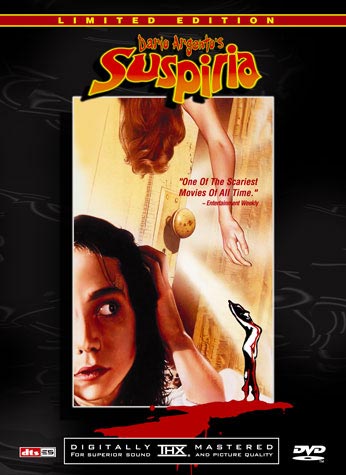
PLOT SUMMARY:
A young American dancer travels to Europe to join a famous ballet school. As she arrives, the camera turns to another young woman, who appears to be fleeing from the school. She returns to her apartment where she is gruesomely murdered by a hideous creature. Meanwhile, the young American is trying to settle in at the ballet school, but hears strange noises and is troubled by bizarre occurrences. She eventually discovers that the school is merely a front for a much more sinister organization.
source = IMDB
Read More »