1970s

  • Federico Fellini – Roma AKA Fellini’s Roma [+Extras] (1972)

    1971-1980ArthouseDramaFederico FelliniItaly

    The New York Times review, Published: October 16, 1972

    Roger Greenspun wrote:
    “Fellini’s Roma” is perhaps three-quarters Fellini and one-quarter Rome; a very good proportion for a movie. Although an appreciation of the city informs every part of the movie, Rome is not so much the subject as the occasion for a film that is not quite fiction and surely not fact, but rather the celebration of an imaginative collaboration full of love and awe, suspicion, admiration, exasperation and a measure of well-qualified respect.Read More »
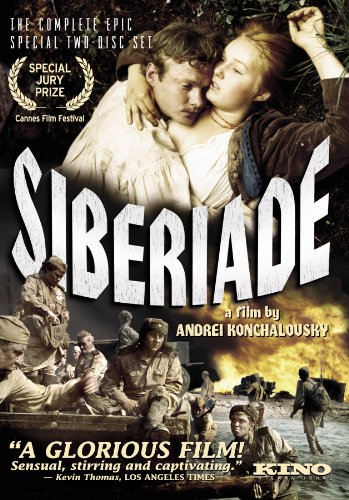
  • Andrei Konchalovsky – Sibiriada aka Siberiade (1979)

    1971-1980Andrei KonchalovskyDramaEpicUSSR

    29f7c043f76a2bde437fd0d52a185152

    Amazon.com
    This ambitious 1979 Russian film attempts no less a feat than the encapsulation of the tumultuous history of Russia in the 20th century. Written and directed by Andrei Konchalovsky (Runaway Train, Tango and Cash), the film weaves an engrossing tale of three generations of two Russian families in the remote region of Siberia, each trying in their own way to find fulfillment in their lives as they seek to reconcile themselves with the ever-changing landscape of their homeland. Sandwiched between the chaotic events of the First and Second World Wars, as well as the Russian Revolution of 1917, the people of the small village find themselves at the cusp of great changes, from communications to the expanding infrastructure and the changes that brings, to the discovery of oil and the riches and perils that come with it. Konchalovsky juxtaposes archival footage with stunning cinematography and contrasts the assaultive changes of the modern world with the timeless impulses of family and the enduring need to adapt and survive. Reminiscent of such great films as Giant and 1900, Siberiade is a visually adept and stunningly effective epic about the price of a country’s history on its people. —Robert Lane
    Read More »

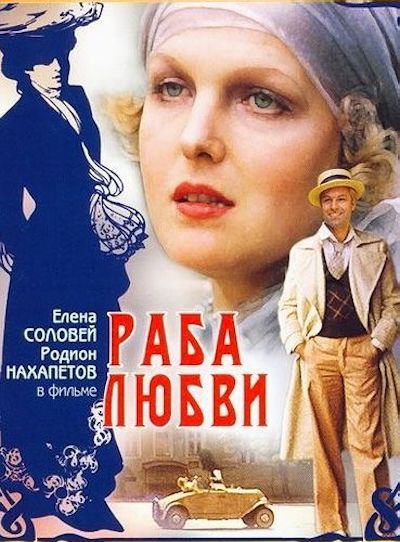
  • Nikita Mikhalkov – Raba lyubvi AKA A Slave of Love (1976)

    1971-1980DramaNikita MikhalkovUSSR

    Plot Synopsis by Hal Erickson (from allmovie.com)
    Nikita Mikhalkov examines the plight of the filmmaker operating in an uncertain political climate in his irony-laden seriocomedy Slave of Love. The time is 1918, at the height of the Bolshevik revolution. A small group of filmmakers are hurriedly trying to complete a silent melodrama while the world changes all around them. As production progresses, leading lady Elena Solovei metamorphoses from self-centered movie star to committed revolutionary. Normally described as “Chekhovian,” director Mikhalkov borrows a few pages from Pirandello. With Slave of Love he gained his first serious international attention.Read More »

  • Nikita Mikhalkov – Neskolko dney iz zhizni I.I. Oblomova AKA A Few Days in the Life of I.I. Oblomov (1979)

    Drama1971-1980ArthouseNikita MikhalkovUSSR

    Synopsis:
    St. Petersburg, mid 19th century: the indolent, middle-aged Oblomov lives in a flat with his older servant, Zakhar. He sleeps much of the day, dreaming of his childhood on his parents’ estate. His boyhood companion, Stoltz, now an energetic and successful businessman, adds Oblomov to his circle whenever he’s in the city, and Oblomov’s life changes when Stoltz introduces him to Olga, lovely and cultured. When Stoltz leaves for several months, Oblomov takes a country house near Olga’s, and she determines to change him: to turn him into a man of society, action, and culture. Soon, Olga and Oblomov are in love; but where, in the triangle, does that leave Stoltz?Read More »

  • Paul Morrissey – Women in Revolt (1971)

    Drama1971-1980ComedyPaul MorrisseyUSA

    29f7c043f76a2bde437fd0d52a185152

    Vincent Canby @ The New York Times, Feb 17, 1972 wrote:
    Probably no man, not even Norman Mailer, will ever have the last word on women’s liberation, but until ones does, perhaps the Andy Warhol-Paul Morrissey “Women in Revolt” will do. The movie is called a comedy, but it can be more accurately described as a madcap soap opera whose three manic heroines are played by female impersonators—which may be interpreted as the ultimate put-down of women’s lib, as well as the ultimate endorsement.

    More particularly, “Women in Revolt” ( as did “Trash” ) recalls Hollywood movies of the 1930’s and 1940’s, especially those slushy romances in which Alice Faye, Frances Langford and Patsy Kelly compromised everything except their virtue in their pursuit of husbands.Read More »

  • Tengiz Abuladze – Natvris khe aka The Wishing Tree (1976)

    1971-1980ArthouseDramaTengiz AbuladzeUSSR

    This adaptation of Giorgi Leonidze’s short stories sees twenty-two episodes coalesce into one phantasmagoric narrative. Set in pre-revolutionary Georgia, it follows a young woman forced into marriage by her village elders despite her love for another man. Drifting poetically from one incident to the next, this gorgeously sustained pastorale from one of Georgia’s great auteurs creates a sense of the rich tapestry of Georgian village life, and the tragic consequences of community dispute.Read More »

  • Hellmuth Costard – Fußball wie noch nie AKA Soccer As Never Before (1971)

    Documentary1971-1980ExperimentalGermanyHellmuth Costard

    29f7c043f76a2bde437fd0d52a185152

    The sun shone on Old Trafford on 12th September 1970 as Manchester United beat Coventry 2:0 in a league match. It was not an important victory; that season Man Utd would only be also-rans in the race for the championship. But a record was preserved of the match that is probably unique in the history of film and television. Using eight 16mm cameras, Hellmuth Costard, one of the most important experimental filmmakers in German cinema of the 60s and 70s, followed every move over the 90 minutes of the man in the red jersey with the number 11 – traditionally associated with the conventional outside left, but here worn by the mercurial George Best.Read More »

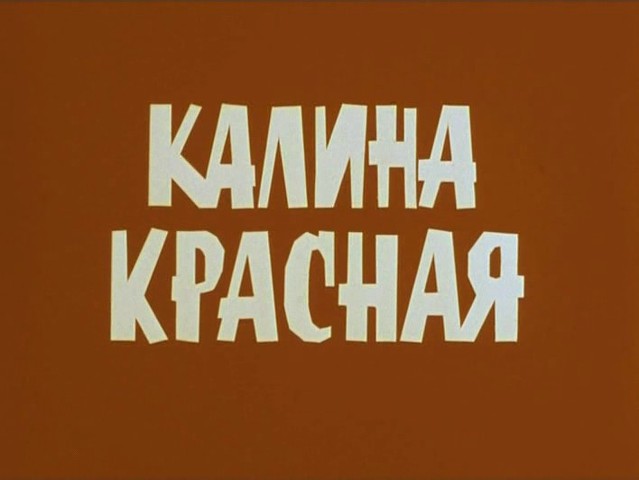
  • Vasili Shukshin – Kalina krasnaya AKA The Red Snowball Tree (1973)

    1971-1980DramaUSSRVasili Shukshin

    29f7c043f76a2bde437fd0d52a185152

    Quote:

    Drama of a man who tried to live a new life. Yegor Prokudin (Vasili Shukshin) is a child of a street who grew up in a criminal gang. While he was free, he did not lose his innocent, joyful heart, but many years in prison have taken away his joy in living. The film opens on the occasion of his release from prison. Soon, he discovers love with a village peasant girl, Lyuba (Lidia Fedoseeva-Shukshina), who was lettering him in jail and restores his will to live and fills him with an enthusiasm for rural life. There are dark shadows on his way for better being – his past and his old mother he never visited from childhood times. (Actually, the scene where Lyuba talks to his mother was shooted with non-acting old village women) Their idyll is short-lived, as his former associates will not leave him alone.
    Read More »

  • James Bidgood – Pink Narcissus (1971)

    1971-1980CultEroticaJames BidgoodQueer Cinema(s)USA

    29f7c043f76a2bde437fd0d52a185152

    Before the art duo Pierre et Gilles, before fashion photographer David LaChapelle, before the artist Jeff Koons, and before the neo-Pop movement broke, there was director James Bidgood and his film PINK NARCISSUS. A cult classic, it is so considered more for its highly artistic production values than for its narrative.

    The film is essentially a piece of gay erotica (more erotic than explicit) about an impossibly handsome young man (played by Bobby Kendall), obsessed with his own beauty and youth, who escapes the realities of street life through intricately choreographed fantasies in which he portrays a Roman slave, a matador, a wood nymph, and a harem boy. Characterized by searingly bright colors and highly stylized visual elements (sets, props, and costumes), Bidgood’s design for the film has been endlessly emulated by commercials and photographers to this day. PINK NARCISSUS is a “must see” for anyone interested in contemporary art, the pre-Stonewall sensibility, or the history of underground film.
    Read More »

Back to top button