1960s

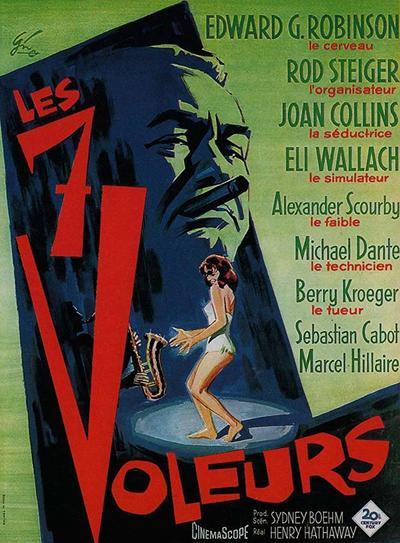
  • Henry Hathaway – Seven Thieves (1960)

    Drama1951-1960CrimeHenry HathawayUSA

    29f7c043f76a2bde437fd0d52a185152

    Quote:
    Discredited professor Edward G. Robinson organizes a seven-person criminal gang. Robinson plans to steal a fortune from the underground vaults of the Monte Carlo casino. Despite a few tense moments, the plot moves like clockwork. Alas, Robinson isn’t around long enough to enjoy the fruits of his labors. As for the other criminals, they find that fencing their stolen booty is next to impossible. All they come away with is $3000–won legitimately at the gaming tables. Those not interested in the male contingent of Seven Thieves (Robinson, Rod Steiger, Eli Wallach et. al.) are advised to feast their eyes upon leading-lady Joan Collins, in her considerable prime. ~ Hal Erickson, RoviRead More »

  • Giovanni Guareschi & Pier Paolo Pasolini – La rabbia AKA Anger (1963)

    1961-1970DocumentaryGiovanni GuareschiItalyPier Paolo PasoliniPolitics

    “La Rabbia” employs documentary footage (from the 1950s) and accompanying commentary to attempt to answer the existential question, Why are our lives characterized by discontent, anguish, and fear? The film is in two completely separate parts, and the directors of these respective sections, left-wing Pier Paolo Pasolini and conservative Giovanni Guareschi, offer the viewer contrasting analyses of and prescriptions for modern society. Part I, by Pasolini, is a denunciation of the offenses of Western culture, particularly those against colonized Africa. It is at the same time a chronicle of the liberation and independence of the former African colonies, portraying these peoples as the new protagonists of the world stage, holding up Marxism as their “salvation,” and suggesting that their “innocent ferocity” will be the new religion of the era. Guareschi’s part, by contrast, constitutes a defense of Western civilization and a word of hope, couched in traditional Christian terms, for man’s…Read More »

  • Zoltán Huszárik – Elégia AKA Elegy (1966)

    1961-1970ExperimentalHungaryShort FilmZoltán Huszárik

    This 20 minute experimental short is generally considered to be the start of a new visual style in Hungarian filmmaking. Often called a “film poem” or a “film symphonie”, Huszárik’s masterpiece begins with wild horses, and ends in the slaughterhouse. The film is thought to be an allegory to the human fate.Read More »

  • Kon Ichikawa – Taiheiyo hitori-botchi aka Alone on the Pacific (1963)

    Drama1961-1970AdventureJapanKon Ichikawa

    Synopsis:
    Director Kon Ichikawa’s (An Actor’s Revenge, The Burmese Harp, Tokyo Olympiad) incredible real-life tale of one man’s epic journey across the Pacific Ocean is based on Kenichi Horie’s best-selling book of the same name. A year previously, at only 23 years old, Horie took his basic sailboat (named ‘The Mermaid’) and set off from Nishinomiya in Japan, arriving in San Francisco, California 94 days later. Man’s battle against nature is amongst the timeless themes of Ichikawa’s beautifully shot, inspiring film.Read More »

  • Mikio Naruse – Midareru AKA Yearning (1964)

    1961-1970DramaJapanMikio Naruse

    29f7c043f76a2bde437fd0d52a185152

    Slant Magazine wrote:
    At first, Yearning appears to be a typically late-Narusian offering, a low-key and observational drama that obsessively details Reiko’s day-to-day routines. In addition to keeping her small business afloat, Reiko must deal with her meddling in-laws, who have their minds set on selling the grocery store, and also attend to Koji, who inexplicably indulges in a rebellious cycle of petty crime and violence. One of Naruse’s great talents is in making the mundane mysterious so when Koji declares, seemingly out of nowhere, that he’s been in love with Reiko for years, it takes more than a few moments to acclimate to the film’s suddenly malleable emotional terrain, even though, in retrospect, it makes perfect psychological sense. It’s a shock to witness how charged and raw the duo become after Koji’s admission, and Naruse’s camera, under the guiding eye of cinematographer Jun Yasumoto, never blinks, maintaining a harsh, voyeuristic presence as the characters move, like increasingly frenzied celestial bodies, through a space made unfamiliar because of a naked confessional moment.Read More »

  • Haskell Wexler – Medium Cool (1969)

    1961-1970DramaHaskell WexlerPoliticsUSA

    29f7c043f76a2bde437fd0d52a185152

    Quote:
    It’s 1968, and the whole world is watching. With the U.S. in social upheaval, famed cinematographer Haskell Wexler decided to make a film about what the hell was going on. Medium Cool, his debut feature, plunges us into the moment. With its mix of fictional storytelling and documentary technique, this depiction of the working world and romantic life of a television cameraman (Robert Forster) is a visceral cinematic snapshot of the era, climaxing with an extended sequence shot right in the middle of the riots surrounding the Democratic National Convention in Chicago. An inventive commentary on the pleasures and dangers of wielding a camera, Medium Cool is as prescient a political film as Hollywood has ever produced.Read More »

  • Orson Welles – The Merchant of Venice [Rushes] (1970)

    Drama1961-1970Orson WellesTVUSA

    Footage from Shylock’s monologue filmed by Orson Welles in connection with his unfinished film The Merchant of Venice.
    According to the accompanying notes by Hervé Pichard, head of restoration at La Cinémathèque Francaise, the rushes were restored in 2025 by the film museum. The 4K work was carried out using a 16mm double-strip work print (Eastmancolor film, 1969) deposited in its collections by Welles’ longtime companion and collaborator Oja Kodar.Read More »

  • Pierre Prévert – Le petit Claus et le grand Claus AKA Little Claus and Big Claus (1964)

    Arthouse1961-1970FantasyFrancePierre Prévert

    29f7c043f76a2bde437fd0d52a185152

    Synopsis
    Once upon a time there lived in the same village two men bearing the very same name. One of them chanced to possess four horses, the other had only one horse, so, by way of distinguishing them from each other, the proprietor of four horses was called “Great Claus,” and he who owned but one horse was known as “Little Claus”…Read More »

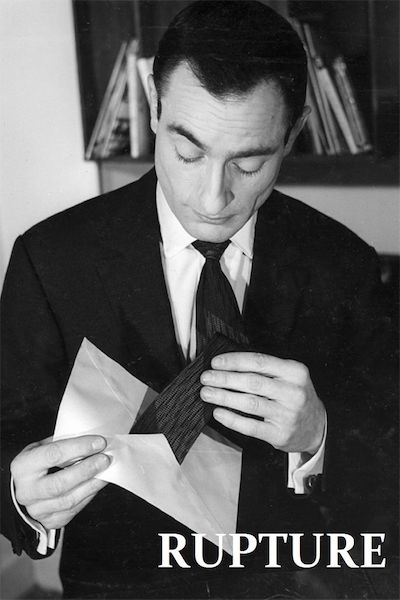
  • Pierre Étaix & Jean-Claude Carrière – Rupture (1961)

    France1961-1970ComedyJean-Claude CarrièrePierre ÉtaixShort Film

    When picking up his mail, a man is excited to see a letter from his sweetheart. His excitement turns to sorrow when he gets home to his flat and sees that it is a Dear John letter. But that sorrow turns to anger as he figures that he will send her a Dear Jane letter in return. However, writing that letter isn’t as easy as he hopes as he encounters one problem after another, from a broken fountain pen, to a temperamental ink well, to stuck stamps, to a broken desk.Read More »

Back to top button