1960s

  • Lucio Fulci – I Maniaci aka The Maniacs (1964)

    1961-1970ComedyItalyLucio Fulci

    29f7c043f76a2bde437fd0d52a185152

    Plot Synopsis by Robert Firsching
    A minor comedy from Italian filmmaker Lucio Fulci (Zombi 2; L’Aldila), this anthology is of interest primarily to cult devotees for marking the notorious director’s only collaboration with legendary “scream queen” Barbara Steele (La Maschera del Demonio). Lushly photographed and filled with popular comedians of the era (including Franco Franchi and Ciccio Ingrassia, who made several of their “Franco and Ciccio” comedies with Fulci), the film’s sketches spotlight various manias. As might be expected, nymphomania gets an extended treatment, with all the requisite mugging, leering, and smarmy asides common to Italian comedies of the period, as well as a lengthy parade of songs, many scored by Ennio Morricone, and some international burlesque performers. Enrico Maria Salerno and Walter Chiari lead a cast which includes Lisa Gastoni, Gaia Germani, Umberto d’Orsi, and Raimondo Vianello.Read More »
  • Kon Ichikawa – Bonchi (1960)

    1951-1960AsianDramaJapanKon Ichikawa

    29f7c043f76a2bde437fd0d52a185152

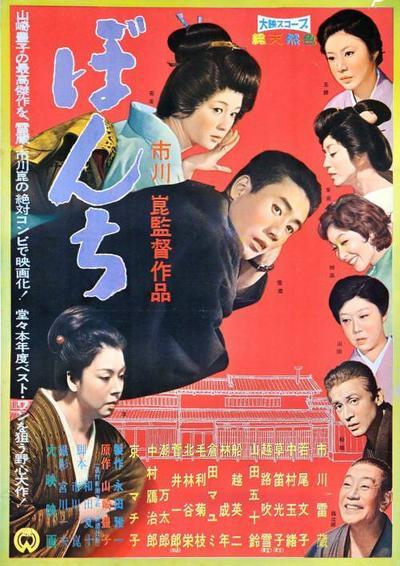
    Where Ichikawa skewered patriarchal family values in Her Brother, in this savage satire he hoists the matriarchal system on its own apron strings. Raizo Ichikawa (“in his best role yet”-Variety) is the scion of an Osaka merchant family whose traditional power is matrilineal. Instructed by his overbearing mother and grandmother to give them an heiress for the family business, he stands by helplessly as wife after wife is thrown out of the house for producing sons. Driven to a life of dissipation-his mistresses also fail to produce daughters-in the end he is just too tired to care. Ichikawa’s frighteningly funny picture of the matriarchy’s efforts to perpetuate itself was received as antifeminist, if not downright misogynistic, but Joan Mellon suggests that the target once again is “the institution of the family [which] places its own survival ahead of the needs and feelings of individuals.” If this looks forward to The Makioka Sisters, so does Donald Richie’s comment, “We find this cruel matriarchal story…told in terms of the most transcendental beauty.”Read More »

  • Federico Fellini – Giulietta degli spiriti AKA Juliet of the Spirits (1965)

    Arthouse1961-1970FantasyFederico FelliniItaly

    29f7c043f76a2bde437fd0d52a185152

    Quote:
    Fellini lore has it that the master made “Juliet of the Spirits” as a gift for his wife. Like many husbands, he gave her the gift he really wanted for himself. The movie, starring a sad-eyed Giulietta Masina who fears her husband is cheating, suggests she’d be happier if she were more like her neighbor, a buxom temptress who entertains men in a tree house.Read More »

  • Henri-Georges Clouzot – La Vérité AKA The Truth (1960)

    1951-1960CrimeDramaFranceHenri-Georges Clouzot

    Plot summary from IMDB:
    Dominique Marceau is on trial for the murder of Gilbert Tellier. The counsels duel relentlessly, elaborating explanations for why the pretty, idle and fickle girl killed the talented and ambitious conductor freshly graduated from the conservatory. Was it passion, vengeance, desperation, an accident? The acquaintances of Gilbert testify, as well as Dominique’s former lovers, and her sister, Annie, the studious violin player engaged to Gilbert. The evidence they give progressively paints a more finely-shaded picture of the personalities of Dominique and Gilbert, and of their relationship, than the eloquent and convincing justifications of the counsels.Read More »

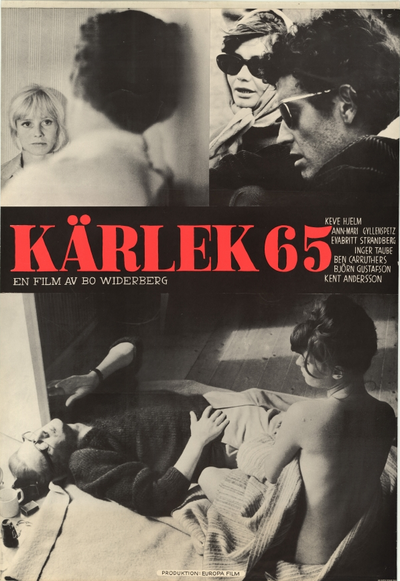
  • Bo Widerberg – Kärlek 65 AKA Love 65 (1965)

    Drama1961-1970ArthouseBo WiderbergSweden

    29f7c043f76a2bde437fd0d52a185152

    Foreword: Love 65 shares common elements from director Michelangelo Antonioni, Federico Fellini and Jean-Luc Godard. Especially Fellini’s “8½” and Godards “Contempt” (both from 1963) which also deals with filmmakers, shares a striking resemblance to Love 65.

    Synopsis: The movie is entirely built upon Keve, a successful movie director. He has a conveniently located cabin in the Kåseberga area on Österlen in Skåne, a beautiful wife, Ann-Marie, and daughter, Nina. All things considered, he should be happy but instead he feels unharmonical, lonely and disoriented. As every other summer he has invited his friends to a small party. Inger and Kent, a young couple in the divoce process are also there. During the preparations for the party, Keve leaves the cabin and walks about in the nearby village. He finds a poster which announces a lecture being held this day. He knows the lecturer Björn briefly and decides to go listen to what he has to say. At this very lecture he finds Björns wife Evabritt who makes a profound impression on Keve…Read More »

  • Henrikas Sablevicius – Atspindziai AKA Reflections [Restored] (1968)

    1961-1970ArthouseFantasyHenrikas SableviciusUSSR

    29f7c043f76a2bde437fd0d52a185152

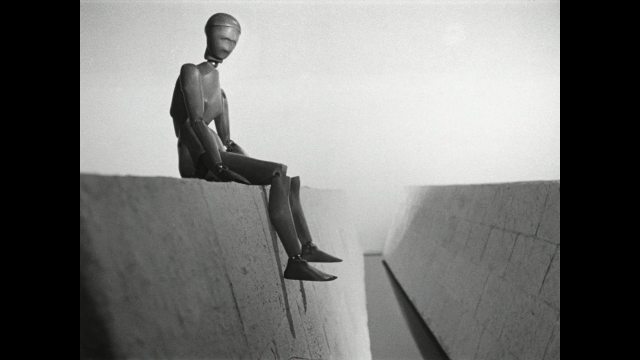
    “Reflections” is a film created by Henrikas Šablevičius and the national television. Back then, the movie was seen as unconventional in the context of Lithuanian cinema: it employs a surrealistic etude of no clear narrative and has an extreme form. Thus, immediately after the release it was banned and had been unnoticed for almost two decades. By bringing graphic artist Stasys Krasauskas’ works to life in the conditional spaces of “Reflections”, the director, only by means of images, creates a story about human’s duality, the search for self, liberation, accepting the agency of the past and a limited opportunity to choose.Read More »

  • Yves Allégret – Germinal (1963)

    1961-1970DramaFranceYves Allégret

    Synopsis
    Adaptation of Zola’s novel about 18th-century French coal miners going on strike to fight for better conditions.Read More »

  • Ebrahim Golestan – Ganjine-haye gohar AKA The crown jewels of Iran (1965)

    1961-1970DocumentaryEbrahim GolestanIran

    Quote:
    Made for the Central Bank of Iran to celebrate the collection of precious jewels kept in the treasury, this film remains filmmaker Ebrahim Golestan’s most visually dazzling work, embellished with terrific camera movements.

    Some of the most iconic landscape photography in the history of Iranian cinema can be found within a minute after the opening credits, in which peasants of various ethnicities and tribes are quickly reviewed, all posed in a graceful manner, like kings without being kings. Like a work of musical composition, a simple act of ploughing is spread across shots of various size and angle, creating an intimate visual symphony. And then appears one of Golestan’s allegorical match-cuts: a farmer seen on the horizon before a cut to a diamond on a dark background – the farmer is the jewel.Read More »

  • Jirí Menzel – Skrivánci na niti AKA Larks on a String [+Extra] (1969)

    1961-1970ArthouseCzech RepublicDramaJirí Menzel

    29f7c043f76a2bde437fd0d52a185152

    Long-Repressed Tale of Repression
    The junk heap to which the characters of “Larks on a String” are consigned is a kind of paradise. Here, in the early 1950’s, former members of Czechoslovakia’s banished bourgeoisie are nominally engaged in forced labor, but in fact are free to play cards, discuss philosophy, joke sardonically about their situation and languish as they choose.

    The men in this group — among them a professor who refused to destroy decadent Western literature, a saxophonist whose very instrument was considered an offense against the state and a lawyer who upheld the radical idea that a defendant ought to be allowed to plead his case — also spend a lot of time trading secret smiles and sidelong glances with a group of female prisoners nearby. The women, dressed in drably functional uniforms, nonetheless manage to look nymphlike as they laugh and frolic and hum little tunes. The setting is bleak and the season unspecified, but in spirit, it might as well be spring.Read More »

Back to top button