Tokyo, 1934. Gang boss Arakawa is too ill and a successor must be named. The choice falls on Nakai, but being an outsider he refuses and suggests senior clansman Matsuda instead. But Matsuda is in jail and the elders won’t wait for his release, so they appoint the younger and more malleable Ishido to take the reins. Clan honour and loyalties are severely tested when Matsuda is released, resulting in an increasingly violent internal strife. An atmospheric tale of gangland intrigue written by Kazuo Kasahara (Battles Without Honour and Humanity) and starring Tomisaburo Wakayama, (Lone Wolf and Cub, The Bounty Hunter Trilogy) and genre legend Koji Tsuruta, Big Time Gambling Boss is one of the all-time classics of the yakuza genre. Paul Schrader called it the richest and most complex film of its type, while novelist Yukio Mishima hailed it as a masterpiece.Read More »
1960s
-
Kôsaku Yamashita – Bakuchiuci: Sôchô Tobaku AKA Big Time Gambling Boss (1968)
1961-1970CrimeJapanKôsaku YamashitaThriller -
Hans Rolf Strobel & Heinrich Tichawsky – Notizen aus dem Altmühltal aka Notes from the Altmühltal (1961)
1961-1970DocumentaryGermanyHans Rolf StrobelHeinrich TichawskyShort FilmA sociological essay on a Bavarian region where the economic miracle is left out. The documentary emphasises the declining populations due to migration and notes how such places come with “a lot of past [but] not much present or future”.Read More »
-
Maurice Cloche – La porteuse de pain AKA The Bread Peddler (1963)
1961-1970DramaFranceMaurice Cloche

A young woman by the name of Jeanne Fortier finds herself the victim of a terrible miscarriage of justice
Quote:
The first half of the sixties saw a mini-boom of French old melodramas of the nineteenth century.The most celebrated of them “Les Mysteres de Paris” (someone’s reading that book in Cloche’s film) was filmed by André Hunebelle in 1962 with poor results;Riccardo Freda tackled D’Ennery’s “Les Deux Orphelines” (which was made by Griffith as “Orphans of the storm” in the silent era and remade by Maurice Tourneur in the thirties ) and “Roger la Honte” .
Maurice Cloche took “la Porteuse de Pain” (= bread carrier)-which he had already filmed in 1949-and succeeded measurably well;the loooong novel was simplified with good results.Read More » -
Emilio Vieyra – Sangre de vírgenes AKA Blood of the Virgins (1967)
1961-1970ArgentinaCultEmilio VieyraHorrorA blood drenched vampire epic from the director of “The Curious Dr. Humpp”. A potent combination of Latin spice, Hammer-style horror and topless go-go dancing, this vampire movie from south of the border is a wild and untamed slice of raw cinema. A group of young swingers are on holiday in the mountains when their van breaks down. Seeking shelter in an abandoned lodge, they end up having a night none of them will soon forget… A raunchy and radical production – as you’d expect from the country that produced both Evita and Che Guevara.Read More »
-
Jürgen Böttcher – Der Sekretär AKA The Secretary (1967)
1961-1970DocumentaryGermanyJürgen Böttcher

Quote:
Presentation of a commited State Party (Socialist Unity Party of Germany) secretary at the Chemicals Combine in Buna. A former miner and small farmer rises to a leading political position – symbol of a typical Party career.Read More » -
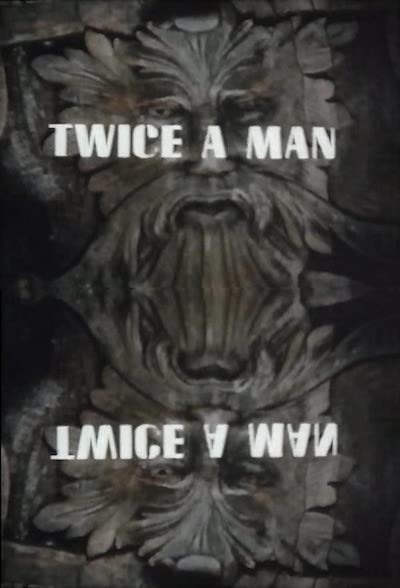
Gregory J. Markopoulos – Twice a Man (1963)
1961-1970Amos Vogel: Film as a Subversive ArtExperimentalGregory J. MarkopoulosQueer Cinema(s)Short FilmUSAQuote:
A modern recreation of the legend of Hyppolytus subtly reveals homosexual and incestual motives among its three protagonists as it mingles reality and memory. Particularly noteworthy is the attempt to portray thoughts and flashes of memory by inserting bursts of single-frame, almost subliminal shots into the main sequence which proceeds in different time and space.Read More » -
Gregory J. Markopoulos – Sorrows (1969)
1961-1970ExperimentalGregory J. MarkopoulosShort FilmUSAQuote:
Sorrows, US expatriate director Gregory J. Markopoulos’ 1969 film, shares his earlier films’—Bliss (1966) and Gammelion (1968)—fascination with significant structures and the lives of those who lived in or constructed them.In the case of Sorrows, the mansion, Villa Tribschen, filmed from the outside and inside, viewed from a cold, frigid landscape, and within with the warmth of furniture, sculpture, art, and windows which provided natural light from all four sides of the house on each level, was built by King Ludwig of Bavaria—most often described as the “mad” king—for the composer Richard Wagner.Read More »
-
Hugh Burnett – Warsaw Ghetto (1965)
1961-1970Amos Vogel: Film as a Subversive ArtDocumentaryHugh BurnettUnited KingdomWarFrom Amos Vogel’s Film as a Subversive Art:
This secret Nazi film – unforgettable documentary of a vanquished world – was photographed just before the Ghetto’s total destruction and either never completed or not intended for public release. For once, the Nazis – albeit unintentionally – revealed the truth about an event, though it was a truth distorted by their presence; the only Jews who did not know that they were being photographed were the dead; the others, depending on degree of desperation, indifference, or nearness of death, attempted to smile or otherwise co-operate with the photographer/director (representative of unlimited power over life or death), an obscene spectacle difficult to bear. Read More » -
Emilio Vieyra & Jerald Intrator – La Venganza del sexo AKA The Curious Dr. Humpp (1969)
1961-1970ArgentinaEmilio VieyraEroticaHorrorJerald IntratorQueer Cinema(s)

Quote:
It began life as La Vengenza del sexo, a cheap little melodrama shot in only two weeks by Emilio Vieyra, one of the few Argentinean directors to make fantastic films. The American rights for it and another Vieyra film, Placer sangriento (Bloody Pleasure, which became The Deadly Organ) were bought by Jerald Intrator, the director of movies like Striporama (yes, the one with Bettie Page). Intrator proceeded to insert almost twenty minutes of nude people into Vengenza, feeling, with it’s already liberal amount of nudity, its proper place was in the adult market.Read More »