1930s

  • Alfred Hitchcock – The Lady Vanishes (1938)

    1931-1940Alfred HitchcockClassicsDramaUnited Kingdom

    29f7c043f76a2bde437fd0d52a185152

    Quote:
    In this best-loved of Hitchcock’s British-made thrillers, a young woman on a train meets a charming old lady (Dame May Whitty), who promptly disappears. The other passengers deny ever having seen her, leading the young woman to suspect a conspiracy. When she begins investigating, she is drawn into a complex web of mystery and high adventure.

    If one film challenges the idea that Hitchcock ‘found himself’ as a director only after he arrived in Hollywood, it is The Lady Vanishes. Released in 1938 by Gainsborough, it is arguably the most accomplished, and certainly the wittiest of Hitchcock’s British films, and is up there with the best of his American work.Read More »

  • René Clair – À nous la liberté (1931)

    France1921-1930ComedyRené Clair

    29f7c043f76a2bde437fd0d52a185152

    Quote:
    René Clair’s exuberant anti-capitalist satire À nous la liberté was one of the early triumphs of sound cinema and is still considered one of the all-time greats of French cinema. The film is a light-hearted comic tour de force, erupting into unbridled farce in a few places, and yet it also offers an intelligent reflection on one of the major social preoccupations of the time: the gradual dehumanisation of mankind through technological progress. In characteristically humorous vein, Clair gives us a speculative glimpse of the future in which human beings are reduced to quasi-machines to meet the remorseless capitalist imperative for ever greater efficiency and increased output. The demoralising repetitiveness of life on the factory production line mirrors the endless monotony of the prison scenes at the start of the film, and both contain echoes of the Fascistic nightmare that would overrun most of Europe in the 1930s. In an era of immense social and technological change, Clair poses a timely question: what is man’s destiny, to be a free individualist or a robotic slave to corporate greed?Read More »

  • Edmond T. Gréville – Remous AKA Whirlpool (1935)

    Drama1931-1940ClassicsEdmond T. GrévilleFrance

    29f7c043f76a2bde437fd0d52a185152

    Quote:
    The happiness of a newly-married couple, Henry and Jeannie Saint Clair, is shattered when the husband is made a paralytic in an automobile accident. The wife still loves him, although he is incapable of any physical love. She is slowly drawn into a short-lived affair with a handsome athlete, Robert Vanier. When the husband learns of the affair, he commits suicide. But the wife cannot forget him and she sends her lover away.Read More »

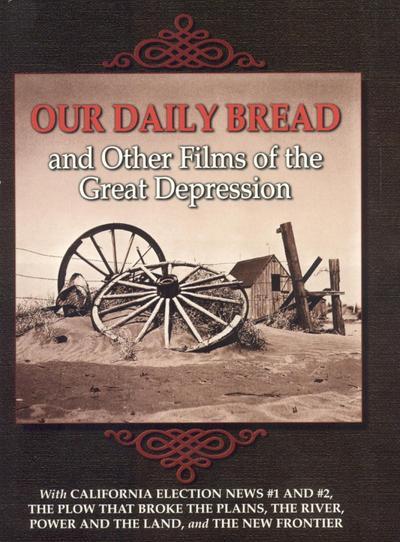
  • King Vidor – Our Daily Bread (1934)

    1931-1940ClassicsDramaKing VidorUSA

    Quote:
    “Back to the land!” To escape the massive urban unemployment of the Depression, John Sims and his wife Mary take President Franklin D. Roosevelt’s exhortation to heart and take over an uncle’s run-down farm. But it soon becomes clear that the two city-dwellers have taken on more than they can handle. When a landless farmer pitches in, John decides to gather more unemployed into the collective. Soon the arcadian farm is filled with tradesmen, farmers, and their families. Together, they fend off foreclosure and speculators. Until a drought threatens to destroy the harvest … King Vidor made one of the first films of the New Deal era with the intention of contrasting the glamour of Hollywood with the harsh realities of American life. In reference to real institutions such as Texas’ Woodlake Community, he created a conservative social utopia in the form of a collective based on faith and a barter economy. Denounced sometimes as communist, sometimes as fascist, Our Daily Bread glorifies, above all, the American work ethic. In the lyrical tradition of poet Walt Whitman, Vidor celebrates the power of the human body, on full display in the rhythmic choreography of the final scenes.Read More »

  • Rouben Mamoulian – Queen Christina (1933)

    1991-2000DramaRomanceRouben MamoulianUSA

    Free Image Hosting at www.ImageShack.us

    29f7c043f76a2bde437fd0d52a185152

    Quote:
    Greta Garbo Appears as Queen Christina of Sweden in Her First Film in More Than Eighteen Months.
    Soon after entering the Astor Theatre last night for the presentation of Greta Garbo’s first picture in eighteen months, the spectators were transported by the evanescent shadows from the snow of New York in 1933 to the snows of Sweden in 1650. The current offering, known as “Queen Christina,” is a skillful blend of history and fiction in which the Nordic star, looking as alluring as ever, gives a performance which merits nothing but the highest praise. She appears every inch a queen.Read More »

  • Michael Curtiz – Mandalay (1934)

    1931-1940ClassicsDramaMichael CurtizUSA

    29f7c043f76a2bde437fd0d52a185152

    Synopsis:
    Tanya, a Russian refugee, is hiding in Rangoon, Burma under the protection of her lover, Tony Evans, a gunrunner working for a weathly underworld leader named Nick. Nick wants to add Tanya to his stable of women in a decadent Rangoon club and intimidates Tony into turning her over to settle a debt. At first the abandoned Tanya refuses to cooperate with Nick, but eventually decides to beat him at his own game and uses sex to gain power. She becomes notorious for her affairs, is re-named “Spot White,” and by blackmailing a British officer, gets passage money out of Rangoon. On the boat to Mandalay, she meets formerly prestigious surgeon Gergory Burton who is now exiled in Burma because of his alcoholism, and they fall in love. Unfortunately, Tony has followed her, and in an attempt to escape the authorities, he frames her for what appears to be his murder. She is arrested, but before the boat docks, Tony comes to Tanya’s cabin and proposes that they open a club like Nick’s, with Tanya as “hostess.” Tanya, desperate to sever her past, poisons Tony, who falls overboard to his death. When they dock in Mandalay, the captain reports that stowaways saw Tony in the hold and it is presumed he escaped in a small boat. Tanya is freed, she confesses her crime to Gregory, and they pledge to start a new life togetherRead More »

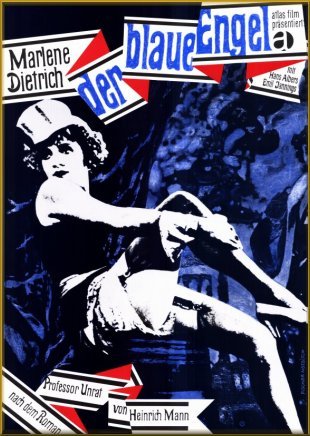
  • Josef von Sternberg – Der blaue Engel aka The Blue Angel (1930)

    1921-1930ClassicsDramaGermanyJosef von Sternberg

    29f7c043f76a2bde437fd0d52a185152

    Article: from ~ by James Steffen
    Immanuel Rath is a stuffy, disciplinarian professor who is shocked to discover his students passing around a postcard of Lola-Lola, a singer at The Blue Angel cabaret. Hoping to catch his students there, Professor Rath visits the nightclub and witnesses Lola-Lola’s performance. Entranced by her dissolute charms, he gets drunk on champagne and spends the night with her. The ensuing scandal causes him to lose control of his students and he is terminated from his position. Returning to Lola, he agrees to marry her and joins the troupe. His humiliation at having to play a clown onstage is compounded by Lola’s attraction to the strongman Mazeppa. To make matters worse, the troupe returns to the professor’s hometown, forcing him to acknowledge how far he has fallen.Read More »

  • Teuvo Tulio – Laulu tulipunaisesta kukasta AKA Song of the Scarlet Flower (1938)

    1931-1940ClassicsDramaFinlandTeuvo Tulio

    29f7c043f76a2bde437fd0d52a185152

    Synopsis:
    Song of the Scarlet Flower was Teuvo Tulio’s first independently produced film, and the earliest of his surviving films. The plot was about Olavi, a farmer’s son who leaves his home after a dispute with his father and leads a life of a womanizing logger.Read More »

  • Hiroshi Shimizu – Kaze no naka no kodomo AKA Children in the Wind (1937)

    1931-1940DramaHiroshi ShimizuJapan

    Two young boys are usurped from being the head of their gang of children. Their father is fired and arrested for this, and they are sent to live with their uncle, only to spend their time thinking of ways to escape back home.Read More »

Back to top button