1930s

  • Jean Grémillon – La Petite Lise (1930)

    Drama1921-1930FranceJean Grémillon

    Jean Grémillon’s first talkie, the 1930 LA PETITE LISE, is anything but talky. While opening
    and closing with soulful afro-Latin strains, something just above silence reigns throughout
    the film. Grémillon is already orchestrating the auditory menace of nuanced sound sculpting
    that would later pervade REMORQUES (1941), setting forth evolving rhythmic figures at an
    atmospheric whisper. Grémillon grafts this aural frieze onto smoldering b&w photography.
    Truly, the frame is often smoking for purposes of motif.Read More »

  • Edward H. Griffith – Another Language (1933)

    1931-1940DramaEdward H. GriffithUSA

    29f7c043f76a2bde437fd0d52a185152

    Synopsis by Hal Erickson
    Given the usual pedestal upon which mothers were placed by MGM head Louis Mayer, it’s all the more amazing that Mayer gave the go-ahead for Another Language. Louise Closser Hale plays a domineering matriarch who controls the lives of her grown, married sons, using a fabricated heart condition to keep them in line. Helen Hayes marries youngest son Robert Montgomery, only to sit by in mute horror as Mother exerts her authority over her timorous offspring at a weekly family get-together. At the end, only Hayes and Montgomery’s nephew John Beal have the courage to break the apron strings, but not without the formidable opposition of Monster Mom. Based on the Broadway play by Rose Franken, Another Language represented the screen debut of Margaret Hamilton, recreating the supporting role she’d played on stage.Read More »

  • Amleto Palermi – Cavalleria rusticana (1939)

    1931-1940Amleto PalermiDramaItalian Cinema under FascismItaly

    29f7c043f76a2bde437fd0d52a185152

    PLOT & Review:
    (Contains some spoilers)

    Quote:
    This film was not based on the famous one-act opera of Pietro Mascagni but rather on the original story by the Sicilian writer Giovanni Verga. It’s the story of Santuzza, her love Turiddu, and his passion for the married Lola that leads to his death in a duel when Lola’s husband Alfio exacts satisfaction. Santuzza’s curse leveled at unfaithful Turiddu, “A te la mala Pasqua!” (“Hope you have a bad Easter!”) is a memorable moment… as it was in Mascagni’s opera.

    All Sicilian passion and emotion, the film is shot against authentic Sicilian backgrounds. There are wonderful colorful sequences of villagers riding in decorated traditionally decorated carts. Those scenes are so vivid you almost don’t notice the absence of color in this black and white film. Mount Etna looms in the background, suggestive of the smoking volcanic passions of some of the characters we see living near it.Read More »

  • Charles Chaplin – City Lights (1931)

    USA1931-1940Charles ChaplinComedySilent

    29f7c043f76a2bde437fd0d52a185152

    Quote:
    The Tramp meets a poor blind girl selling flowers on the streets and falls in love with her. The blind girl mistakes him for a millionaire. Since he wants to help her and doesn’t want to disappoint her, he keeps up the charade. He befriends a drunk millionaire, works small jobs like street sweeping, and enters a boxing contest, all to raise money for an operation to restore her sight.

    CHAPLIN HILARIOUS IN HIS ‘CITY LIGHTS’; Tramp’s Antics in Non-Dialogue Film Bring Roars of Laughter at Cohan Theatre. TAKES FLING AT “TALKIES” Pathos Is Mingled With Mirth in a Production of Admirable Artistry.

    Charlie Chaplin, master of screen mirth and pathos, presented at the George M. Cohan last night before a brilliant gathering his long-awaited non-dialogue picture, “City Lights,” and proved so far as he is concerned the eloquence of silence. Many of the spectators either rocking in their seats with mirth, mumbling as their sides ached, “Oh, dear, oh, dear,” or they were stilled with sighs and furtive tears. And during a closing episode, when the Little Tramp sees through the window of a flower shop the girl who has recovered her sight through his persistence, one woman could not restrain a cry.Read More »

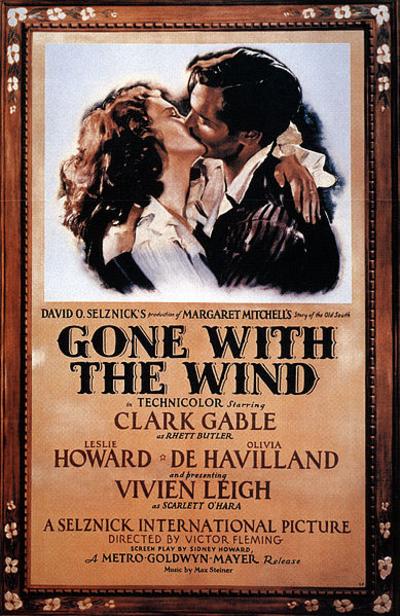
  • Victor Fleming – Gone with the Wind (1939)

    Drama1931-1940ClassicsUSAVictor Fleming

    29f7c043f76a2bde437fd0d52a185152

    Gone With the Wind boils down to a story about a spoiled Southern girl’s hopeless love for a married man. Producer David O. Selznick managed to expand this concept, and Margaret Mitchell’s best-selling novel, into nearly four hours’ worth of screen time, on a then-astronomical 3.7-million-dollar budget, creating what would become one of the most beloved movies of all time. Gone With the Wind opens in April of 1861, at the palatial Southern estate of Tara, where Scarlett O’Hara (Vivien Leigh) hears that her casual beau Ashley Wilkes (Leslie Howard) plans to marry “mealy mouthed” Melanie Hamilton (Olivia de Havilland). Despite warnings from her father (Thomas Mitchell) and her faithful servant Mammy (Hattie McDaniel), Scarlett intends to throw herself at Ashley at an upcoming barbecue at Twelve Oaks. Alone with Ashley, she goes into a fit of histrionics, all of which is witnessed by roguish Rhett Butler (Clark Gable), the black sheep of a wealthy Charleston family, who is instantly fascinated by the feisty, thoroughly self-centered Scarlett: “We’re bad lots, both of us.” The movie’s famous action continues from the burning of Atlanta (actually the destruction of a huge wall left over from King Kong) through the now-classic closing line, “Frankly, my dear, I don’t give a damn.” Holding its own against stiff competition (many consider 1939 to be the greatest year of the classical Hollywood studios), Gone With the Wind won ten Academy Awards, including Best Picture, Best Director, Best Screenplay, Best Actress (Vivien Leigh), and Best Supporting Actress (Hattie McDaniel, the first African-American to win an Oscar). The film grossed nearly 192 million dollars, assuring that, just as he predicted, Selznick’s epitaph would be “The Man Who Made Gone With the Wind.” (AMG)Read More »

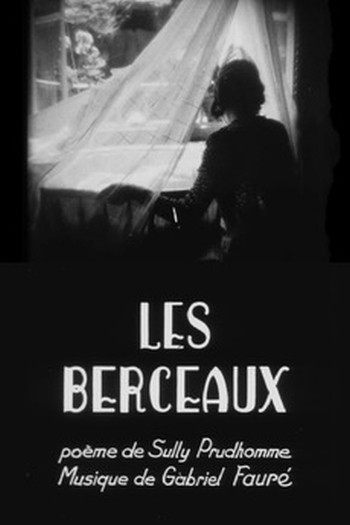
  • Jean Epstein – Les berceaux (1931) (HD)

    1931-1940ArthouseFranceJean EpsteinShort Film

    29f7c043f76a2bde437fd0d52a185152

    Here is the text for the poem by Sully Prudhomme that the song is based on:

    Le long du Quai, les grands vaisseaux,
    Que la houle incline en silence,
    Ne prennent pas garde aux berceaux,
    Que la main des femmes balance.

    Mais viendra le jour des adieux,
    Car il faut que les femmes pleurent,
    Et que les hommes curieux
    Tentent les horizons qui leurrent!
    Read More »

  • Jean Grémillon – Gueule d’amour AKA Lady Killer (1937)

    1931-1940ClassicsDramaFranceJean GrémillonQueer Cinema(s)

    29f7c043f76a2bde437fd0d52a185152

    Gueule d’Amour
    Made partly while Grémillon was working at the Ufa Studios in Berlin, this film features the young Jean Gabin as a foreign-legion Casanova – the “lady killer” Lucien Bourrache – who meets his match in the mysterious seductress Madeleine (Mireille Balin). The sizzling electricity between Gabin and Balin made Gueule d’amour a rare popular success for the director.Read More »

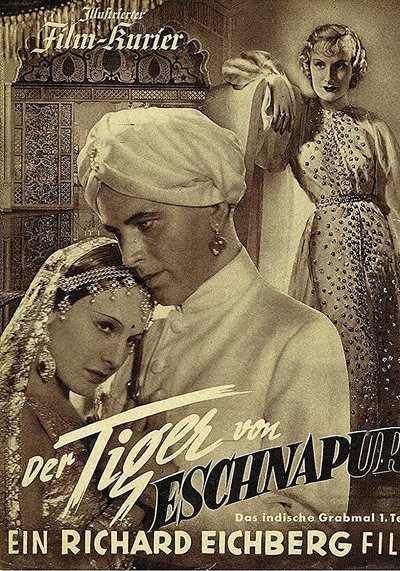
  • Richard Eichberg – Der Tiger von Eschnapur AKA The Tiger of Eschnapur (1938)

    Drama1931-1940AdventureGermanyRichard EichbergThird Reich Cinema

    29f7c043f76a2bde437fd0d52a185152

    Synopsis:
    First part of two-film adaptation of Thea von Harbous novel “The Indian Tomb.” The focus of the elaborate adventure film is a dramatic love triangle: Chandra, the Maharajah of Eschnapur, lives happily with his wife Sitha. But Sithas former lovers Sascha from Germany in the palace arises, the revival of passion between the two
    grounds for malicious intrigue. Prince Ramagani of secretly planning a coup d’etat, uses the occasion to the Maharajah of Sascha and Sitha raise. Both flee around
    the world to Berlin, constantly haunted by Chandra and his entourage.Read More »

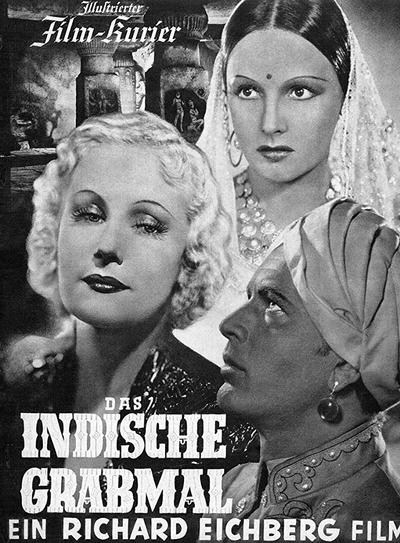
  • Richard Eichberg – Das indische Grabmal AKA The Indian Tomb (1938)

    Drama1931-1940AdventureGermanyRichard EichbergThird Reich Cinema

    29f7c043f76a2bde437fd0d52a185152

    Synopsis:
    Second and last part of the filming of Thea von Harbous Roman: After their daring escape from the jealous and the Maharajah Chandra intriguing Prince Ramagani reach Sitah the Maharani and her German lover Sascha back to India.
    In the Palace of Eschnapur is the decisive confrontation between the main actors: Ramaganis coup attempt by Sascha and Sitah – given their lives for Chandra sacrifices – frustrated. Sascha Ramagani finally kills and is reconciled with the Maharajah.Read More »

Back to top button