1910s

  • Lawrence B. McGill – How Molly Malone Made Good (1915)

    1911-1920ComedyLawrence B. McGillSilentUSA

    29f7c043f76a2bde437fd0d52a185152

    This 1915 film stars Marguerite Gale as the title character, a journalist trying to make her name by interviewing celebrities for the New York Tribune. Picture quality is quite good, although the print is a little dark on the whole. A number of celebrities play themselves, including noted drag performe Julian Eltinge, and burlesque star Mabel Fenton. Read More »

  • Aleksandr Razumnyj – Mat aka Mother [Incomplete] (1919)

    1911-1920Aleksandr RazumnyjDramaSilentUSSR

    29f7c043f76a2bde437fd0d52a185152

    First screen adaptation of Gorky’s ” Mother”
    Read More »

  • Lois Weber & Phillips Smalley – The Dumb Girl of Portici (1916)

    Drama1911-1920Lois WeberPhillips SmalleySilentUSA

    29f7c043f76a2bde437fd0d52a185152

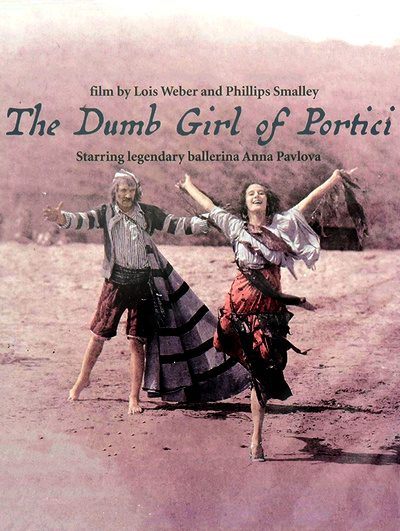
    from the Milestone Films website:

    “Pavlova’s artistry is something that we are often asked to take on faith, something where you had to be there. Watching The Dumb Girl, you are there!” — Joan Acocella, The New Yorker

    In the early 20th century, when few stars were known by name, no woman had greater worldwide fame than ballet dancer and choreographer Anna Pavlova. Unlike movie actresses, whose celebrity spread with the international distribution of their films, Pavlova’s renown had to be earned theater by theater, performance by performance. Her legendary art was, by its nature, ephemeral. Still, no one traveled farther or worked harder than this slight daughter of a Russian laundress.Read More »

  • Arvid E. Gillstrom – The Hero (1917)

    1911-1920Arvid E. GillstromComedySilentUSA

    http://img826.imageshack.us/img826/1680/clip14y.jpg

    29f7c043f76a2bde437fd0d52a185152

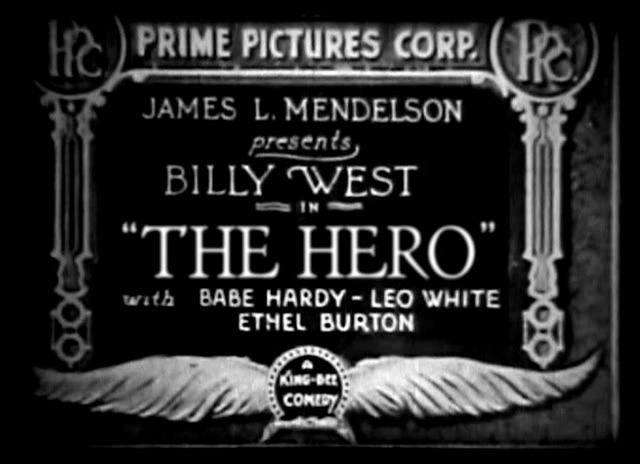
    Plot: Another silent comedy with Billy aka Charley and very young Oliver Hardy. Rare movie!Read More »

  • Allan Dwan – The Ranchman’s Vengeance (1911)

    1911-1920Allan DwanShort FilmUSAWestern

    29f7c043f76a2bde437fd0d52a185152

    Lorenz Pedro, a Mexican half-breed, owns a small sheep ranch, and lives happily with his wife Marie and little daughter Lois. One exceedingly hot afternoon, Tom Flint, riding across the ranch looking for work is overcome by the heat, and Pedro, acting the part of a good Samaritan, takes him to his home, where Marie, through careful nursing, soon has him quite himself again. Pedro is out daily with his flock, leaving Marie and Flint together, offering an opportunity which Flint ungratefully takes advantage of, resulting in his completely winning Marie’s love. Manuelito, Marie’s father, is suspicious and comes upon them while Flint is declaring his love. He goes to Pedro in the field and tells what he has seen and heard. Hastening home he finds his wife in Flint’s embrace, and in his great love for Marie bids Flint take her, but warns him his life shall pay the penalty should he ever find him shamefully abusing both mother and child. Manuelito sends a telegram to Pedro, who is working …

    Written by Moving Picture World Read More »
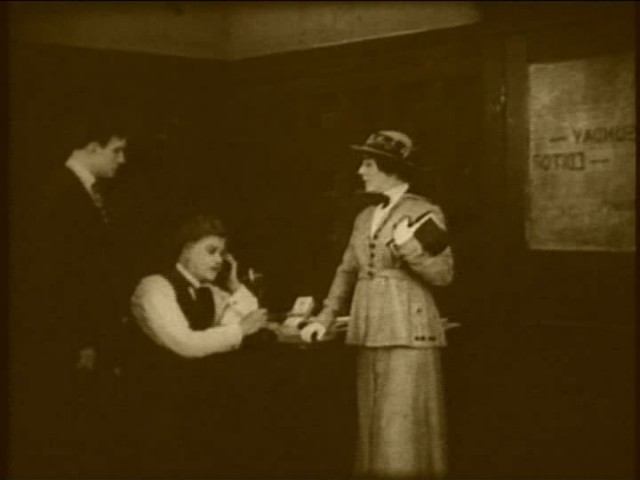
  • A.E. Coleby – Mysteries of London (1915)

    1911-1920A.E. ColebyDramaSilentUnited Kingdom

    29f7c043f76a2bde437fd0d52a185152

    Quote:
    After her father is falsely jailed for embezzlement and her mother dies of grief, Louise is adopted by a kindly stockbroker. 15 years later, she falls in love with his dissolute son Frank, a mistake that nearly proves fatal to her. The film’s main historical point of interest, though, lies in the still highly recognisable central London locations – but Dutch intertitles and copious print damage suggest that we’re lucky that this lively three-part melodrama survives at all.

    Active in films from 1907, and making features as early as 1912, London-born AE Coleby (1876-1930) was a prolific silent-era director. Specialising in thrillers and melodramas, he was among the first to tackle such horror staples as Egyptian curses (The Mummy, 1912) and the perennial Chinese villain Fu Manchu (The Mystery of Fu Manchu, 1923). In the 1920s, he returned to making mainly short films, including a couple of early sync-sound experiments, but he died shortly after Britain’s talkie era began in earnest. Sadly, as with many silent filmmakers, most of his output no longer survives.Read More »

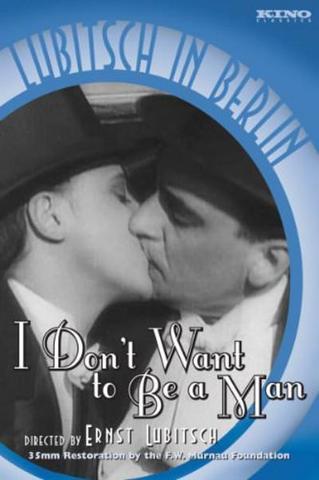
  • Ernst Lubitsch – Ich möchte kein Mann sein AKA I Don’t Want to Be a Man (1918)

    1911-1920ComedyErnst LubitschGermanySilent

    29f7c043f76a2bde437fd0d52a185152

    A teenaged tomboy, tired of being bossed around by her strict guardian, impersonates a man so she can have more fun, but discovers that being the opposite sex isn’t as easy as she had hoped.

    Quote:
    I Don’t Want To Be A Man is like The Oyster Princess an early example of Ernst Lubitsch’s comic skills, and it also shares The Oyster Princess’ star, the irrepressible comedienne Ossi Oswalda, who in both films lends her name to the characters she plays. Here she plays a wild, rambunctious late teen barely under the control of her guardian/uncle and governess. (In reality it takes a while to work out that this middle-aged couple glaring disapprovingly out the window at Ossi’s mild antics outside are not her parents; they seemed rather coded as such.)Read More »

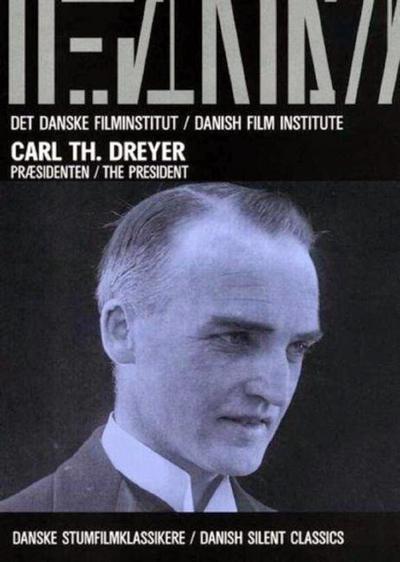
  • Carl Theodor Dreyer – Præsidenten AKA The President (1919)

    Drama1911-1920Carl Theodor DreyerDenmark

    Quote:
    It perhaps comes as no surprise, given Carl Theodor Dreyer’s lifelong, idealized melancholy over his own unresolved parentage, that the scenario selected for his first film, The President would involve three generations of children conceived out of wedlock, and thematically crystallize on the legacy of their unreconciled paternity in the resolution of their own disparate lives. For Dreyer, this expurgation of such deep-seated trauma was not only manifested in the naïve idea of restoring the virtue and honor of a “fallen” woman (an archetypal surrogate for his own idealized, unwed, biological mother) through transcendence, but also in confronting the innate cruelty of the very institutions that socially (and inequitably) stigmatized such human transgressions through codified notions of morality and class division. Read More »

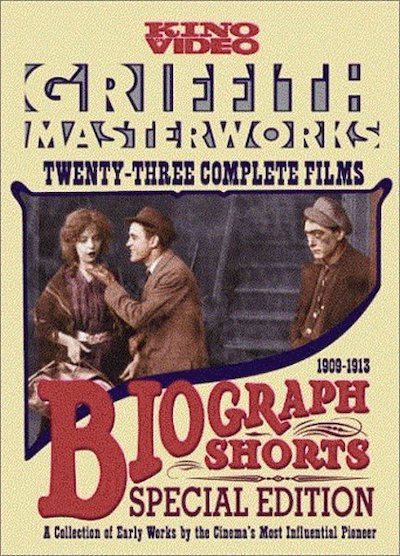
  • D.W. Griffith – The Painted Lady (1912)

    Drama1911-1920D.W. GriffithSilentThe Birth of CinemaUSA

    A lonely young woman lives with her strict father who forbids her to wear make-up. One day at an ice cream social, she meets a young man you seems interested in her. However, unknown to her, he is a burglar who is only interested in breaking into her father’s house. One night she is awakened by a noise. Grabbing a pistol, she enters her father’s downstairs office where she confronts a masked intruder . . . Read More »

Back to top button