

Set at an institute devoted to culinary and alimentary performance, a collective finds themselves embroiled in power struggles, artistic vendettas, and gastrointestinal disorders.Read More »
Set at an institute devoted to culinary and alimentary performance, a collective finds themselves embroiled in power struggles, artistic vendettas, and gastrointestinal disorders.Read More »
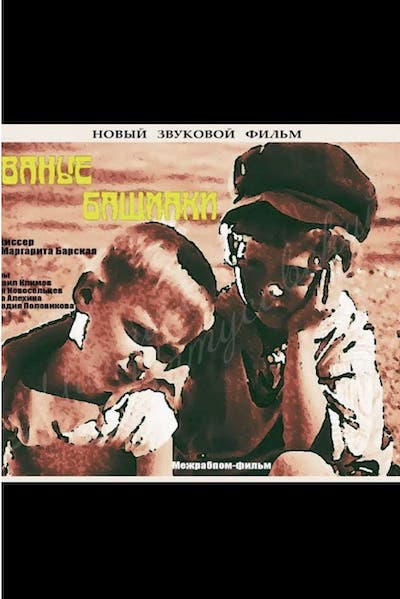
The first sound film for children “Torn Shoes” was released in 1933 and won the world audience. It’s about kids from a poor family living in some European country (looks like pre-nazi Germany); two brothers have one pair of shoes for both. The author of the film Margarita Barskaya was proclaimed the leading director of child cinema. In 1937 she was repressed and her name was taken off the Soviet cinematography.Read More »

Quote:
Like the dissertation on Duncan, Russell’s look at painter/poet Rossetti and his own personal Hell (a clear allusion to the Dante of Divine Comedy fame) can be tough going at times. His relationship with Elizabeth Siddal is very upsetting, especially when we learn of her terminal illness and Rossetti’s mere indifference to it. There is also another woman, a dark haired succubus who seems to bring out the worst in the artist, constantly turning causal outings into turmoil even where situations finally seem settled. As mentioned before, Russell seems obsessed by the way women of the age interacted with men. There is a contemporary twist of course, but the overall interpretation seems wrapped up in an intricate combination of need, nurturing, and novelty. As played by Reed, Rossetti is a ruthless cad, treating everyone with determined disdain. At least in this situation, we see how the personalities of everyone involved influenced the art.Read More »

Plot: During construction at the old, hard-pressed Lakewood Hotel, two workers stumble upon a swarm of ants in a closed section of the building. After discovering the unusually aggressive and dangerous ants, the workers attempt to get the warning out, but they are accidentally buried alive.
Shortly after, the unscrupulous real estate magnate Anthony Fleming (Gerald Gordon) and his partner and mistress Gloria (Suzanne Somers) arrive at the hotel, there to haggle with the elderly proprietor, Ethel Adams (Myrna Loy), and her daughter Valerie (Lynda Day George) as they pursue plans to convert Lakewood into a casino.Read More »

A woman who trains police horses adopts her second child, a severely traumatised 5-year-old girl. When the girl shows violent and anti-social behaviour, her new mother becomes determined to help her.Read More »

imdb says:
Spy suspense drama set in 1960’s Berlin. Intrigue and double-cross lead Killian on a twisting path through love and loss.Read More »

An epic story about colonization of poor Dalmatian peasants (Southern Croatia) to the fertile Pannonian plain shortly after WWII.
It was entered into the 1959 Cannes Film Festival and won a special award “CIDALC”.
Was the winner of several international movie festivals.
The film was also selected as the Yugoslav entry for the Best Foreign Language Film at the 32nd Academy Awards in 1959.Read More »

PLOT
Alberto is a promising young man who plans to succeed with a new television programme, “We see it clearly”. In an accident, he loses his sight, but he relies on the help of his good friend Gianluca to carry on with the programme.Read More »

Quote:
A somber, visually distilled, and deeply affecting portrait of the human toll and uncalculated tragedy of nuclear holocaust. In contrast to Shohei Imamura’s characteristically unrefined, primitivistic, and subversively bawdy cinema, the film is shot in high contrast black and white, creating a spare and tonally muted chronicle of dignity, survival, community, and human resilience. Through recurring literal and figurative images of regression, Imamura conveys a dual meaning, not only in the community’s noble attempt to rebuild Hiroshima and return to a semblance of normal life after the annihilating bombing but also in their collective gradual and systematic erasure from Japanese society through long-term effects of radiation sickness, infertility, cultural (and geographic) isolation, and social stigmatization.Read More »