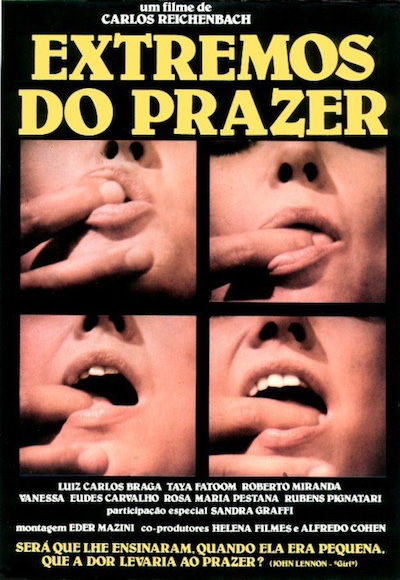
Luiz Antônio, a sociologist, had his political rights suppressed, during the Brazilian military dictatorship. Also, his wife Ruth had been tortured and killed. So he decides to hide in his niece Natércia and her husband Felipe’s country house for a while. But she invites the intellectual Marcela and broker Ricardo for a weekend together. Luiz’s world is upset and the existential problems of all get entangled, with unexpected results.Read More »
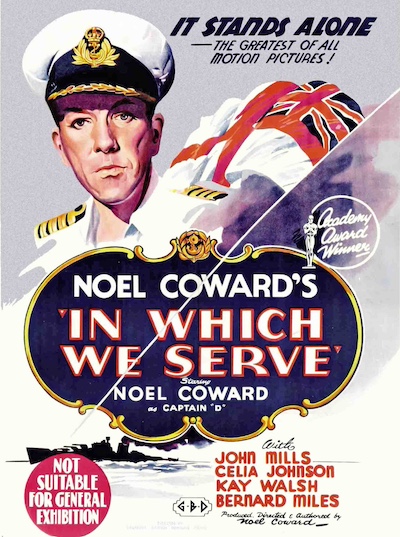
Plot / Synopsis In the midst of World War II, the renowned playwright Noël Coward engaged a young film editor named David Lean to help him realize his vision for an action drama about a group of Royal Navy sailors (roles that would be filled by Coward himself, Bernard Miles, and John Mills, among others) fighting the Germans in the Mediterranean. Coward and Lean ended up codirecting the large-scale project—an impressive undertaking, especially considering that neither of them had directed for the big screen before (this would be Coward’s only such credit). Cutting between a major naval battle and flashbacks to the men’s lives before they left home, In Which We Serve (an Oscar nominee for best picture) was a major breakthrough for both filmmakers and a sensitive and stirring piece of propaganda.Read More »
Quote: After World War II, Fuji Photo Film Co. Ltd. developed and launched colour film stocks, with which the first Japanese natural colour features Carmen Comes Home (1951) and Natsuko’s Adventure in Hokkaido were produced by Shochiku; the latter has seldom been presented as its existing print is an incomplete one. Adapted from an early serial fiction by Yukio Mishima, it is a melodrama with women as subjects—a genre Nakamura was best at, with excellent representation of Mishima’s persevering characters. Born to a prestigious family, Natsuko is not impressed by any one of her suitors. Determined to spend her life serving god, she sets off to a convent in Hakodate, Hokkaido and meets along the way a young bear-hunter with whom she begins an adventure. A few scenes are missing in this print, one of which near the end is without a soundtrack; lines in the original script are inserted in these scenes to make up for these defects, which do not discount the film’s status as a valuable film capturing Hakodate in its glorious and vibrant colours.Read More »
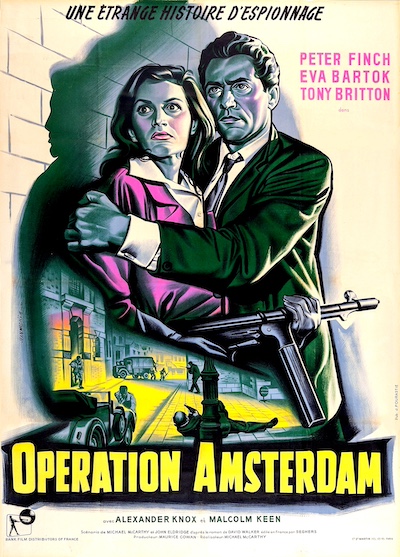
A British army officer teams with two members of the Dutch underground for a covert mission to Amsterdam to lift a stash of diamonds before the city is overrun by Nazi occupiers in this action-packed wartime heist drama.Read More »
Axel Freed is a literature professor. He has the gambling vice. When he has lost all of his money, he borrows from his girlfriend, then his mother, and finally some bad guys that chase him. Despite all of this, he cannot stop gambling.Read More »
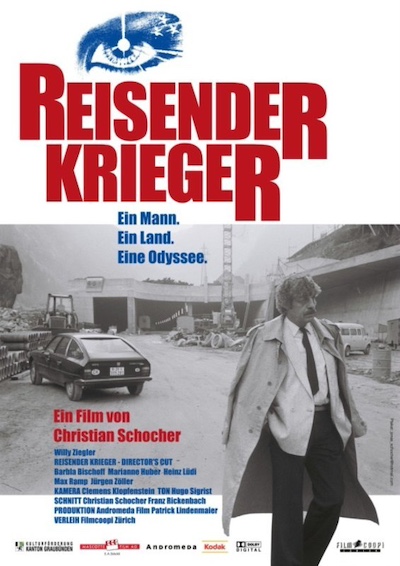
This is a portrait of a man and of a country, as he travels through it. He is a travelling salesman, and travels through Switzerland selling cosmetics to beauty parlours. MUBIRead More »
Film-maker Vladimir Yerofeyev (1898-1940) was a pioneer of expedition cinema in the Soviet Union, advocating for increased attention and investment in edifying non-fiction films made to win the interest of broad audiences. Pamir. Roof of the World, 1927, is his second feature film, and the first resulting from an expedition (his debut that same year, Za poliarnym krugom [Beyond the Arctic Circle] was a co-edited compilation film). In summer 1927, a trek to the mountainous Pamir region, known as the “Roof of the World”, in present-day Kyrgyzstan and Tajikistan, was organized by the Sovkino studio in co-operation with the Geological Committee. Yerofeyev worked with prominent geologist Dmitrii Nalivkin and ethnographer Mikhail Andreyev; both scholars had extensively researched the area and contributed to the planning for the crew’s journey.Read More »