Between light and darkness stands Olfa, a Tunisian woman and the mother of four daughters. One day, her two older daughters disappear. To fill in their absence, the filmmaker Kaouther Ben Hania invites professional actresses and invents a unique cinema experience that will lift the veil on Olfa and her daughters’ life stories.Read More »
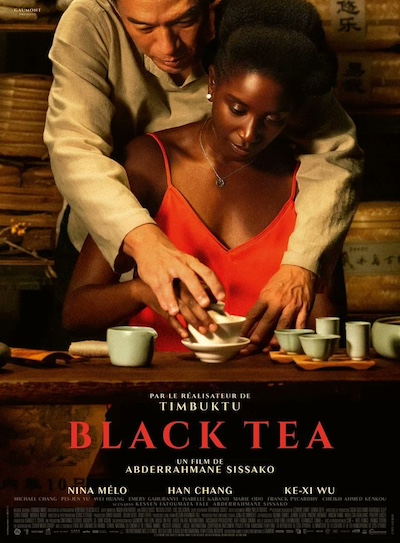
Quote: Aya is a woman in her early thirties. After astonishing everyone by saying “No” on her wedding day, she leaves the Ivory Coast for a new life in China. Living in an area where the African diaspora meets the Chinese culture, she finds a job in a tea boutique owned by Cai, a 45-year-old Chinese man. In the privacy of the shop’s backroom, Cai initiates Aya into the Chinese tea ceremony. As he teaches her this ancient art, their relationship slowly grows into one of tender love. But for their burgeoning passion to be supported by trust, both of them must let go of their burdens and face up to their pasts. -berlinale.deRead More »
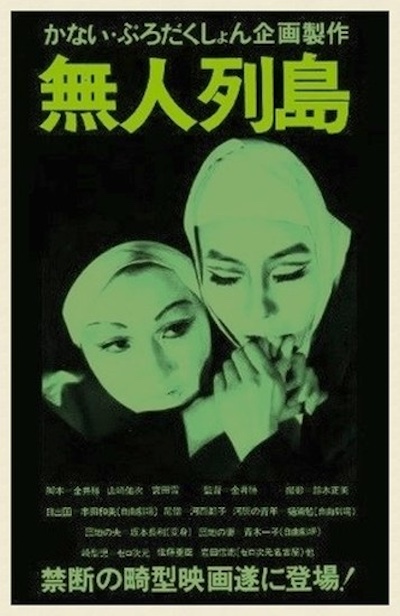
KatsuKanai wrote: The Deserted Archipelago was my first independently directed and produced film. The film won the Grand Prix at the Nyon International Film Festival and garnered considerable attention both overseas and in Japan. The film follows an extremely simple story of a plain boy who matures into manhood while constantly manipulated by nuns. But woven into this narrative are my own experiences and the history of postwar Japan as well as a series of fantasies. The result is a multifaceted and multilayered objet, the birth of a newly sur-realistic filmmaking. On August 15th, the day the war ended, I was in the third year of primary school. That day, when the reality that I had known turned completely upside down, I was saddled with the trauma of no longer being able to believe in anything. Searching here and there for some kind of spiritual salvation, I finally found the existentialism of Albert Camus. From there, I was able to build up my own kind of existentialism and this film is best understood as based in that “Kanai Katsu Existentialism.” The film was praised by European film scholars Max Tessier and Tony Rayns and was screened as part of “Eiga: 25 Years of Japanese Film,” a special program at the 1984 Edinburgh International Film Festival.Read More »
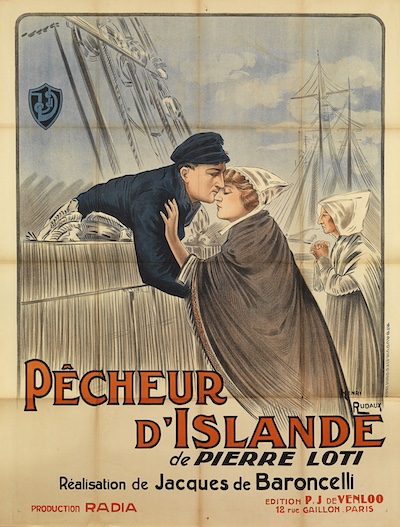
Faithfully reproduced observations of Breton fisherfolk in story of the man a local woman really loves who will not at first give himself to her because of his fondness for the sea that takes him away.Read More »
Synopsis: Five friends (representatives of the Fifties generation) now in their forties, get together after many years of silence. One shows up from jail, where he has been entering and exiting for years. The other comes from a series of “accidental” murders, another leaves his wife and kids, the fourth one is a wonderer and the last one, the girl of the gang, comes from a lunatic asylum where she has been hiding for years…Read More »
Kafka scholars investigate Kafka’s life and work with the aid of readings, dramatisations and clips from archive footage and film adaptations.Read More »
Quote: A hot story about young Claudia’s lovely summer outings in picturesque southern Sweden. The summer and the nice weather mean that Claudia has no problem whatsoever getting what she wants – and through her diary entries she tells us exactly how she went about it…Read More »
Plot:The film follows the journey of Lena and Meryem during their escape from the war in Syria. Lena is a ten-year-old girl who has lost her family in the war. She finds herself forced to make her way to Turkey with her baby sister and their neighbor Meryem, along with the other refugees. Lena wants to return home, while Meryem’s hope is to reach Europe.Read More »
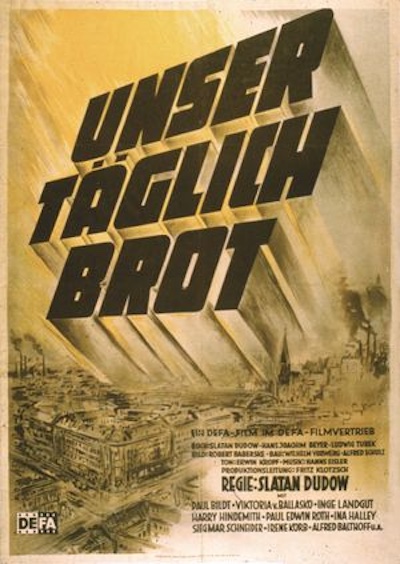
Quote: A story about a family after the Second World War. The petty bourgeois cashier Karl Weber of Berlin observes from a distance how his son Ernst participates in the building of a new socialist society. Karl does not understand Ernst’s visions, instead he confides in his other son Harry. However, Harry becomes involved in illicit business and Karl quickly realizes that it would be best to join his son Ernst in the citizen-owned factory. With this film, director Slatan Dudow (1903-1963) continued the traditions of proletarian German film from the Weimar Republic. As with his first feature film Kuhle Wampe, from a screenplay by Bertolt Brecht, Dudow wanted an art that “cultivates the viewer’s psyche.” His postwar films were intended to make the viewers realize the importance of supporting the “new order” in East Germany. Our Daily Bread became known as a premiere film of its day under the rubric of “socialist realism.” Slatan Dudow’s work was convincing mainly through his detailed descriptions of socialist everyday life. Music by Hanns Eisler was the centerpiece of contemporary review. After coming back from his exile in America, the composer created a score that challenged, thrilled, and focused. Berlin’s world of ruins is captured in almost documentary fashion.Read More »