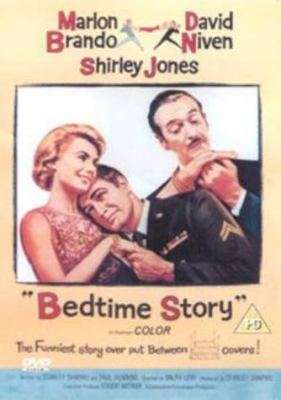
• Ralph Levy – Bedtime Story (1964)

    1961-1970ComedyRalph LevyUSA

    http://img818.imageshack.us/img818/4261/419e7aatytlsx220.jpg

    29f7c043f76a2bde437fd0d52a185152

    Description:
    In this 1960s comedy, Freddy Benson (Marlon Brando) and Lawrence ‘The Prince’ Jameson (David Niven) are two charming scoundrel confidence trickster gigolos who prey on wealthy women taking holidays on the French Riviera. The pair join a playful competition to see who is best at the job, and the target is cute Janet Walker (Shirley Jones), better known as the “American Soap Queen.” Who can extract $25,000 firstRead More »
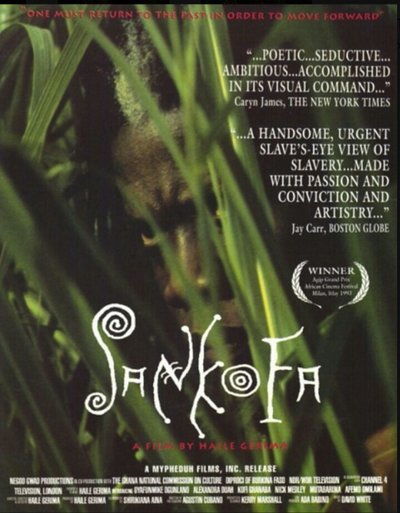
  • Haile Gerima – Sankofa (1993)

    1991-2000ArthouseBurkina FasoDramaHaile Gerima

    29f7c043f76a2bde437fd0d52a185152

    From the New York Times review:
    “In “Sankofa,” a contemporary African-American woman travels back in time and experiences slavery. Haile Gerima’s poetic and precisely detailed film takes its audience into its heroine’s life and mind as her moral sense is challenged and changed. No viewer can avoid the discomforting questions the film so eloquently raises.

    The opening sequences, set and filmed in Ghana, are alternately seductive and off-putting. Among drums and chants, a voice invokes ancestral ghosts. “Spirit of the dead, rise up,” the voice says, “and claim your story.” The film’s title is a West African term meaning to reclaim the past in order to go forward, and “Sankofa” stumbles only in its depiction of the present.Read More »

  • D.W. Griffith – Lady of the Pavements (1929)

    Drama1921-1930D.W. GriffithUSA

    29f7c043f76a2bde437fd0d52a185152

    Art Cinema Corporation production; distributed by United Artists Corporation. / Produced by Joseph M. Schenck. Screenplay by Sam Taylor, with dialogue by George Scarborough, from the short story “La Paiva” by Karl Gustav Vollmoeller. Set design by William Cameron Menzies. Costume design by Alice O’Neill. Theme song “Where Is the Song of Songs for Me?” by Irving Berlin. Cinematography by Karl Struss. Assistant cameraman, G.W. Bitzer. Intertitles by Gerrit Lloyd. Edited by James Smith. Music arrangement by Hugo Riesenfeld. Presented by Joseph M. Schenck. / © 4 February 1929 [LP79]. Premiered 22 January 1929 at the United Artists Theatre in Los Angeles, California. General release, 16 February 1929. / Standard 35mm spherical 1.37:1 format. Movietone sound-on-film sound system. / A silent version of the film was also released in eight reels at 7495 feet. / Silent film, with talking sequences, synchronized music and sound effects.Read More »

  • Jacques de Baroncelli – La Duchesse de Langeais AKA Wicked Duchess (1942)

    1941-1950DramaFranceJacques de BaroncelliRomance

    The Duchess of Langeais, as beautiful as she is brilliant, is a woman who likes to seduce but who does not give in. Until the day when she falls in love with General de Montriveau, a cabal goes up against her.Read More »

  • Eriprando Visconti – La Orca (1976)

    Drama1971-1980Eriprando ViscontiExploitationItaly

    A teenage girl is kidnapped by 3 guys and taken to an abandoned house in the country, and make her write her own ransom letter. She soon discovers that one of her captors is infatuated with her and she will use those feelings to stay alive.Read More »

  • Dharmasiri Bandaranayake – Suddilage Kathawa (1984)

    Drama1981-1990AsianDharmasiri BandaranayakeSri Lanka

    http://img217.imageshack.us/img217/2526/71456457.png

    A masterpiece of Sri Lankan cinema, “Suddilage Kathawa” or “A Woman in a Whirlpool” is the third film by Dharmasiri Bandaranayake. Swarna Mallawarachi plays the role of Suddi who is married to Romiel, a hired assassin played by Cyril Wickramage. Suddi’s life becomes complex when her husband ends up in prison and she is forced to have multiple affairs in order to support herself. Joe Abeywickrama plays the role of the village head whose brother-in-law is a shop owner played by Sommie Rathnayake. Observe how the lives of these characters are intricately nested around love, hate, deception, crime and murder. Witness the facets that greed takes in this exceptional feauture film, beautifully shot and portrayed by accomplished cinematographer Udaya Perera.Read More »

  • Gustaf Edgren – Valborgsmassoafton AKA Walpurgis Night (1935)

    1931-1940DramaGustaf EdgrenSweden

    29f7c043f76a2bde437fd0d52a185152

    Synopsis:

    ‘Lena Bergstrom works in an office and is unhappily in love with her boss, Johan Borg. She decides to quit. Borg’s wife won’t have any children, and when she becomes pregnant she has an illegal abortion. For some reason, Lena’s father believes that it is Lena who has had an abortion.’
    – Mattias Thuresson (IMDb)Read More »

  • Jean-Pierre Limosin – Abbas Kiarostami – Verités et songes (1994)

    1991-2000Abbas KiarostamiArthouseDocumentaryFranceJean-Pierre Limosin

    29f7c043f76a2bde437fd0d52a185152

    Description: This documentary by French director Jean-Pierre Limosin is the first Spanish edition of the renowned “Cinéma, de notre temps” series. In this episode, Abbas Kiarostami talks about his life and work. Summarising his approach to filmaking, Kiarostami said:

    “A filmmaker has to be conscious about his responsibility. I always wish to remind the audience that they are watching a film. You see, it is very dangerous to make the audience more emotionally engaged than they need to be. In the darkness of the cinema, people are so innocent. It makes them feel that everything is closer and stronger. That is why we should not make them even more emotional: People need to think when they watch films, not to be robbed of their reason … I make half movies. The rest is up to the audience to create for themselves.”Read More »

  • Cecil B. DeMille – The Cheat (1915)

    1911-1920Cecil B. DeMilleClassicsSilentUSA

    29f7c043f76a2bde437fd0d52a185152

    Description: One of the early De Mille’s melodramas: love triangle, fruvolous wife, demonic Japanese tempter… But besides all that melodramatic rubbish it’s one of the most innovative films of the era. De Mille actively experimented with lighting, cutting, and framing to extend narrative technique. “The Cheat” featured probably the first use of so called “psychological editing: cutting not between two simultaneous events but to show the drift of a character’s thoughts. A must see.Read More »

Back to top button