• Guy Maddin – Send Me to the ‘Lectric Chair (2009)

    2001-2010CanadaExperimentalGuy MaddinShort Film

    http://img29.imageshack.us/img29/7623/vlcsnap8924823.png

    Rotterdam 2009: Guy Maddin Will “Send Me To the ‘Lectric Chair”
    By R. Emmet Sweeney on 01/29/2009
    Guy Maddin, courtesy of the International Film Festival Rotterdam, 2009

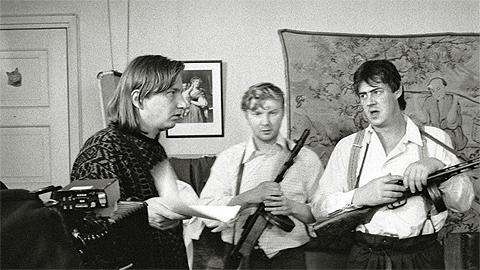
    Guy Maddin is a hoarder of uncanny images, from the candy-colored Alpine tableaus of “Careful” to the frozen horse heads of last year’s “My Winnipeg.” A commission from the Rotterdam Film Festival centers around another: Isabella Rossellini blasted out of an electric chair. It’s the basis for his new short film, “Send Me to the ‘Lectric Chair,” part of the Urban Screens series at the festival, which is projecting three works onto office buildings throughout the city. It’s an archetypal Maddin film, conflating sex, death and film history in a manic seven minutes. I spoke with him at the festival about the new work, collage parties, Thomas Edison and the hazards of Dutch public transit.

    How did you get this assignment, and how did you conceive it?Read More »
  • Various – The Movies Begin – Disc 5 – Comedy, Spectacle, and New Horizons (1893 – 1913)

    1891-19001901-19101911-1920ExperimentalSilentThe Birth of CinemaUSAVarious

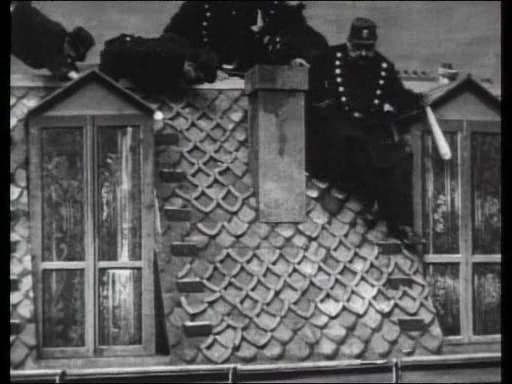
    This edition explores the establishment of cinematic genres in the first years of the 20th Century, offering rare glimpses of the innovative visual comedy of Max Linder, the pioneering Italian epic NERO – or THE BURNING OF ROME, the phenomenal animation of Windsor McCoy, the social realism of Alice Guy Blaché’s MAKING OF AN AMERICAN CITIZEN, D. W. Griffith’s early melodrama A GIRL AND HER TRUST, and more!

    By 1907 the cinema’s initial growing pains had subsided and fairly distinct generic categories of production were established. This volume of The Movies Begin examines some of these integral works that begin to reflect the modern day cinema — punctuated with authentic hand-tinted lantern slides used during early theatrical exhibition.Read More »

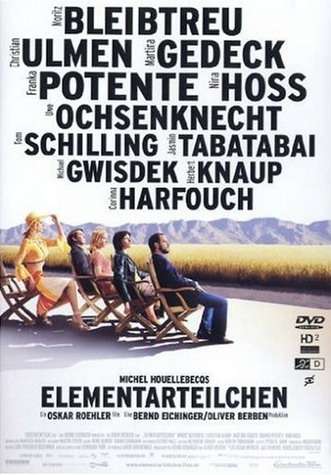
  • Oskar Roehler – Elementarteilchen aka Elementary Particles (2006)

    Drama2001-2010GermanyOskar RoehlerRomance

    http://img718.imageshack.us/img718/2913/elementarteilchenze0.jpg

    29f7c043f76a2bde437fd0d52a185152

    Quote:
    If you are moved by the death of a parakeet at the beginning of The Elementary Particles (Elementarteilchen), you are in for a bumpy ride, as all of humanity as we know it will be wiped out by the film’s end in a brief written epilogue. Of course, those who have read the novel (Les particules élémentaires in its original French, Atomised in its UK version) saw this coming, but for those who are unfamiliar with Michel Houellebecq’s cult hit that explosively mixes sex, death and science to annihilate mankind – and blames the flower power generation for it in the process – this might come as something of a shock.Read More »

  • Yakov Protazanov – Pikovaya dama AKA The Queen of Spades (1916)

    1911-1920DramaSilentUSSRYakov Protazanov

    Already in the early years of Russian cinema Protazanov’s name was a hallmark of artistic excellence. “The Queen of Spades” is a brilliant example of his extraordinary talent. The film has not only a first-rate story and ingenious Mozzhukhin’s performance, but also all the tricks that were available to filmmakers in 1916. The use of crosscutting in the film is quite sophisticated for the time; superimposition is yet another important device; and the use of flashbacks here is very effective. Unlike most pictures of that time “The Queen of Spades” made a genuine contribution to the evolution of Russian film art. I think it would be great if more people see one of the best pre-revolutionary Russian films.Read More »

  • Various – The Movies Begin – Disc 3 – Experimentation and Discovery (1898 – 1910)

    1891-19001901-1910ExperimentalSilentThe Birth of CinemaUSAVarious

    EXPERIMENTATION AND DISCOVERY (vol. 3 of THE MOVIES BEGIN) Dir. (various). U.S. and Europe. 1898-1910. Color-tinted, B&W. Frequently comical, often risque, and sometimes just plain baffling, the twenty films of this anthology challenged the precepts of the visual representation of narrative, thereby inventing the photographic and editing techniques that would quickly become accepted as cinematic syntax. Includes Peeping Tom (1901), History of a Crime (1901), How It Feels to be Run Over (1900), and The Dream of a Rarebit Fiend (1906).

    More than any other decade, the first ten years of the moving picture saw the greatest amount of experimentation and development. Ranging from the ingeniously creative to the audacious, the films represented in this volume offer a sampling of the primitive masterworks that allowed the technical novelty of the cinema to so quickly flourish into an artistically expressive medium.Read More »

  • Various – The Movies Begin – Disc 2 – The European Pioneers (1895 – 1906)

    1881-18901901-1910ExperimentalSilentThe Birth of CinemaVarious

    The European Pioneers
    Director: (various)
    Country: (various)
    Year: 1895-1906
    From the archives of the British Film Institute, this collection features forty distinctive works from cinema’s infancy, produced by such Euro pioneers as R.W. Paul, George Edward Smith, Fran Mottershaw, Walter Haggar & Sons, and James Bamforth, as well as by acknowledged innovators like the Lumière brothers and Méliès. Includes Demolition of a Wall (1896), Exiting the Factory (1895), and Arrival of a Train at La Ciotat (circa 1895).Read More »

  • Various – The Movies Begin Vol. 1: The Great Train Robbery and Other Primary Works (1880 – 1910)

    1881-18901901-1910ExperimentalShort FilmSilentThe Birth of CinemaVarious

    The Movies Begin

    The Great Train Robbery & Other Primary Works
    Directors: Edweard Muybridge, Edwin S. Porter, Thomas Edison
    Country: (various)
    Year: 1893-1907
    This survey of the cinema’s earliest landmarks and rarities features the 1877 motion studies of Edward Muybridge, the early productions of Thomas Edison’s Black Maria, the actualites of Louis Lumiére, George Méliès’s A Trip to the Moon (1902), and climaxes with the premiere of a mint-condition print of Edwin S. Porter’s The Great Train Robbery, complete with the authentic hand-tinting witnessed by audiences of 1903.
    —-Read More »

  • Ryszard Bugajski – Przesluchanie aka Interrogation [+Extras] (1982)

    1981-1990ArthousePolandPoliticsRyszard Bugajski

    29f7c043f76a2bde437fd0d52a185152

    Ryszard Bugajski’s Przesluchanie (Interrogation) is a powerful movie about a certain time in Polish history, that was marked by censorship and oppression and this is where Antonina ‘Tonia’ Dziwisz is caught up in. Played by one of Poland’s most remarkable actresses, Krystyna Janda, it is her that along with the wonderful cinematography work and realistic portrayal of prison conditions makes this movie so incredible. It is through her eyes that we see the story unfold and the suffering of her and her prison inmates (with some great co-acting by the likes of Agnieszka Holland). This is along with Krzysztof Kieslowski’s and Andrzej Wajda’s finest work one of the defining moments of Polish cinema, and beyond that. Certainly one of the most powerful prison movies ever made in my book, not just within the perspective of Polish or European cinema as such. And in the wake of events like Guantanamo bay or Abu Ghraib it still is as fresh and important with the covered subject as it was when it was made, reminding us how things could go horribly wrong within a judicial and in the end prison system. Due to it’s critical stance at the time of making, it was banned by the local government for 7 years, until the Soviet bloc broke up. An extremely powerful reminder of that time.Read More »

  • Aki Kaurismäki – Likaiset kädet AKA Dirty Hands (1989)

    1981-1990Aki KaurismäkiCrimeDramaFinlandNordic Noir

    http://img689.imageshack.us/img689/2449/0va8a.jpg

    29f7c043f76a2bde437fd0d52a185152

    Quote:
    Aki Kaurismäki is a cult and prolific Finnish filmmaker known for his offbeat, deadpan style. One of cinema’s great humanists, his films explore the misfortunes of the misfits and disaffected of Helsinki with great affection and droll, sometimes black, humour.
    Although influenced by filmmakers such as Robert Bresson, Luis Bunuel and Jim Jarmusch, Kaurismaki has a distinctive cinematic style of his own, recognisable by his spare, economical visuals, eclectic soundtracks of vintage rock and pop and use of a regular troupe of actors, including Kati Outinen, Marko Peltola & Matti Pellonpaa… and dogs.Read More »

Back to top button