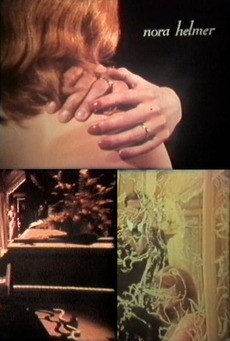
Description: Fassbinder’s version of Ibsen’s A Doll’s House for television develops a radical yet scrupulous reading of the play. Stripped of sentimentality and giving Nora (Carstensen) self-assurance from the start, this studio production delivers its critique of bourgeois marriage with a force rarely matched even in the theatre. The brutal prose, harshly delivered, is complemented by the unique visual spectacle which Fassbinder manages to wring from a videotape studio. Achieving effects of lighting and framing which British TV directors have never dreamed of, he makes the oppressiveness of Nora’s home as concrete as a tank-trap. Almost every scene is shot through latticework, net curtains, cut glass, ornate mirrors, so that the characters are perhaps visually obscured but always intellectually focused. All the BBC’s producers of tele-classics should be chained to chairs and forced to watch it.Read More »
-
Rainer Werner Fassbinder – Nora Helmer (1974)
1971-1980DramaGermanyRainer Werner FassbinderTV -
Mauro Bolognini & Tinto Brass & Luigi Comencini – La mia signora aka My wife (1964)
1961-1970ComedyItalyLuigi ComenciniMauro BologniniTinto BrassAlberto Sordi co-stars with Silvia Mangano in this Dino DeLaurentiis comedy production gang-directed by Tinto Brass, Mauro Bolognini, and Luigi Comenichi. The sketches primarily deal with the endearing battles between husbands and wives, giving Sordi the chance to mug for the camera in the comic fashion that made him famous. ~ Dan Pavlides, All Movie GuideRead More »
-
Jim Powell – Postmodernism for Beginners (1998)
1991-2000BooksJim PowellUnited KingdomBook Description:
Although no one knows exactly what postmodernism is, Postmodernism for Beginners gives a perfectly clear explanation of the subject. Author Jim Powell describes postmodernism as a series of “maps” that helps people find their way through a changing world. For reinforcement, he cites views from modern thinkers from Foucault to Guattari. Illustrated throughout.Read More »
-
Rainer Werner Fassbinder – Händler der vier Jahreszeiten AKA The Merchant of Four Seasons (1972)
1971-1980DramaGermanyRainer Werner Fassbinder

Two different opinions on Händler der vier Jahreszeiten
Hans Epp (Hans Hirschmuller) betrays few traces of his eroding morale as he lyrically announces his daily merchandise into the open air. He is an unassuming fruit vendor, diligently making his rounds through the residential streets, accompanied by his highly critical wife, Irmgard (Irm Hermann). After chastising him for hand delivering an order to an ex-lover (Ingrid Caven), Hans escapes her incessant complaints by abandoning his cart and going into a nearby bar. Soon, the sad ritual of his empty existence emerges: arguing with his wife, drinking excessively, lamenting lost personal and professional opportunities.Read More »
-
Rainer Werner Fassbinder – Bremer Freiheit AKA Bremen Freedom (1972)
1971-1980ArthouseDramaGermanyRainer Werner FassbinderDescription: The subject of this film is a true case that happened in the city of Bremen: The story of citizen Geesche Gottfried (Margit Carstensen), widowed Miltenberger, who killed 15 people, among them her mother, her father, her children, two husbands and other persons from her immediate environs, while her fellow-citizens had considered her a respectable, god-fearing woman. In the end, she was unmasked and beheaded in 1831 – the last public execution in Bremen. Bremen Freedom is not a thriller. It is not the intention of the piece to gradually unmask the culprit. Like in a ballad, the killings are arranged in a kaleidoscope. The murderer’s motive is of interest in this play, but not how she is convicted. Geesche Gottfried murders because she wants to be free and because she does not want to be one of the men’s “pets”. “This was not a life, Michael, what mother lived there. In that case, death is a blessing for someone,” says Geesche Gottfried after murdering her own mother.Read More »
-
Rainer Werner Fassbinder – Whity (1971)
1971-1980DramaEuro WesternsGermanyRainer Werner FassbinderWesternDescription: Perhaps the most iconoclastic Western ever made, Whity is simultaneously entertaining and deeply disturbing. Set in April 1878, it tells the story of the title character, who is the illegitimate son – and de facto slave – of the dissolute and “dying” patriarch Ben Nicholson and his African-American servant. But Ben is only faking his illness to test the loyalty of his wife and two demented sons. Each monumentally dysfunctional family member tries to bribe and/or seduce the bisexual Whity into murdering the others in order to claim what they think is the imminent inheritance.Read More »
-
Jean-Marie Teno – Afrique, je te plumerai AKA Africa, I Will Fleece You (1993)
1991-2000CameroonDocumentaryJean-Marie TénoPolitics
Storyline
This documentary of repressive political realities in Cameroon begins with the 1990 publication of an open letter to President Biya calling for a national conference – and the immediate arrest of the letter’s author and publisher. The narration then examines the nation’s colonial history, beginning with the first German missionary in 1901, the establishment of schools, French occupation following World War I, the paucity of books written by and published by Cameroonians, and the repression of the CPU, a leftist organization of the 1950s and 1960s. Cameroon and its people are the lark, its feathers plucked first by colonialism and then by native strongmen: ‘Alouette, je te plumerai.’ Written by jhaileyRead More » -
Catherine Breillat – Sale comme un ange AKA Dirty Like an Angel (1991)
Drama1991-2000Catherine BreillatFranceRomance

Quote:
Sale comme un ange is another dark portrayal of human sexuality from Catherine Breillat, her fourth in a series of provocative and unequivocally personal films. What is most striking about this film is its sense of realism and the totally unromantic way in which a romantic liaison is portrayed. By showing a consensual love affair between a young woman and a much older man in a sordid, almost animalistic way, Breillat risks offending the sensibilities of her public, but her boldness works – the end result stands as one of her most haunting and poetic films.Read More » -
Pál Fejös – Marie, légende hongroise aka Spring Shower (1932)
1931-1940DramaFrancePál FejösFejos’s Spring Shower is one of the key Hungarian films of the 1930s and 1940s to explore the miserable lives led by maidservants. It tells the story of Mari, an austerely beautiful young peasant girl played by the French star, Annabella. Mari is seduced beneath a flowering tree by the admirer of one of the daughters of the prosperous family for whom she works, becomes pregnant and is cast out.Read More »


