Quote:
A detective tracking a serial killer who preys on young women finds his investigation complicated by a glamorous Hollywood starlet and a ruthless crime kingpin in director Bertrand Tavernier’s adaptation of the James Lee Burke novel In the Electric Mist with Confederate Dead.Read More »
-
Bertrand Tavernier – In the Electric Mist (2009)
USA2001-2010Bertrand TavernierThriller -
Jean-Gabriel Albicocco – Le rat d’Amérique (1963)
1961-1970DramaFranceJean-Gabriel AlbicoccoThis South American adventure drama finds Charles (Charles Aznavour), a youthful
Frenchman traveling to Paraguay to start a new life. Seeking out a rich uncle, the
idealistic nephew is rejected by his miserly relation, and he goes on to get involved with
a shady woman and a band of gun runners who supply arms for the revolution of the
week. Charles and his new girlfriend head for the border after a shootout with federal
troops, and a kindly railroad worker hides the couple in an abandoned copper mine.
Charles is later thrown in prison while the girl becomes a concubine, but her violator is
killed when Charles escapes to rescue her and exact revenge. A pretty harrowing
composition could be written by the young couple on “How I Spent My Summer
Vacation.” ~ Dan Pavlides, RoviRead More » -
Alfred Hitchcock – I Confess (1953)
USA1951-1960Alfred HitchcockClassicsThriller

Synopsis: Based on the turn-of-the-century play Our Two Consciences by Paul Anthelme, Hitchcock’s I Confess is set in Quebec. Montgomery Clift plays a priest who hears the confession of church sexton O.E. Hasse. “I…killed…a man” whispers Hasse in tight closeup–and, bound by the laws of the Confessional, Clift is unable to turn Hasse over to the police. But police-inspector Karl Malden has a pretty good idea who the guilty party is: all evidence points to Clift. It seems that the dead man had been blackmailing Anne Baxter, who was once in a factually innocent, but seemingly exploitable compromising position with Clift. Tried for murder, Clift is released due to lack of evidence, but he is ruined in the eyes of the community. Then it is Hasse’s turn to make that One Fatal Error. I Confess is frequently dismissed as a lesser Hitchcock, due mainly to the quirky performance of Montgomery Clift (who, it is said, steadfastly refused to take direction). Today, four decades removed from its on-set intrigues, the film has taken its place as one of the best of Hitchcock’s “between the classics” efforts. — Hal EricksonRead More »
-
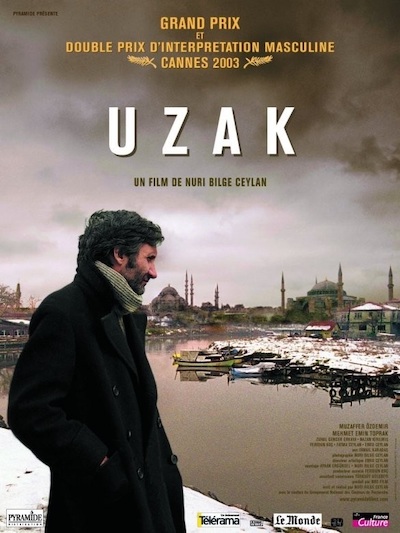
Nuri Bilge Ceylan – Uzak AKA Distant (2002)
Drama2001-2010ArthouseNuri Bilge CeylanTurkey

Quote:
How is it that the same movie can seem tedious on first viewing and absorbing on the second? Why doesn’t it grow even more tedious? In the case of “Distant,” which I first saw at Cannes in 2003, perhaps it helped that I knew what the story offered and what it did not offer, and was able to see it again without expecting what would not come.Read More » -
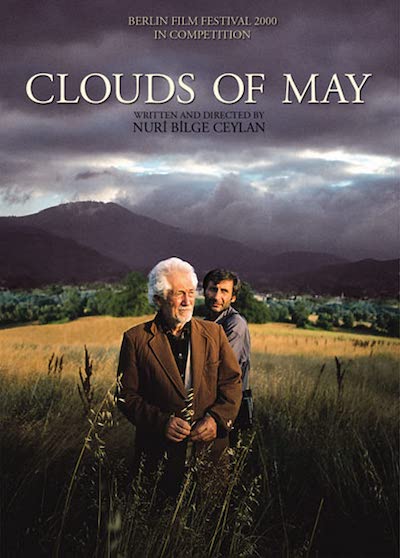
Nuri Bilge Ceylan – Mayis sikintisi AKA Clouds of May (1999)
Drama1991-2000ArthouseNuri Bilge CeylanTurkeySynopsis:
This is a movie within movie, which is almost recursive, i.e., the movie inside looks like director Ceylan’s previous movie, Kasaba. It is about the movie director, Muzaffer, going back to his hometown to make a movie using a cast of local people. While Muzaffer is around, his mother complains about simple health problems, his father is in a legal fight against the government for his land, his cousin gets out of his job to help Muzaffer who promises him to find a job in Istanbul, and his little cousin Ali tries to carry an egg in his pocket for 40 days so that he’ll get the watch of his dreams. In the meantime, they get to form the cast for Muzaffer’s movie as wellRead More » -
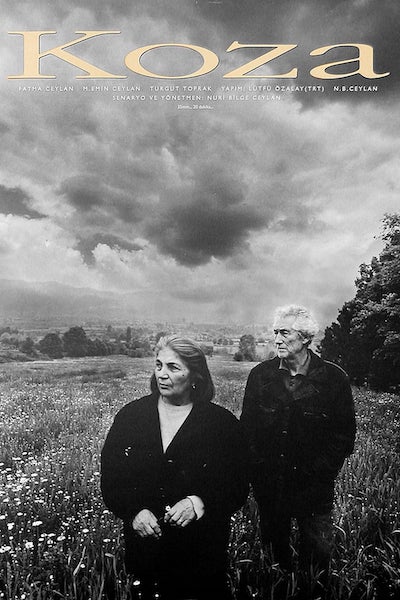
Nuri Bilge Ceylan – Koza AKA Cocoon (1995)
1991-2000ArthouseNuri Bilge CeylanShort FilmTurkey

Synopsis
A short, silent, black and white story about life, survival, death; animals, objects, trees; young and old. It is mostly an aggregation of a bunch of good photos which is not surprising for Ceylan who is also a photographer.Read More » -
Francis Leroi – Les plaisirs solitaires (1977)
1971-1980EroticaFranceFrancis LeroiPlot review:
The misadventures of three women in the same apartment block. After being disappointed with a boyfriend who wants her to whip him and having a lesbian fling with a schoolfriend, Joelle (Maryline Guillaume) finally manages to lose her viriginity with her teacher, Hector, but they are dicovered by her father and she is kicked out of their apartment.
Martine (Carole Gire) is dissatisfied with her husband and seeks pleasure elsewhere, for example with her friend (Dolores Manta and her husband). Martine’s husband finally leaves her.
Read More » -
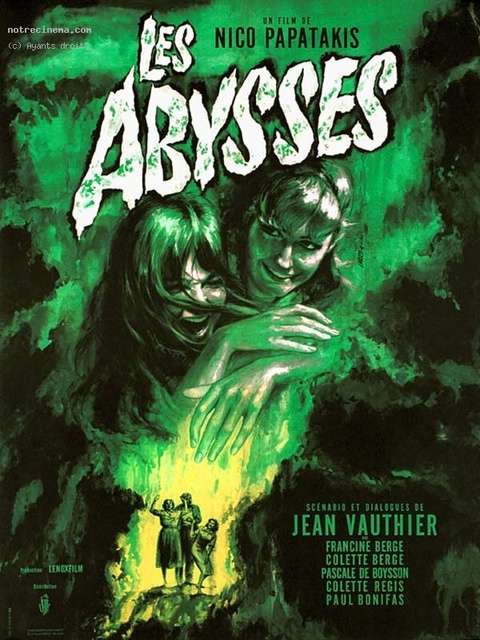
Nikos Papatakis – Les abysses aka The depths (1963)
1961-1970ArthouseDramaFranceNikos PapatakisInspired by “Les Bonnes”, Jean Genet’s play (itself based on the true story of the Papin sisters), adapted by Jean Vauthier (a writer and avant-garde playwright, which is probably why the dialogue is so theatrical. He died in 92 but he was born in 1910 so his centennial was this year, but he is totally forgotten) and by an uncredited Louis Jouvet (according to imdb)
André Malraux, then Minister of Culture (yes, there was, still is, such a Minister in France) wanted the movie to the Cannes Festival. The followers of the Surrealism movement took the Papin sisters case as paradigm of class revolt, and a signal that a social revolution was already taking place. Romantics saw in these grisly murders the emergence of absolute Evil, like Lautréamont in `Les Chants de Maldoror’. Philosophers engaged in the socialist movement wrote passionate texts in defence of those maids, like Jean-Paul Sartre in `Le Mur’, and Simone de Beauvoir in `La Force de l’âge’. Jacques Lacan, in `Écrits’, will develop his first scientific essay on psychoanalysis, following the Papin criminal case. (imdb’s only user comment)Read More » -
Richard Woolley – Drinnen und Draussen AKA Inside and Outside (1974)
1971-1980ExperimentalGermanyRichard WoolleyShort FilmA film set in the front room of a Berlin commune with a large shop window leading to the street outside. The film uses an actor and an actress, a pianist (visible playing the film’s incidental music in the room next door) and occasional people on the street. Scripted action is located inside the room, unscripted on the pavement outside where passers-by occasionally stop and watch the actors in the same way that the audience is watching them on screen from a cinema or the comfort of home. The ‘intellectual/ aesthetic’ rationale for the film (in the director’s words at the time) was to: “signify the similarity of social codes in East and West; to cement – seal with a kiss (there is a central scene where the actor and actress kiss in the traditional Hollywood manner) – two systems that, despite surface differences, seduce and cajole their citizens into obedience and passivity; to emphasise the common bond of bourgeois family values and traditional role-playing prevalent in consumer capitalist and state socialist countries.” An ambitious agenda for a short film, but the serious (immaculately delivered) speeches and exchanges on personal/social positions and solutions are lightened by Woolley’s tongue-in-cheek filmic observations and the comedic role of a pianist, who provides live musical comment and life-support in the room next door. The ending, where the inmates escape from their intellectual prison to the reality of the street outside, is a simple but effective critique of the obsessive search for theoretical answers to everything that hallmarked the early 70’s. [richardwoolley.com]Read More »