• Lewis Allen – The Perfect Marriage (1947)

    1941-1950ClassicsComedyLewis AllenScrewball ComedyUSA


    29f7c043f76a2bde437fd0d52a185152

    Quote:
    Jenny and Dale Williams have been married ten years and parents of a
    nine-year-old daughter, “Cookie” Williams. They live well, have
    separate careers, are surrounded by sophisticated friends, and are
    afflicted with overattentive in-laws on each side. Celebrating their
    tenth anniversary,this, of course, means it is time to tell each other
    they want a divorce from each other. They talk about it. They talk to
    their friends about it. The friends and in-laws talk to them and to
    each other and to anyone who will listen about it.Read More »

  • Steve Lannin & Matthew Caley – Pop Fiction: The Song in Cinema (2005)

    2001-2010BooksSteve Lannin and Matthew Caley


    Synopsis: (Amazon.com)

    The aim of this book is to examine the multifarious placements of the pop song in contemporary cinema through a series of short essays from a variety of perspectives-each looking at the use of ONE pop song in a particular movie. These writings offer the opportunity for in-depth discussion of a cinematic moment(s), rationalising function, condition, method, theory, and practice -by academics, authors & professionals from relevant disciplines. All approaches to deconstructing the relationship of pop song to film- psychological, political, semiotic, theological, post-modern and post-mortem etc., are invited, with an extraordinary collection of interpretations expected. Given that the pop song is no longer the exception but the norm within much mainstream cinema there are surprisingly few books analysing this relationship. There are major works by both Anahid Kassabian, who in ‘Hearing Film’ posits a new, genderised theory, comparing & contrasting song placement with bespoke composition, and Jeff Smith, ‘The Sounds Of Commerce’ dissecting some early song placements from detailed economic and stylistic positions. The earlier “Celluloid Jukebox” is a thematic account, written from a music journalist perspective compiling many films and songs simultaneously but without substantial focus on ‘audio-visual moments’ or theoretical-‘listening’.Read More »

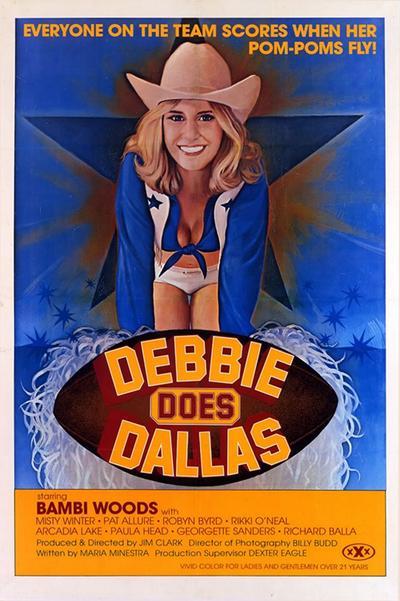
  • Jim Buckley – Debbie Does Dallas (1978)

    USA1971-1980EroticaExploitationJim Buckley

    A cheerleader and her friends need to make money quickly, so they begin selling sexual services.Read More »

  • Richard Brooks – Bite the Bullet (1975)

    USA1971-1980ActionRichard BrooksWestern

    Synopsis:
    In 1906, the popular Western Post newspaper sponsored a demanding cross-country horse race, attracting a motley crew of ambitious contestants. With a tempting $2,000 prize, the bold competitors–including the plucky former prostitute, Miss Jones; the ex-Rough Riders, Luke Matthews and Sam Clayton; a Mexican vaquero with a terrible toothache; the English gentleman, Sir Harry Norfolk; an ageing cowhand, and the arrogant cowboy, Carbo–will have to endure 700 miles of unforgiving desert and rugged terrain. The race is on. Who has what it takes to bite the bullet?Read More »

  • Roberto Rossellini – India: Matri Bhumi [French version] (1959)

    1951-1960ClassicsDocumentaryFranceRoberto Rossellini

    29f7c043f76a2bde437fd0d52a185152

    Quote:
    India runs counter to all usual cinema: here the image is only the complement of the idea that provokes it. India is a film of absolute logic, more Socratic than Socrates. Each image is beautiful not because it is beautiful in itself, like a shot in [Eisenstein’s] Que viva Mexico!, but because it is the splendor of the true and because Rossellini starts with the truth. There where the others won’t arrive except in twenty years perhaps, he has already gone on from.India embraces world cinema, as the theories of Riemann and Planck embrace geometry and classical physics. In a coming issue [of Cahiers du Cinéma], I shall prove why India is the creation of the world.
    Jean-Luc GodardRead More »

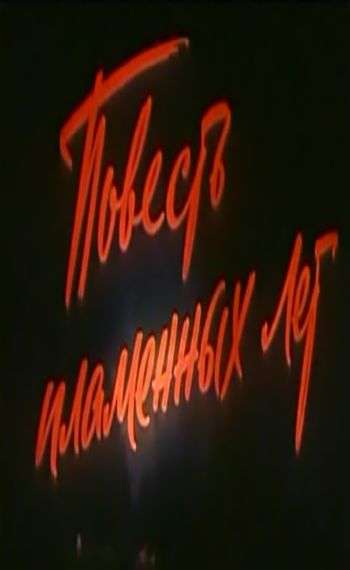
  • Yuliya Solntseva – Povest plamennykh let aka The Story of the Flaming Years (1961)

    1961-1970DramaUSSRWarYuliya Solntseva

    http://img528.imageshack.us/img528/5831/povestplamennyhletpovst.jpg

    29f7c043f76a2bde437fd0d52a185152

    Synopsis
    The war is over. Soviet troops are marching past the captured Reichstag (former seat of government) in Berlin. A young soldier with a submachine gun in hand, a Ukrainian peasant from the Dnipro region, Ivan Orliuk pauses, towering by the Brandenburg Gates. He stands like a magnificent monument. Before the war, Orliuk’s was the most peaceful of occupations—he tilled the soil. With the war, he took to arms to cover a difficult road from the Dnipro all the way to Berlin.Read More »

  • Frank Mosvold – Summer Blues (2002)

    Drama2001-2010Frank MosvoldNorwayQueer Cinema(s)Short Film

    29f7c043f76a2bde437fd0d52a185152

    A film about four teenagers, two boys and two girls, and their relationship. It is a story of love and friendship, of loss and discovery, of the transition from childhood to maturity.

    Mads and Kristian spend a summer weekend with their girlfriends at a summerhouse by the sea. When Mads and his girlfriend have a fight we find that Kristian may love someone else.Read More »

  • Jacques Audiard – De battre mon coeur s’est arrêté AKA The Beat That My Heart Skipped (2005)

    2001-2010CrimeDramaFranceJacques Audiard

    Twenty-eight-year-old Tom leads a life that might be termed as criminal. In doing so, he follows in the footsteps of his father, who made his money from dirty, and sometimes brutal, real estate deals. Tom is a pretty hard-boiled guy but also strangely considerate as far as his father is concerned. Somehow he appears to have arrived at a critical juncture in his life when a chance encounter prompts him to take up the piano and become a concert pianist, like his mother. He senses that this might be his final opportunity to take back his life. His piano teacher is a Chinese piano virtuoso who has recently come to live in France. She doesn’t speak a lick of French so music becomes the only language they have in common. Before long, Jacques’ bid to be a better person means that he begins to yearn for true love. But, when he finally has the chance of winning his best friend’s wife, his passion only succeeds in scaring her. And then, one day, his dubious past comes to light…Read More »

  • Shinya Tsukamoto – Tetsuo (1988)

    1981-1990AsianCultJapanShinya Tsukamoto

    29f7c043f76a2bde437fd0d52a185152

    Quote:
    An hour-long feature from Japanese director Shinyu Tsukamoto, Tetsuo (also known as Tetsuo: The Iron Man) tells a horrific, cyberpunk-influenced science fiction tale about the intersection of man and post-industrial technology. The central character is a Japanese salary man, an average office worker who is transformed by a brief encounter with a metals fetishist, a man who has purposefully implanted pieces of scrap metal in his body. The salary man soon begins sprouting pieces of metal from various parts of his body, a change which is accompanied by increasingly nightmarish visions and bizarre, metal-filled sexual fantasies. As the man evolves into a strange hybrid of man and machine, he also develops a telepathic connection with another of his kind: the metal fetishist, who has been undergoing a similar conversion, and may indeed be the cause of the salary man’s transformation. The two engage in a violent, destructive battle throughout the streets of Tokyo, accompanied by an appropriately industrial soundtrack. Shot on a small budget in 16 millimeter black-and-white, Tsukamoto reprised many of the images and plot elements of Tetsuo in a higher-budgeted sequel, Tetsuo II: Body Hammer.AMGRead More »

Back to top button