• Alfred Hitchcock – Young and Innocent (1937)

    United Kingdom1931-1940Alfred HitchcockClassicsThriller
    Young and Innocent (1937)
    Young and Innocent (1937)

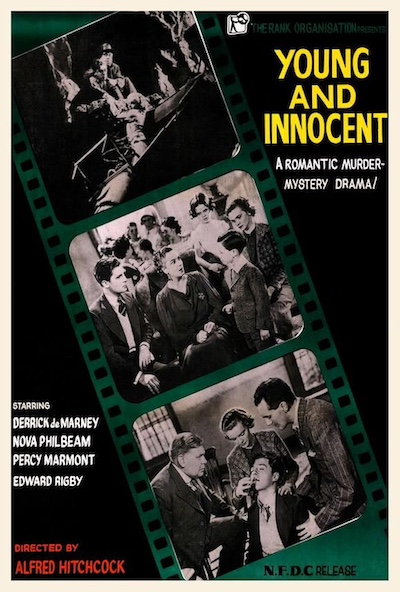
    Synopsis: As early as 1937’s Young and Innocent, Alfred Hitchcock was beginning to repeat himself, but audiences didn’t mind so long as they were thoroughly entertaining-which they were, without fail. Derrick De Marney finds himself in a 39 Steps situation when he is wrongly accused of murder. While a fugitive from the law, De Marney is helped by heroine Nova Pilbeam, who three years earlier had played the adolescent kidnap victim in Hitchcock’s The Man Who Knew Too Much. The obligatory “fish out of water” scene, in which the principals are briefly slowed down by a banal everyday event, occurs during a child’s birthday party. The actual villain, whose identity is never in doubt (Hitchcock made thrillers, not mysteries) is played by George Curzon, who suffers from a twitching eye. Curzon’s revelation during an elaborate nightclub sequence is a Hitchcockian tour de force, the sort of virtuoso sequence taken for granted in these days of flexible cameras and computer enhancement, but which in 1937 took a great deal of time, patience and talent to pull off. — Hal EricksonRead More »

  • Jacques Becker – Le Trou AKA The Hole (1960)

    1951-1960ClassicsCrimeFranceJacques Becker

    29f7c043f76a2bde437fd0d52a185152

    Reviewed by Glenn Erickson

    Le Trou (literally, The Hole) is a harrowing experience in claustrophobia, pressure and hope among inmates in a French prison. The hopes and aspirations of the overcrowded members of one prison cell are put to the test as they commit their trust to luck and each other, to effect a difficult escape. Jacques Becker’s final film is the most realistic prison break movie Savant’s seen – as we all know how these stories usually turn out, the tension and suspense grow, every desperate step of the way.

    Synopsis:
    The La Santé is overcrowded because of construction, and five men are put into each cell instead of four. But in one cell, the inmates are secretly delighted. Claude Gaspard (Marc Michel), faces a long sentence and therefore can be trusted. He’ll be the extra man needed for a daring, complicated escape the men have planned, that requires nerve, deception, and a lot of digging. The scheme is such a beautifully executed communal effort, that when the first diggers break through to the outside world, they dutifully go back so that their comrades can escape too.Read More »

  • Abbas Kiarostami – Be Tartib ya Bedoun-e Tartib AKA Orderly or Unorderly (1981)

    1981-1990Abbas KiarostamiIranShort Film

    SYNOPSIS:
    This film’s first shot shows students descending a staircase in a calm, orderly fashion. Its second portrays the same action as a chaotic rush. Separated by slates and Kiarostami’s voice intoning, “sound, camera,” subsequent sequences describe the same dichotomous behavior in a schoolyard, on a school bus, and in the haphazard traffic of Tehran. Kiarostami described this as “a truly educational film,” but it plays more like a quirky philosophic aside.Read More »

  • Noboru Tanaka – Jitsuroku Abe Sada aka A Woman Called Abe Sada (1975)

    1971-1980ArthouseEroticaJapanNoboru Tanaka

    29f7c043f76a2bde437fd0d52a185152

    Critical Appraisal (From Wiki)
    Midnight Eye’s review of A Woman Called Sada Abe compares it to In the Realm of the Senses, notes, “Aside from being less sexually explicit, it is also smaller scale, more intimate, more cinematically stylised and arguably more erotic.”[5]

    A Woman Called Sada Abe is generally considered one of Nikkatsu’s five best Roman porno films.[1] Many Japanese critics consider it to be superior to Oshima’s internationally better-known In the Realm of the Senses, and Junko Miyashita is called a more realistic Sada Abe than Eiko Matsuda.[2] Miyashita’s performance in the film has been judged one of the best of her career, and the film has been called director Tanaka’s masterpiece.[1]Read More »

  • Bernard Émond – Tout ce que tu possèdes AKA All That You Possess (2012)

    2011-2020Bernard ÉmondCanadaDrama

    29f7c043f76a2bde437fd0d52a185152

    Quote:
    Pierre Leduc leaves his job as a university lecturer in an effort to escape the world, only to have his plans thwarted as two family members reach out to him: first, his dying father, who wants to leave him a fortune of ill-gotten gains, and then the young daughter whom he abandoned years ago.

    Québécois cinema has often explored the bonds that keep us together, but rarely has the subject been addressed so elegantly or so powerfully. An obsessed scholar attempts to withdraw from the world but finds personal ties drawing him back into the family he had left behind, in this novelistic, beautifully modulated drama from acclaimed Québécois filmmaker Bernard Émond. Tout ce que tu possèdes is characterized by a meditative style, a novelist’s eye for detail and startlingly beautiful grace notes. @TiffRead More »

  • Raymond Bernard – Maya (1949)

    Arthouse1941-1950Film NoirFranceRaymond Bernard

    Very weird piece of mystic low-life exotica, with perennial foreigner Valery Inkijinoff as Eastern sage dispensing strange wisdom and Viviane Romance looking stunning in Betty Page fringe as a prostitute and femme fatale. Lots of Third Manic running around in a sort of non-specifically-exotic soukh set, crime, atmosphere and Marcel Dalio. Quite peculiar by Raymond Bernard’s standards, but VERY diverting.Read More »

  • Mohsen Makhmalbaf – Nun va Goldoon AKA A Moment of Innocence (1996)

    1991-2000DramaIranMohsen Makhmalbaf

    http://images.amazon.com/images/P/B0009PW3RE.01._SCLZZZZZZZ_.jpg

    29f7c043f76a2bde437fd0d52a185152

    Quote:
    Analyzing the intricacies and variances between differing film titles is something of an indulgence for film critics, especially when they’re searching for a quick, utilitarian lead into otherwise complex films. Mohsen Makhmalbaf’s film à clef revisitation (or, rather, a cinematic palimpsest) of a violent 1974 encounter from his past as an angry young fundamentalist went by the title A Moment of Innocence in its European and American releases, but its original Farsi title was actually Bread and Flower. The latter title refers to the two objects that play into the all-important remembered event, when Makhmalbaf stabbed one of the Iranian Shaw’s policemen in an attempt to snatch his gun away, an attack that led to the future director’s incarceration. (Makhmalbaf hid his knife under a circle of flatbread; the policeman was holding a flower he intended to offer the entrancing young girl who, unbeknownst to him, was actually a decoy intended to distract the cop so Makhmalbaf could steal his firearm.) Some 20 years later, while a reformed and de-radicalized Makhmalbaf was directing Salaam Cinema, the now former-policeman approached Makhmalbaf again, their meeting (and triggered memories) spurning A Moment of Innocence, a title of which seems to echo the film’s aura of reflective enlightenment and mutual cooperation between the two men (as opposed to the Farsi title’s emphasis on the fragmented multiplicity of memory).Read More »

  • Kristina Buozyte – Aurora aka Vanishing Waves (2012)

    2011-2020Kristina BuozyteLithuaniaRomanceSci-Fi

    29f7c043f76a2bde437fd0d52a185152

    A neuron-transfer scientist experiments with the thoughts of a comatose young woman.
    Read More »

  • Wim Wenders – Tokyo Ga (1985)

    1981-1990ArthouseDocumentaryUSAWim Wenders

    Quote:
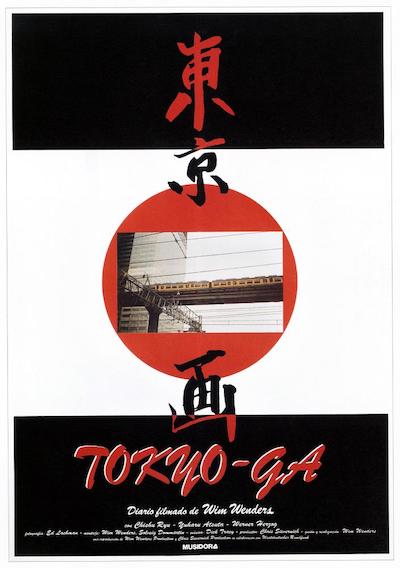
    Taking a breather from the Paris, Texas shooting, Wim Wenders hopped a plane, camera in hand, to look for the Tokyo enshrined by the late Yasujiro Ozu (whose work Wenders dubs “the sacred treasure of the cinema”). What he found instead, documented in this filmic journal, was an urbanized dislocation not far from the forlorn emptiness he coached out of German and American vistas. Whether abstracting businessmen teeing off atop skyscrapers or the rigorous, artisanal craft of building a wax sandwich display, Wenders scrambles for humanity seeping through neon and steel — a humanity linked, inevitably, to the old Japan of Ozu’s films (rebellious tykes, cherry blossoms, tranquil countrysides).Read More »

Back to top button