Quote:
Sayoko rents out cats to help lonely people fill the emptiness in their hearts. She walks along the banks of the river with a megaphone promoting her service and her animals in a handcart. It turns out that Sayoko is lonely too, ever since the death of her grandmother. All she has left is her cats. However, one day a young man shows up from Sayoko’s past. He follows her home and suddenly Sayoko’s life seems to completely fall apart.Read More »
-
Naoko Ogigami – Rentaneko aka Rent-a-Cat (2012)
2011-2020ComedyDramaJapanJapanese Female DirectorsNaoko Ogigami -
Clarence G. Badger – The Ropin’ Fool (1922)
1921-1930Clarence G. BadgerSilentUSAWestern
In Ropin’ Fool (1922) Rogers plays Ropes Reilly, a cowboy who ropes anything that moves until a lynch mob decides to use Reilly’s rope for a hanging party, with Reilly as the guest of honor. Motion Picture World wrote: “Plentiful use of slow motion photography shows how it is done and dispels any possible belief that the stunts are faked. No audience can help but marvel as Rogers throws a figure eight around a galloping horse, or lassoes a rat with a piece of string, or brings to term a cat melodiously inclined.” Later Rogers would wryly claim fame as America’s “Poet Lariat.”
Read More » -
Bruno Dumont – Camille Claudel, 1915 (2013) (HD)
ArthouseBruno DumontDramaFranceQuote:
Winter, 1915. Confined by her family to an asylum in the South of France – where she will never sculpt again – the chronicle of Camille Claudel’s reclusive life, as she waits for a visit from her brother, Paul Claudel.
Read More » -
Luis Buñuel – Abismos de pasión AKA Wuthering Heights (1954)
1951-1960ArthouseLuis BuñuelMexicoRomanceQuote:
Unlike William Wyler’s inferior 1939 film adaptation, Luis Buñuel’s Abismos de Pasión is more than a literate extrapolation of Emily Bronte’s gothic masterpiece Wuthering Heights, which certainly must count as one of the five greatest novels of the English language. Though not overtly surreal, Buñuel’s minor classic is fraught with the kind of feverish contradictions typically heir to his cinematic dogma. Critic Manny Farber observed in his eulogy for Val Newton (published in The Nation back in April of 1951) how Jacques Tourneur’s The Leopard Man gives “the creepy impression that human begins and ‘things’ are interchangeable and almost synonymous and that both are pawns of a bizarre and terrible destiny.” Farber felt the Surrealists had never been able to transform the psychological effects of their dramas into a realm of the non-human but, four years later, Buñuel would accomplish something similar with his very Latin rendition of Bronte’s classic. The film’s dreary exteriors (the trees without leaves, the buzzards on constant alert) evoke a landscape of spiritual unrest, a breezy gateway between the living and the dead. While the film arouses the dreaminess of the original text, death signifies more than the lead couple’s transcendence of the flesh—it’s also a fascinating wish fulfillment.Read More » -
Benoît Jacquot – Villa Amalia (2009)
2001-2010Benoît JacquotDramaFrance“From the opening rain-swept scene, in which a distraught woman, Ann (Huppert), follows her longtime b.f. Thomas (writer-director Xavier Beauvois) to his mistress’ house, actress and camera coexist in urgent lockstep. Ann’s refusal to process her lover’s betrayal radically disconnects her from any sense of continuum, her jerky, determined movements mirrored by disruptive closeups, and gaps in time and space open up between scenes as every action fades to black.
Ann discards all vestiges of her successful career as a composer/pianist — walking out in the middle of a concert, burning her sheet music and celebrated CDs. She sells her austerely luxurious Paris apartment and disposes of everything in it, turns off her phone, closes out her accounts and disappears, the camera recording every painstaking phase of the unexpectedly hard work involved. The only link she retains to her past is a long-lost childhood friend (Jean-Hugues Anglade), whom she unexpectedly runs into on the night she discovers her b.f.’s infidelity.
Read More » -
Kon Ichikawa – Koibito aka The Lover (1951)
Japan1951-1960AsianKon IchikawaRomancesynopsis
The day before her wedding, a young woman goes out one last time with an old boyfriend.
Read More » -
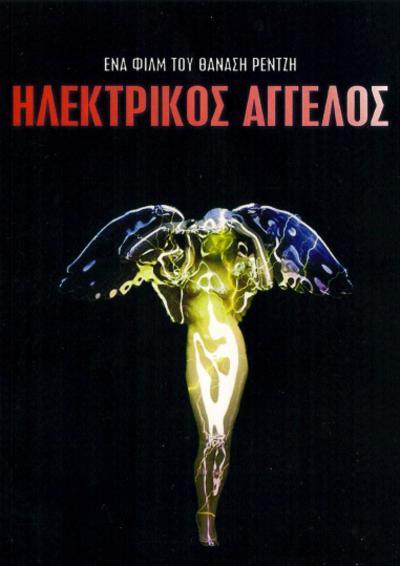
Thanasis Rentzis – Ilektrikos Angelos AKA Electric Angel (1981)
1981-1990ExperimentalGreeceThanasis RentzisFilm synopsis:
An experimental film, in which a variety of audiovisual techniques are used to create the sense of polymorphic eroticism as developed by European and Mediterranean cinematography of the 20th century. Combining the methods of “animation” and “live action”, this intricate work embodies the idea of an “ars combinatoria”. The structure is loose, with neither a central axis nor a point where everything converges, contributing greatly to the open-ended character of the film, where rhythm is the key element.Read More »
-
Lewis Seiler – Whiplash (1948)
1941-1950DramaFilm NoirLewis SeilerUSAPlot:
Michael Gordon never intended to be a boxer. But after he decks a burly brawler at a nightclub, a ring promoter encourages him to give the fight game a shot. Gordon, whose career as an artist is going nowhere, agrees. Besides, it will bring him closer to the woman who has KO’d his heart – the promoter’s wife. The corrupt world of boxing was a staple of postwar Hollywood in well-known works like Body and Soul, The Set-Up and Champion and in lesser yet admirable works like Whiplash. Romantic melodrama and noirish atmospherics combine in this tale starring Dane Clark, Alexis Smith, Zachary Scott, Eve Arden and other reliables. Future The Mickey Mouse Club host Jimmie Dodd has an uncredited role as a piano man. From Warner Brothers!
Read More » -
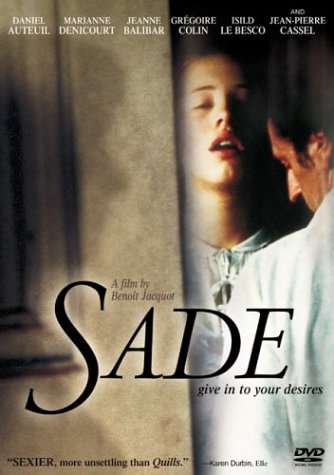
Benoît Jacquot – Sade (2000)
1991-2000Benoît JacquotDramaFranceThe Marquis de Sade in a More Complex Guise
Raving lunatic or subversive bad boy? Revolutionary intellectual or fiend from hell? The Marquis de Sade is such an inflammatory figure that when you contemplate his life, the imagination tends to run wild. But as embodied by the French actor Daniel Auteuil in ”Sade,” Benoît Jacquot’s smart, cool-headed costume drama, the marquis is a disturbingly recognizable figure: a sly, charming, ruthlessly arrogant bon vivant with a scary current of rage zipping like a live wire under his reptilian surface.When Sade casts a hard, beady-eyed gaze on a virginal young woman, his expression is the cold, evaluative stare of a jaded predator. In his too-glittering eyes, you can almost read the graphic sexual scenarios dancing through his mind. Mr. Auteuil’s Sade, with his mixture of tense, coiled civility and ferocious willfulness, has almost nothing in common with the histrionic madman played by Geoffrey Rush in ”Quills.” Mr. Rush’s Sade, for all its high dramatic flourishes, conveniently excused the viewer from having to judge the Marquis. Because his character was so obviously crazy, he was not one of us.Read More »