• blackANDwhite – Lynch (2007)

    2001-2010blackANDwhiteDocumentaryExperimentalUSA

    Manohla Dargis’ review from The New York Times (October 26, 2007):
    Manohla Dargis wrote:
    A Man, His Movies and, Sometimes, His Monkey

    Whether you dig “Lynch,” a feature-length video visit with the director David Lynch, will largely depend on your views of his work and whether you think there’s something instructive and characteristically wonderful and weird about him telling an assistant, “I want a one-legged 16-year-old girl.” It says something about the unflappable nature of his employees or their familiarity with his desires that the assistant doesn’t appear startled by this request or his ensuing demands for “a Eurasian” and “a pet monkey.”Read More »
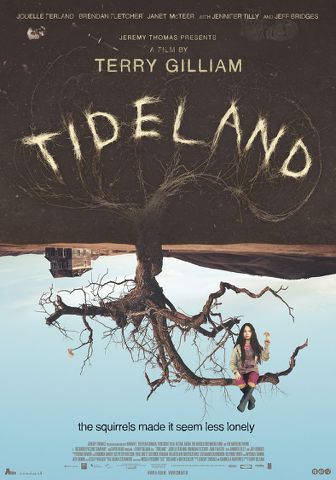
  • Terry Gilliam – Tideland [+Extras] (2005)

    2001-2010ArthouseCanadaFantasyTerry Gilliam

    29f7c043f76a2bde437fd0d52a185152

    Quote:
    After her mother dies from a heroin overdose, Jeliza-Rose is taken from the big city to a rural farmhouse by her father. As she tries to settle into a new life in a house her father had purchased for his now-deceased mother, Jeliza-Rose’s attempts to deal with what’s happened result in increasingly odd behavior, as she begins to communicate mainly with her bodiless Barbie doll heads and Dell, a neighborhood woman who always wears a beekeeper’s veil.Read More »

  • Béla Tarr – Panelkapcsolat aka The Prefab People (1982)

    1981-1990Béla TarrDramaHungary

    29f7c043f76a2bde437fd0d52a185152

    “It’s the rawness of the film that makes us believe we are unquestionably seeing the truth.”

    Reviewed by Dennis Schwartz

    A heavy going realistic slice of life domestic drama that is filmed in black and white. It’s a followup to Béla Tarr’s other domestic strife tales Family Nest and The Outsider. This one keys in on marital strife. It’s about a struggling young couple’s confrontations and their own inability to freely communicate with each other. Tarr was evidently influenced by the works of Ranier Werner Fassbinder and John Cassavettes.Read More »

  • Doris Wishman – Hideout in the Sun (1960)

    Drama1951-1960Doris WishmanErotica
    Hideout in the Sun (1960)
    Hideout in the Sun (1960)

    Synopsis:
    Two brothers rob a bank and take a young girl hostage. They find out that the girl is a nudist, so they force her to take them to a nudist colony so they can hide out.Read More »

  • Michael Haneke – Benny’s Video (1992)

    1991-2000ArthouseAustriaDramaMichael Haneke

    29f7c043f76a2bde437fd0d52a185152

    Quote:
    The second part of Haneke’s “glaciation trilogy” begins with a buzz and a bang: the white noise of a television screen snow shower and then the bang of a pig being shot on the subsequent home video. Benny’s Video is the most accessible film of the trilogy, but still never departs from Haneke’s powerful concoction of brutal images and laconic montage. Benny is a neglected son of rich parents in Vienna. He spends his days and nights in his room lost in a cobweb of video equipment, cameras, monitors and editing consoles. He keeps his shades drawn at all times and experiences the outside world mediated through the camcorders he has set up outside his windows. He obsessively reviews the farmyard killing of a pig in forward and reverse, slow motion and freeze-frame. Intermittently, he flips through channels full of news on neo-nazi killings, toy commercials, war films and reports on the incipient war in Yugoslavia. One day he meets a girl at the video store and invites her back to his empty house. He shows her the stun-gun used to kill the pig and shoots her with it. The girl’s death is shot visually out of the camera’s frame although the audience is privy to excruciating minutes of screams and whimpers. In the end, Benny foils his parents’ perversely cynical attempt to cover up the murder.Read More »

  • Derek Jarman – Caravaggio (1986)

    1981-1990ArthouseDerek JarmanUnited Kingdom

    29f7c043f76a2bde437fd0d52a185152

    Quote:
    When experimental director Derek Jarman was serving as production designer on 1973’s The Devils, that film’s director, Ken Russell, was already established as a radical master of the biopic, turning historical and pop culture personalities into grist for his own obsessions and visual quirks. Oddly, it took Jarman over a decade to try his hand at the same approach with Caravaggio, a visually overwhelming examination of the famous painter who redefined the use of light in painting and scandalized the church by portraying sacred figures as dirty, commonplace peasants. Of course, the painter’s life was no less remarkable; a ruffian prone to fighting, gambling, and copulating apparently every waking moment he wasn’t holding a paintbrush, Caravaggio could be read in many ways as a prototype for today’s modern celebrity.Read More »

  • Béla Tarr – Werckmeister harmóniák AKA Werckmeister Harmonies (2000)

    1991-2000ArthouseBéla TarrHungaryMystery

    29f7c043f76a2bde437fd0d52a185152

    Synopsis:

    This story takes place in a small town on the Hungarian Plain. In a provincial town, which is surrounded with nothing else but frost. It is bitterly cold weather – without snow. It is twenty degrees below zero. Even in this bewildered cold hundreds of people are standing around the circus tent, which is put up in the main square, to see – as the outcome of their wait – the chief attraction, the stuffed carcass of a real whale. The people are coming from everywhere. From the neighbouring settlings, from different holes of the Plain, even from quite far away parts of the country. They are following this clumsy monster as a dumb, faceless, rag-wearing crowd. This strange state of affairs – the appearance of the foreigners, the extreme frost – disturbs the order of the small town. The human connections are overturning, the ambitious personages of the story feel they can take advantage of this situation, while the people who are condemned anyway to passivity fall into an even deeper uncertainty. The tension growing to the unbearable is brought to explosion by the figure of the Prince, who is pretending facelessness and is lying low behind the whale. Even his mere appearance is enough to break loose the destroying emotions. The apocalypse that sweeps away everything spares nothing. I does not spare the outsiders wrapped up in scientificness, does not spare the teenage enthusiasts, the people who have philistine fears for ease, the family – nothing that the European culture preserved as from of attitude in the last centuries.Read More »

  • Peter Brosens & Jessica Hope Woodworth – Khadak (2006)

    2001-2010ArthouseDramaJessica Hope WoodworthMongoliaPeter Brosens

    Set in the frozen steppes of Mongolia, Khadak tells the epic story of Bagi, a young nomad confronted with his destiny to become a shaman. A plague strikes the animals and the nomads are forcibly relocated to desolate mining towns. Bagi saves the life of a beautiful coal thief, Zolzaya, and together they reveal the plague was a lie fabricated to eradicate nomadism. A sublime revolution ensues.Read More »

  • Nami Iguchi – Inuneko AKA Dogs & Cats AKA The Cat Leaves Home (2004)

    2001-2010AsianComedyJapanNami Iguchi

    29f7c043f76a2bde437fd0d52a185152

    Quote:
    This is the first feature by Iguchi Nami, who more recently made the film Don’t Laugh at My Romance. Inuneko is also known as The Cat Leaves Home and as (more literally) Dogs & Cats or even Dog/Cat. The title refers to the personalities of the two heroines–one sly and flirtatious, the other stubborn and introverted.

    Iguchi actually shot this as a 8mm feature (in 2001 I believe) before “remaking” it in 35mm. The 8mm feature is also on DVD but I don’t have it; I’d love to see it, provided subtitles are available.

    This 35mm version is the one that played commercially in Japan and made it to festivals worldwide. As far as I know, it wasn’t released commercially outside of Japan, which is a shame as this is one of the most charming recent Japanese films i know. It’s shot in the long-take style preferred by many Asian independent filmmakers, but in a mode closer to, say, the deadpan comedy of Jarmusch than to the muted intensity of Kore-eda. I suppose, in the Japanese cinema, it’s closest in tone to Yamashita Nobuhiro’s Linda Linda Linda.Read More »

Back to top button