Quote:
Slovak director Juraj Jakubisko is often described as the Fellini of Eastern Europe. After the 1968 film The Deserter and the Nomads, he was put in exile in Czechoslovakia after the soviet invasion. With cooperation from a Paris film studio he made this film. Birds Orphans and Fools is a brilliant, surreal and underrated tragic comedy that not many people seem to know about. The story is about three orphans who have lost their families in war. Although the two men Andrej and Yorick and the lady Marta are adults, they act foolish like children trying to live life to the fullest. They resort with their landlord and other orphans in an apartment that is distorted with various shelves, cupboards and animals scattered about. But the main characters can’t block out the pain of living in a war torn country, and after Yorick is put in prison and returns a year later, things will never be the same. Towards the end the climax becomes maybe one of the most tragic in cinema history. This was the first film in Jakubisko’s trilogy of Happiness. If you enjoyed Jodorowsky’s Fando & Lis or Vera Chytilova’s Daisies, you have to see this film.Read More »
-
Juraj Jakubisko – Vtáckovia, siroty a blázni AKA Birds, Orphans and Fools (1969)
1961-1970ArthouseJuraj JakubiskoSlovakia -
Mauro Bolognini – Madamigella di Maupin AKA Mademoiselle de Maupin (1966)
Comedy1961-1970AdventureItalyMauro Bolognini

Maddalena (the radiant Catherine Spaak) is obliged to dress as a young cleric to escape an invading army, which gets her into hot water as she is forcibly drafted to fight on the other side under the fiery Alcibiade (Robert Hossein). This leads to a series of comic misunderstandings as Alcibiade begins to suspect himself of unnatural feelings for a brother officer. A delightfully frivolous, sexy entertainment, enhanced by the director’s light touch with period detail.Read More »
-
Frank Henenlotter – That’s Sexploitation! (2013)
2011-2020DocumentaryExploitationFrank HenenlotterBefore the advent of modern-day pornography, a vast and rapidly-paced world of smut peddling was the norm, complete with its own secret history. This documentary reveals the untold story of American cinema’s gloriously sordid cinematic past. Starting in the 1920s, expert exploiteer David F. Friedman and Henenlotter navigate us through more than five salacious decades of skin flicks. It’s the true story of dirty movies, traced in elegant detail from the bizarre locations where these nudie shorts were screened to the ongoing legal battles fought by their promoters. And of course there are the stories of the innovators themselves, people who often risked their own security and livelihood to make these films, believing in some way that what they were doing wasn’t a ‘bad’ thing – and that it could rake in some dough. Read More »
-
Masahiro Shinoda – Sakura no mori no mankai no shita AKA Under the Blossoming Cherry Trees (1975)
Drama1971-1980JapanMasahiro ShinodaRomancePlot:
When a mountain man (Lone Wolf and Cub’s Tomisaburo Wakayama) kills a man and steals his wife (Shima Iwashita), he bites off more than he can chew. Rather than being a submissive victim, the beautiful woman soon browbeats her murderous husband into total compliance, convincing him to murder all but one member of his harem of dirty mountain women. She soon becomes his wife, and convinces him to take her (and the one girl she spared, now a maid) to the capital, where the mountain man begins his new vocation: collecting heads for his wife, who uses them as props in her own personal melodramas. Soon, Wakayama (his character has no name) becomes a feared figure in the city, and his wife’s collection of heads grows and grows. But how long can it last?Read More » -
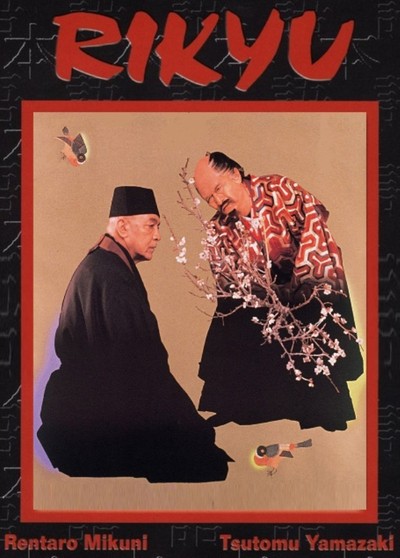
Hiroshi Teshigahara – Rikyu (1989)
1981-1990ArthouseDramaHiroshi TeshigaharaAcclaimed director and headmaster of the Sogestsu school of flower arranging Hiroshi Teshigahara helms this elegant historical drama about tea master Sen no Rikyu. A Buddhist priest who talks of the beauty of a single flower or the shape of a hand holding a teacup, Rikyu (played by Rentaro Mikuni) not only perfected the art of the tea ceremony, but he was one of the primary arbiters of taste during his age. That era was a bloody one, culminating in the uniting of Japan’s disparate kingdoms by a series of strong leaders. The most ambitious and the most extravagant was Toyotomi Hideyoshi (Tsutomu Yamazaki), who favored flashy displays of wealth as much as he did violent conquest. Hideyoshi thought of the tea ceremony not as an art but as a show of refinement and power. In 1587 he held a ten-day tea-drinking orgy in Kyoto and Osaka. Hideyoshi chose Rikyu to oversee it and soon the buffoonish, violent leader and the reserved master were engaged in a thinly veiled clash of wills. Rikyu eventually does teach Hideyoshi that beauty is found in the minute. Yet when Hideyoshi receives both guns and a globe from Portuguese missionaries, he is overwhelmed with Napoleonic visions. When Rikyu expresses his reservations about Hideyoshi’s impending invasion of Korea and China, the potentate demands an apology. — Jonathan Crow allmovie.comRead More »
-
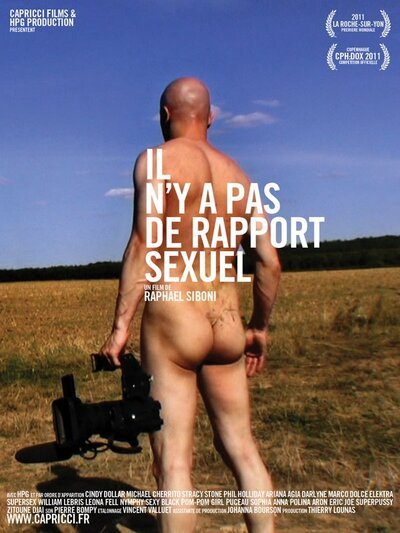
Raphaël Siboni – Il n’y a pas de rapport sexuel AKA There is no sexual rapport (2011)
2011-2020DocumentaryEroticaFranceRaphaël SiboniQuote:
A rambling, amusing and occasionally poignant examination of one man’s career as a director/performer of pornography. This behind-the-scenes look at the skin flick trade and its prominent purveyor Hervé P. Gustave, who goes by the moniker HPG, reveals the trials and tribulations that go hand in hand (or shaft in slot, as the case may be) with the creation of said material, such as getting money shots, shooting around anatomy for soft porn gigs, and coaxing reluctant amateurs to perform as the clock is ticking. Culled from 10 years of oh-so-very-unerotic footage, renowned visual artist Siboni shapes an intriguing portrait, one that never glorifies or condemns its subject or his chosen profession.Read More » -
Ming-liang Tsai – Qing shao nian nuo zha AKA Rebels of the Neon God (1992)
1991-2000DramaMing-liang TsaiTaiwanQuote:
On a raining evening at a nondescript telephone booth in Taipei, two petty criminals, Ah-tze (Chen Chao-jung) and his friend Ah-ping (Jen Chang-bin) drill through the lock of the public telephone and steal the contents of the collection box. In another part of the city, an unmotivated and distracted student named Hsiao-Kang (Lee Kang-sheng) encounters a cockroach in his room, stabs the insect with the point of his compass, and tosses its dead carcass into the turbulent wind, only to find the seemingly tenacious vermin resurface on the other side of his window. In a quintessential, understatedly amusing scene, Hsiao-Kang unsuccessfully attempts to swat the insect, crashes his palm through the window, and calmly walks into the bathroom to dress his injured hand, amidst the perplexed and inquisitive gaze of his father (Tien Miao) and mother (Lu Hsiao-Ling).Read More » -
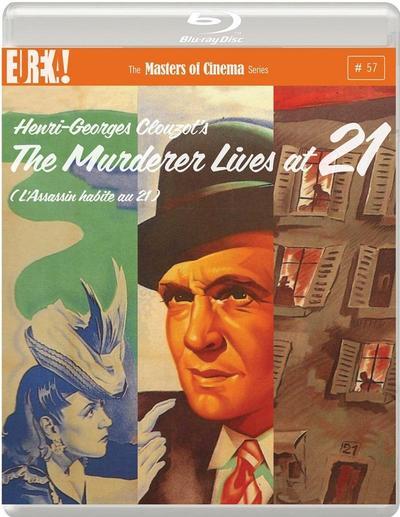
Henri-Georges Clouzot – L’assassin habite… au 21 aka The Murderer Lives at 21 [+extra] (1942)
1941-1950ComedyFranceHenri-Georges ClouzotMysteryEureka, Masters of Cinema wrote:
One of the most revered names in world cinema, Henri – Georges Clouzot, made a remarkably self – assured debut in 1942 with the deliciously droll thriller The Murderer Lives at 21 [L ‘ Assassin habite au 21].A thief and killer stalks the streets of Paris, leaving a calling card from “Monsieur Durand” at the scene of each crime. But after a cache of these macabre identifications is discovered by a burglar in the boarding house at 21 Avenue Junot, Inspector Wenceslas Vorobechik (Pierre Fresnay) takes lodging at the infamous address in an undercover bid to solve the crime, with help from his struggling – actress girlfriend Mila (Suzy Delair).
Featuring audacious directorial touches, brilliant performances, and a daring tone that runs the gamut from light comedy to sinister noir, as well as a subtle portrait of tensions under Nazi occupation, this overlooked gem from the golden age of French cinema is presented in a beautiful new high – definition restoration.Read More »
-
Satyajit Ray – Aranyer Din Ratri AKA Days and Nights in the Forest (1970)
1961-1970DramaIndiaSatyajit RayQuote:
Widely regarded as one of Satyajit Ray’s most magnificent films, “Days and Nights in the Forest” is a beautiful and touching story about four young middle class men who leave Calcutta to spend some time in an empty bungalow in the forests of Palmau.Full of the confidence of the big city, and with little respect for the rural villagers, the boys learn several lessons about life and love as their conceited worldview is challenged by their experiences with the local girls of Palmau.Read More »