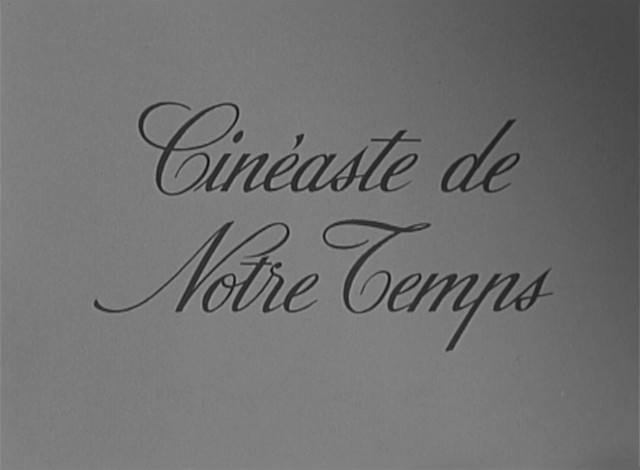
This episode of the French program ‘Cinéastes de notre temps” takes a closer look at the image and legacy of Sacha Guitry. Included in it are archival interviews with producer and director André Labarthe (Hitchcock & Ford), actors Michel Simon and Jeanne Fusier-Gir, director Christian Jaque (Fanfan La Tulipe), and producer Gilbert Bokanowski (If Paris Were Told to Us), among others.Read More »
-
Claude de Givray – Cinéastes de notre temps : Sacha Guitry (1965)
1961-1970ClassicsClaude de GivreyDocumentaryFrance -
John Grierson – Drifters (1929)
1921-1930DocumentaryJohn GriersonUnited KingdomThe story of the North Sea herring fisheries, filmed at Lerwick, in the Shetlands, Lowestoft and Yarmouth and in the North Sea.
~~~— Henry K Miller, From Battleship Potemkin to Drifters, BFI booklet wrote:
The London Film Society’s screening of Sergei Eisenstein’s Battleship Potemkin (1925) and John Grierson’s Drifters (1929) on Sunday 10 November 1929, at the Tivoli cinema in the Strand, is the most celebrated double-bill in British film history. Potemkin, making its British debut more than three years after it shook the film world, had a formidable reputation to live up to. Drifters, on the other hand, was the first film of a director whose only prior filmmaking experience was the preparation of the American release print of Potemkin.Read More »
-
Aaron Katz – Quiet City (2007)
2001-2010Aaron KatzArthouseRomanceUSA
Stephen Holden, The New York Times wrote:
Aaron Katz’s film “Quiet City” is punctuated with images of New York at twilight that cast a mood of reflective melancholy reminiscent of the loneliness at the heart of Edward Hopper paintings. Silhouettes of television aerials against a glowing orange and purple sky; yellow traffic lights on a nearly deserted avenue; a silvery subway train in the middle distance slipping through the dusky, blue-gray light; an industrial landscape at sunset: These and other beautiful images, photographed by Andrew Reed, resonate with the characters’ lives. “Quiet City” belongs to the movie genre labeled mumblecore, so named partly because the young, nerdy characters in these films rarely address any subject outside their immediate social sphere. If they don’t actually mumble their words, the tone of their conversations is restricted to various shades of chat, much of which seems trivial. Tender and sad, “Quiet City” is a fully realized work of mumblecore poetry.Read More » -
Gordon Douglas – I Was a Communist for the F.B.I. (1951)
1951-1960Film NoirGordon DouglasThrillerUSASynopsis:
The FBI infiltrates one of their agents in the US Communist Party. This causes big problems in the normal life of the agent. Nobody knows that he is with the FBI, neither his family.Read More » -
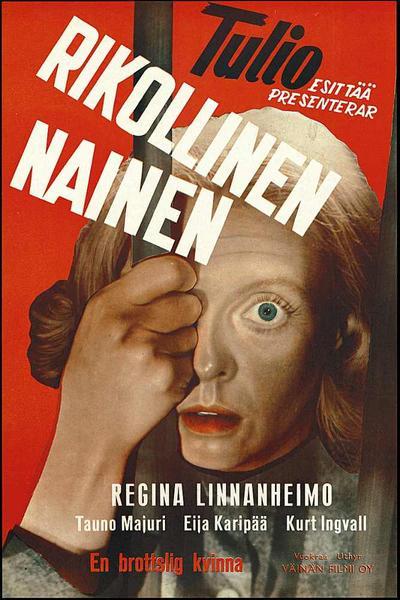
Teuvo Tulio – Rikollinen nainen AKA A Woman of Crime [+Extras] (1952)
1951-1960ClassicsDramaFinlandTeuvo TulioSynopsis:
Pathological, triggered by the unbridled desire to take the story of jealousy towards the film noirs, the film shades of black crime, when Riitta decide to carve adulterous sister, imagining in their path. Again, Tulio used effectively ellipse: a meeting room floor of the Chamber of flashing clothes play almost frame by frame Riitta viettelysessiota own – except that it is now a narrow perspective to give a distorted picture of the situation. Similarly, recalling the horrors huteralla hanging: a child fell into the water past his own clumsiness, Riitta now use the tools to ensure that the structure to give up and his rival for its own sister ends up in the rapids.Read More » -
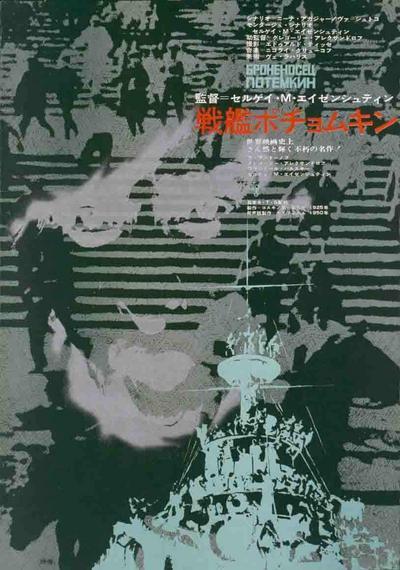
Sergei M. Eisenstein – Bronenosets Potyomkin aka The battleship Potemkin (1925)
1921-1930Sergei M. EisensteinSilentUSSRMarie Seton wrote:
When he made Potemkin in 1925, Sergei Eisenstein was not only a man with his total personality dedicated to creative work — albeit a creative work aimed at destroying all orthodox concepts of ‘art’ — but he was also a revolutionary fighter, a propagandist for the Russian Revolution. Thus, his work had a utilitarian purpose as well as an artistic one. He was educator and artist. At its most obvious level, Potemkin was regarded as propaganda for the Revolution; at a deeper level it was a highly complex work of art which Eisenstein thought would affect every man who beheld it, from the humblest to the most learned.Read More » -
Ruben Östlund – Play (2011)
2011-2020DramaRuben ÖstlundSwedenQuote:
Based on a real Swedish petty-crime wave, Play troubles the waters of any smugly held view, liberal or conservative, about how society should regard and handle its own rogue elements — a dilemma Östlund obviously thinks is vital in countries such as Sweden that are over-comfortable with their own homogenous reasonableness. (His characters cannot help moralizing to each other like scolding parents.) Still, his camera strategy remains fascinating and elusive, always partially obscuring distant action with foreground reality, and patiently letting incidents play out in breath-holding takes that never look away. It’s the rare contemporary film that’s as majestically and gruelingly rigorous in its form as in its thematic interrogations.Read More » -
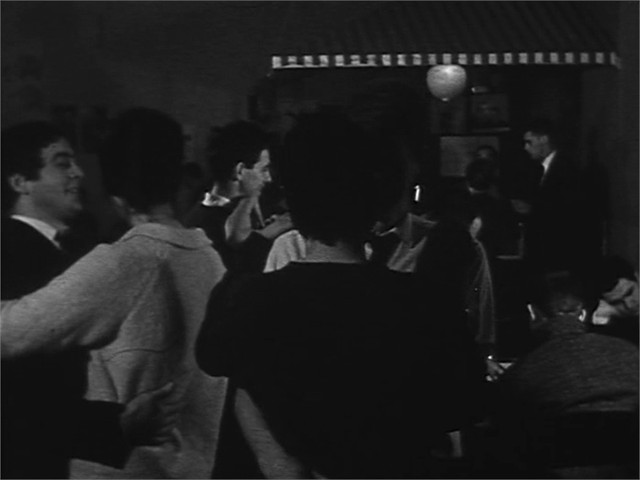
Paul Verhoeven – Niets bijzonders AKA Nothing Special (1961)
1961-1970DramaPaul VerhoevenShort FilmQuote:
A man is thinking about his relationship with his girlfriend, while checking out a gorgeous woman in a bar.Read More » -
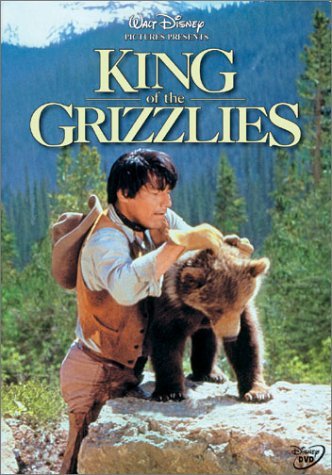
Ron Kelly – King of the Grizzlies (1970)
1961-1970Ron KellyUSAWesternQuote:
Moki (John Yesno) is the Indian foreman at a ranch owned by The Colonel (Chris Higgins). He watches as a baby grizzly bear becomes his playful friend before going off on his own. Years later, the bear returns as a menacing adult and threatens the cattle protected by Moki. When the Colonel wants to kill the bear, Moki interferes. The bear remembers his old friend Moki and seeks another way to satisfy his ravenous hunger in this tepid Walt Disney feature narrated by Winston Hibler.Read More »