

Documentary about one of the most extraordinary directors in the history of German film.Read More »
Documentary about one of the most extraordinary directors in the history of German film.Read More »

Plot Synopsis by Hal Erickson
Of the many films (English and American) bearing the title Carnival, only one was based on the Compton MacKenzie novel of the same name. This 1946 melodrama stars Sally Gray as a 19th century ballet dancer who makes an unfortunate career move by marrying a taciturn Cornish farmer (Bernard Miles). Sally soon longs for the bright lights of the big city, and for the arms of her artist lover (Michael Wilding). Her husband is all too aware of this; and when the lover comes calling to renew the affair, the husband shoots Gray to death. The first film version of Compton MacKenzie’s Carnival was filmed in 1931 as Dance Pretty Lady. Read More »

Paired texts as dueling histories; a journey imagined and remembered; 57 mileage markers produce an equal number of prospects. The latest in a series of films about the division of landscapes, objects, people, ideas and the Byrd family of Virginia during the early 18th century.
—David GattenRead More »
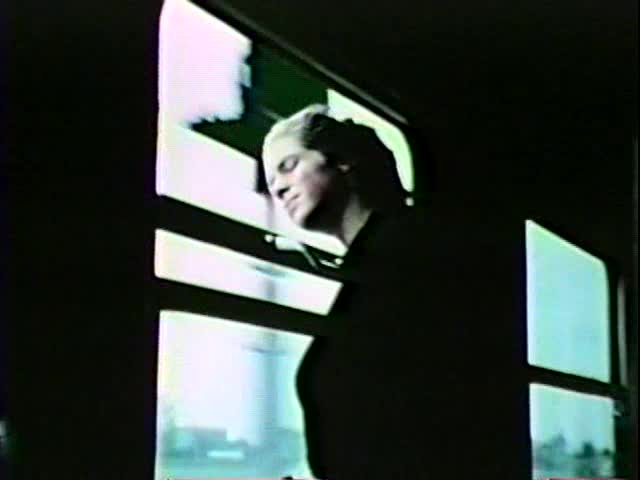
“In [Sonbert’s] best work, behind the mask of unalloyed visual pleasure lurks a dramatic intensity and trajectory, not just of personal concerns or protracted journeys but of massive social upheavals, the melding or collision of distinct cultural rituals of crisis, cessation, renewal.” – Paul Arthur
(Descriptions below are online program notes written by Jon Gartenberg)
SHORT FUSE is informed by Sonbert’s awareness of his own mortality, once he was diagnosed with HIV. As film critic Steven Holden astutely noted, in SHORT FUSE, “an undercurrent of rage seeps through the cracks of its ebullient surface.” The opening of the film explodes with a sea of turbulent emotions, underscored by the gripping sound track from Prokofiev’s First Piano Concerto. Shifting musical passages collide against images of leisure, war, and protest.Read More »

One of the most acclaimed Vietnamese films of the 1980s, The Traveling Circus won numerous international awards, including Grand Prix at Fribourg Third world Film Festival, Audience Award at Uppsala (Sweden) International Film Festival and First Prize at Madrid Women’s Film Festival. With obvious influences from Bergman, DeSica and Fellini, director Viet Linh tells the bittersweet story of a small traveling circus from Hanoi stopping in an impoverished ethnic minority village in Vietnam’s central highlands. Through the eyes of a village youngster, we witness the magic of the circus, and the naïve hope that illusion can be transformed into reality. The Traveling Circus is an extremely realistic, sensitive and moving film, that is rarely shown either in Vietnam or abroad.Read More »

Gregoire Canvel has everything a man could want: a wife he loves, three delightful children and his dream job – he is a film producer. Discovering talented filmmakers and developing films that fit his conception of the cinema, free and true to life, is precisely his reason for living. Gregoire devotes almost all of his time and energy to his work. Although he spends weekends with his family at their house in the country, even these precious moments are regularly interrupted by demanding directors and concerned investors. While Gregoires very presence commands admiration, and his exceptional charisma lead many to believe he is invincible, the future of his prestigious production company, Moon Films, is in doubt; too many productions, too many risks, too many debts. Storm clouds are gathering, and Gregoires realisation that he may have made one gamble too many will trigger a series of events that will change the lives of his family forever.Read More »
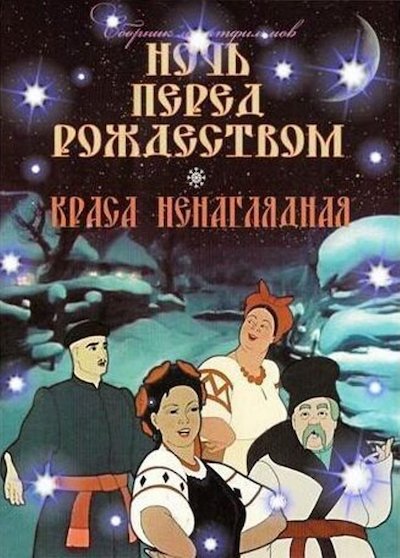
From Wikipedia:
The Night Before Christmas (Russian: Ночь пе́ред Рождество́м, Noch pered Rozhdestvom) is a 1951 Soviet traditionally-animated feature film directed by the Brumberg sisters and produced by the Soyuzmultfilm studio in Moscow. The film is based on Nikolai Gogol’s story The Night Before Christmas.
The animation features heavy use of rotoscoping, known as “Éclair” in the Soviet Union, and is an example of the Socialist-Realist period in Russian animation.Read More »

Synopsis
Jin, an antagonistic youth, tries to take over a motorcycle gang once its leader, Ken, announces he’s going to retire and settle down with his girlfriend. But things aren’t so easy for Jin. The other gangs have united, and decide that Jin’s reckless ways are a thing of the past, so they band together to take him and his four followers out.Read More »
Quote:
A product purposed of an installation project held at Tokyo Metropolitan Museum of Photography. Recomposed as completed film work in 2009.
It originally was theme for “Complete Chaos” visualized bydouble exposure method, however it appeared entire opposite phenomenon as “Birth of Cosmos”, and that is unparalleled miraculous story behind the film.
This film visually demonstrates the fact that human has ability to change Chaos to Cosmos.
A transcend Free Jazz sound is presented by band Osorezan commanded of Jim O’Rourke.
Now images and sound break the wall of the universe and plunge in the new world.Read More »