

O País de São Saruê (1971)
Plot Outline: Documentary about a region in Northeast Brazil, situated in an area subject to severe drought, and the evolution of its economic activities.Read More »
O País de São Saruê (1971)
Plot Outline: Documentary about a region in Northeast Brazil, situated in an area subject to severe drought, and the evolution of its economic activities.Read More »

In the 1980s, college student Samantha Hughes takes a strange babysitting job that coincides with a full lunar eclipse. She slowly realizes her clients harbor a terrifying secret; they plan to use her in a satanic ritual.Read More »

Synopsis
Paris, 1817. The wealthy Countess Ferraud is distressed when she begins to receive letters from her husband, Colonel Chabert, who was reported to have died during the Napoleonic wars ten years before. After an attempt to have him committed to a lunatic asylum fails, the now destitute Chabert appeals to a lawyer Derville to help restore his identity and his fortune. The Countess has since remarried and has no intention of surrendering the wealth she inherited from Chabert…Read More »
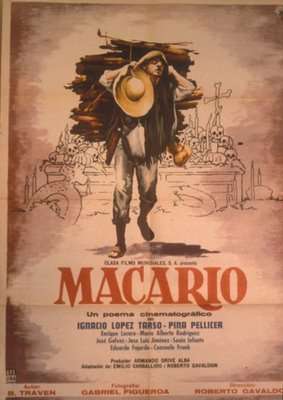
Quote:
The enigmatic B. Traven is certainly one of the most amazing figures in modern literature, as to this date his true identity remains an unsolved mystery. Better known for having written the novel “The Treasure of the Sierra Madre” (the basis for John Huston’s film), the mysterious writer who claimed to be American (although clues point out to he being German) traveled to Mexico where he became fascinated with the country’s rich culture and difficult social situations. “Macario” (or “Der Dritte Gast”, literally, “The Third Guest”) is probably one of his best known works (after the afore mentioned “Treasure of the Sierra Madre”), and the source novel of one of Mexico’s most fascinating and beautiful films.Read More »

Synopsis:
Wandering minstrel Ashik Kerib falls in love with a rich merchant’s daughter, but is spurned by her father and forced to roam the world for a thousand and one nights – but not before he’s got the daughter to promise not to marry till his return. It’s told in typical Paradjanov style, in a series of visually ravishing ‘tableaux vivants’ overlaid with Turkish and Azerbaijani folksongs.Read More »

Written by Boyd van Hoeij
Thursday, 20 April 2006
Nothing less than a double suicide from a dazzling height initiates the fifth and by far best film of Italo-Turkish director Ferzan Ozpetek. With an equally dazzling central performance by another foreigner settled in Italy, Slovakian actress Barbora Bobulova, Cuore sacro (Sacred Heart) could very well win Ozpetek new fans at home and abroad as he forsakes his overly sentimental style for something both more subtle and more resonant.Read More »
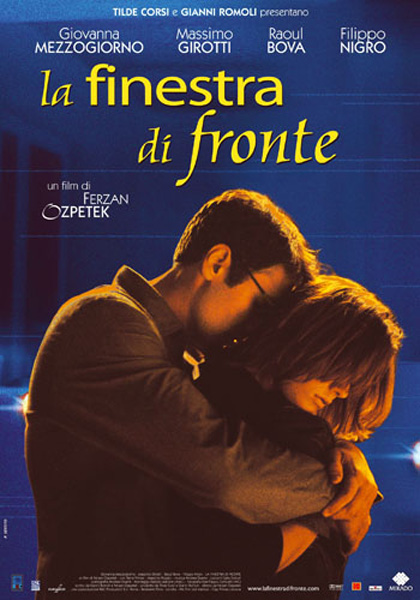
Giovanna is a bookeeper in a company which packs chickens. She is married to a man who has a precarious job. First she starts being curious about a young man who lives in the block opposite hers, and then she falls in love with him. The relationship between the two becomes much stronger when she starts to find out more about him from an old man who bursts into their lives. The old man, obsessed with the memories of some things that happened n the long past autumn of 1943, has lost his memory and finds refuge in Giovanna.
“Facing Windows (La Finestra di fronte)” is like a very European and more sophisticated take on “The Notebook,” as it shifts between romantic and culinary past and present through the in-and-out consciousness of an elderly man. The “Rear Window” eroticism is just one element that accidentally brings together tangled, stymied lives swirling around lovely, exhausted, frustrated chef, wife and mother Giovanna Mezzogiorno, where each child, man, woman, friend and neighbor has separate priorities and fantasies that annoying real life interferes with, from the practical to the political.Read More »
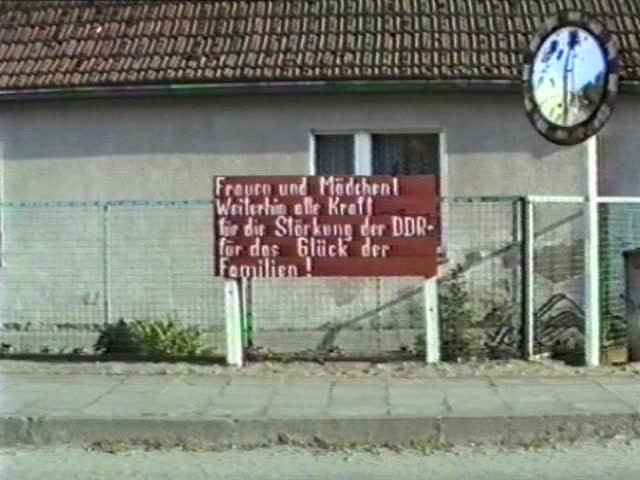
“Vaterland” is a key work in Thomas Heise’s filmography. In the beginning a voice over reads the letters his father Wolfgang and his brother sent their family from a labour camp. When they were 19 they had been sentenced to a labour camp for so-called «jüdische Mischlinge», Jewish half-breed. The camp was located in Straguth, in the surroundings of Zerbst, State of Saxony-Anhalt. At the time of the shooting the village counted about 290 inhabitants. Maybe the most «Fordian» movie by Thomas Heise. Read More »

Synopsis (Written by Theo Angelopoulos):
A, an American film director of Greek ancestry, is making a film that tells his story and the story of his parents. It is a tale that unfolds in Italy, Germany, Russia, Kazakhstan, Canada and the USA. The main character is Eleni, who is claimed and claims the absoluteness of love. At the same time the film is a long journey into the vast history and the events of the last fifty years that left their mark on the 20th century. The characters in the film move as though in a dream. The dust of time confuses memories. A searches for them and experiences them in the present. Read More »