• Ki-duk Kim – Shilje sanghwang AKA Real Fiction (2000)

    1991-2000CrimeDramaKi-duk KimSouth Korea

    http://static.diary.ru/userdir/4/5/8/5/458541/30044647.jpg

    29f7c043f76a2bde437fd0d52a185152

    Quote:
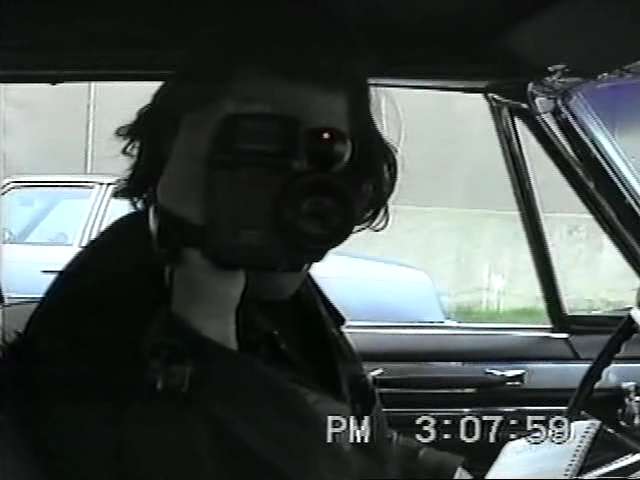
    An unstable artist (Ju Jin-mo) is sent over the edge during a walk in the park when a woman with a video camera (Kim Jin-ah) begins following him. Flying into a murderous rage, the artist begins running loose through the city, leaving dead bodies in his wake, until he winds up back in the park where he began. Director Kim Hi-duk shot this feature in “real time,” during less than four hours in one afternoon, using an armada of 20 film and video cameras set up in different locations; significantly, the film ends with the film running out in the cameras set in the park. Kim Hi-duk then edited his footage down to a compact 86 minutes.Read More »
  • Dana Plays – Zero Hour (1992)

    1991-2000Dana PlaysExperimentalUSA

    Quote:
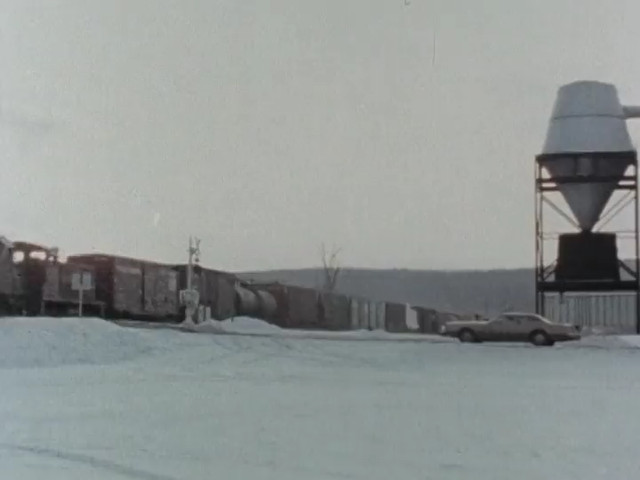
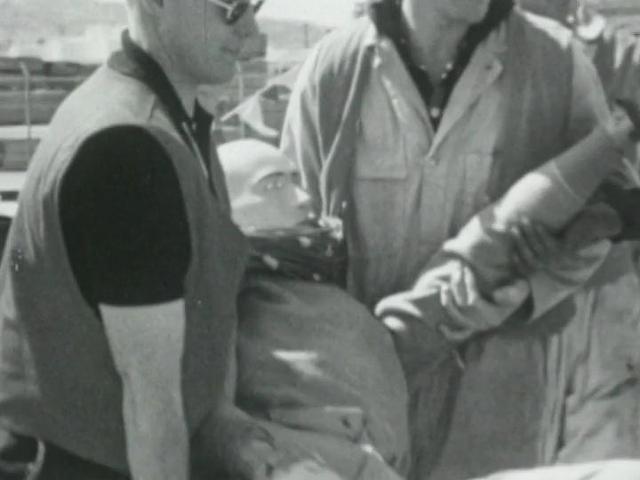
    “The transgression and confrontation is re-enacted in this brilliant fuguelike film by Dana Plays constructed of found footage, and concerning both American involvement in oversees conflict and the resultant unseen plight of the child refugee. Subverting state-sponsored informational films on such issues as war bonds and highway safety, Plays transforms these agit-prop rhetorics into a celluloid mirror of transgression as a larger cultural pathology. In Zero Hour, the results – the products of war return to the initial cite of production: an assumed audience of Americans, middle–class citizens of an ideal suburban dream who have somehow foregone the immediate experiences and repercussion of mass destruction and displacement. The gaze rests on us. We are the sugar-stated, hyper and unaware violator, an audience whose relationship to world events is nowhere more homogenous than in or communal incubation and guilt.” – William Tester
    Read More »

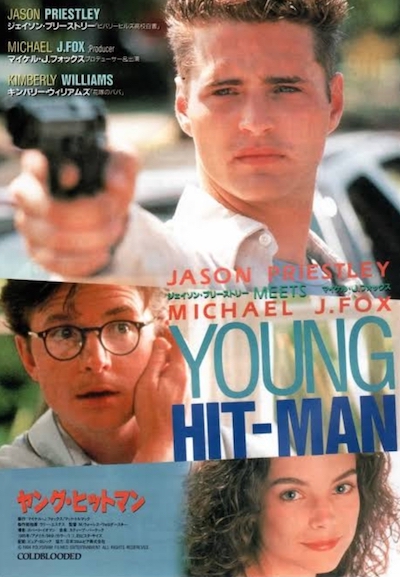
  • Wallace Wolodarsky – Coldblooded (1995)

    1991-2000ComedyCrimeUSAWallace Wolodarsky

    Plot: A quiet young fellow becomes a reluctant, but effective hit man in this comedy. Cosmo, a robot-like bookie, is promoted to hit man by his crime boss, Gordon. Cosmo’s teacher is to be the philosophical and chatty Steve, a real pro. Cosmo is an excellent shot and quickly learns. His problem is that he likes to get to know his clients and empathize with them before he kills them. In time Cosmo feels conflict after he begins to fall in love with Jasmine, his yoga-instructor. He wants out of the profession. ~ Sandra Brennan, All Movie GuideRead More »

  • Sophie Calle & Greg Shepard – No Sex Last Night aka Double Blind (1992)

    1991-2000ExperimentalFranceSophie Calle and Greg ShepardVideo Art

    http://img535.imageshack.us/img535/3505/vlcsnap7782365.png

    For over 20 years Sophie Calle’s work has taken the form of photographic installations and chronicles, whose structure and form reflect a narrative approach – both within themselves individually and, taken together, in terms of Calle’s own career. Born in Paris in 1953, Calle’s early work dates from a world trip in the 1970s that lasted seven years. During a stay in California in 1978 she took her first photographs – graves marked Father and Mother – with no professional intent, she simply had come upon something that ‘her father might like’. On her return to Paris she began tailing unknowns in the street as part of a conscious ‘drifting through the city’, recording the results in notebooks containing photographs and texts.Read More »

  • F.J. Ossang – La dernière énigme (1982)

    1981-1990ExperimentalF.J. OssangFranceShort Film

    Inspired by Gianfranco Sanguinetti’s On Terrorism and the State. Shots of the orbital road, the Arc de Triomphe and rebellious blindfolded youths in a gunfight.

    In-between essay and fiction, La dernière énigme established Ossang’s formal territory: a contemporary mythology. Inspired by the book On Terrorism and the State by Gianfranco Sanguinetti, it evokes visual echoes of political events, where a generation forfeits all revolutionary aspirations due to state terrorism. Shot using two cans of Kodak XX 16mm film.Read More »

  • Adilkhan Yerzhanov – Chuma v aule Karatas AKA The Plague at the Karatas Village (2016)

    Drama2011-2020Adilkhan YerzhanovKazakhstan

    29f7c043f76a2bde437fd0d52a185152

    Quote:
    Yerzhanov is a strong voice of the new Kazakh cinema.

    The story
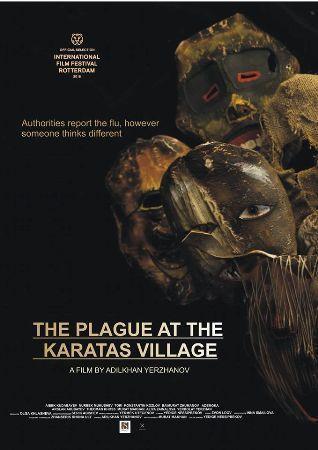
    When a young mayor arrives in Karatas, a remote village in Kazakhstan, he finds a large part of the population ill. He recognises the symptoms immediately as plague-related. The sufferers, however, insist they have the flu, and that is confirmed by the local authorities, who have for decades pocketed the money for vaccination programmes and let the deadly illness rage on. The newly-appointed mayor resists at first, but is slowly dragged down into a morass of corruption and abuse of power. Like the film The Owners shown at Cannes, Adilkhan Yerzhanov’s latest film is an indictment of the lawless practices in today’s Kazakhstan, which is understandably known as the ‘Wild East’. His approach is very theatrical. He presents his message in a Brechtian way. The sets are surrealist, the acting is alienating, the undertone mythical. The moral, however, is highly contemporary and crucial. Winner NETPAC Award 2016.Read More »

  • Larry Gottheim – Four Shadows (1978)

    1971-1980DocumentaryExperimentalLarry GottheimUSA

    Like constellations wheeling round, a double chain of four image segments and four sound segments wheel past each other in sixteen combinations (a family of Gibbon apes, a landscape measured, a shadowed diagram after Paul Cézanne, a wintry urban scene, a text by William Wordsworth, a climactic scene from Claude Debussy’s opera “Pelleas et Melisande”). The stately ceremony can generate rich sensuous cinematic pleasure as well as a free-flowing stream of associations. Containment and flowing free, these are some of the issues. The third film in the Elective Affinities cycle.Read More »

  • Yuriko Furuhata – Cinema of Actuality: Japanese Avant-Garde Filmmaking in the Season of Image Politics (2013)

    2011-2020BooksJapanYuriko Furuhata

    During the 1960s and early 1970s, Japanese avant-garde filmmakers intensely explored the shifting role of the image in political activism and media events. Known as the “season of politics,” the era was filled with widely covered dramatic events from hijackings and hostage crises to student protests. This season of politics was, Yuriko Furuhata argues, the season of image politics. Well-known directors, including Oshima Nagisa, Matsumoto Toshio, Wakamatsu Kōji, and Adachi Masao, appropriated the sensationalized media coverage of current events, turning news stories into material for timely critique and intermedial experimentation. Cinema of Actuality analyzes Japanese avant-garde filmmakers’ struggle to radicalize cinema in light of the intensifying politics of spectacle and a rapidly changing media environment, one that was increasingly dominated by television. Furuhata demonstrates how avant-garde filmmaking intersected with media history, and how sophisticated debates about film theory emerged out of dialogues with photography, television, and other visual arts.Read More »

  • Davor Sanvincenti – Skoro ništa: i dalje noc AKA Almost Nothing: So Continues the Night (2017)

    2011-2020CroatiaDavor SanvincentiExperimentalShort Film

    29f7c043f76a2bde437fd0d52a185152

    For us, a thought always presupposes a society, a culture, and, above all, the consciousness of time. The film revolves around a light bulb like the Earth around the Sun. Light makes the film visible. In the orbit of the film tragedy and our reality, the image resists the cruelty of the experiment.Read More »

Back to top button