

A female highschool teacher (Rei Akasaka) must deal with sexual harrassment from her students and being trapped in a love triangle with two men, neither of whom has any interest in marrying her.Read More »
A female highschool teacher (Rei Akasaka) must deal with sexual harrassment from her students and being trapped in a love triangle with two men, neither of whom has any interest in marrying her.Read More »

This scathing black comedy from Cuban satirist Tomás Gutiérrez Alea is a dish that’s bitter to taste and hard to stomach. It’s an intricate and uncompromising fable that alarmingly boasts an authentic historical model.
In the 18th century, the wealthy owner of a sprawling Havana sugar plantation gives in to a misguided whim. As Holy Week approaches, he decides to host his own Last Supper, appointing himself as Christ and a dozen downtrodden slaves as the apostles. Held on Maundy Thursday, his re-enactment is a precarious proposition from the outset. At first, it offers Alea ample opportunity for comedy, as the pompous master cleans and flinchingly kisses the feet of the bemused slaves before taking to the table.Read More »

SHATRANJ-E BAAD
Film Notes
Shatranj-e Baad might be one of the most emblematic films in the history of Iranian cinema, even though its visibility was limited to a disastrous preview at Tehran International Film Festival in 1976. Due to an artistic conflict between Aslani and the festival curator, the projection was sabotaged, its reels were disrupted and projector malfunctioned. The critics walked out during the screening, as did the jury who pulled the film out of the competition. Instantly deemed elitist, the film was refused by all the distributors. Discouraged, the producer didn’t bother sending the film to the international festivals. Read More »

Orson Welles goes to Brazil to shoot his documentary It’s All True.
Quote:
A fictional account of Orson Welles’ real passage to Brazil where he was supposed to film a cultural film called “It’s All True”, to present a positive image of Brazilian people and the country’s grandiosity’s to the U.S. government, a project that was part of FDR’s Good Neighbor policy. But Welles got enchanted with everything around him and got distracted from the project, that never got fully made. This movie speculates what really happened to Welles that prevented him from fulfilling his work.Read More »

True story of the saga that was hoped to be the long-awaited justice brought to bear upon Augosto Pinochet, Chilean dictator from 1973 to 1990. In September 1998, Pinochet flew to London on a pleasure trip but experienced back pain and underwent an operation in the London Clinic. Upon waking, he was arrested by Scotland Yard. Could it be that this was to become the first Latin American dictator to answer for crimes while serving as Head of State? After 500 days of house arrest, he nevertheless eventually returned unscathed to Chile, despite the compelling case built against him before & during this period by a young Spanish prosecutor, Carlos Castresana.Read More »
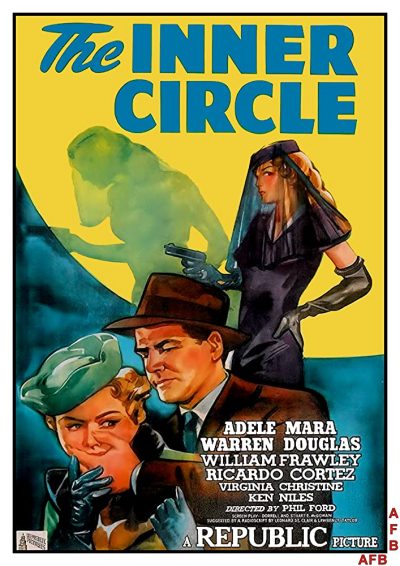
Story:
In this mystery, a private detective is falsely accused of murder by his secretary who wants to protect her little sister who has been formally charged with the crime. The detective must solve the crime before it is too late. To do so, he gathers all the suspects at a radio student and reenacts the crime. The killer is revealed. ~ Sandra Brennan, All Movie GuideRead More »

Set in a small town in 1959 England, it is the story of a woman who decides, against polite but ruthless local opposition, to open a bookshop, a decision which becomes a political minefield.Read More »

Quote:
“The Song of the Rivers, or Das Lied der Ströme, is a 1954 documentary production by the East Germany’s Deutsche Film-Aktiengesellschaft (DEFA). Dutch filmmaker Joris Ivens was the leading director. The sprawling film celebrates international workers movements along six major rivers: the Volga, Mississippi, Ganges, Nile, Amazon and the Yangtze. Shot in many countries by different film crews, and later edited by Ivens, Song of the Rivers begins with a lyrical montage of landscapes and laborers and proceeds to glorify labor and modern industrial machinery. The musical score is by Dmitri Shostakovich, with lyrics written by Berthold Brecht, and songs performed by German communism’s star Ernst Busch and famous American actor, singer and activist Paul Robeson who also narrates. Song of the Rivers is an ode to international solidarity.”Read More »

Quote:
Hanni, the shop girl, comes from a milieu like Zille, from which she is freed, so to speak, by Ferdinand, a wealthy elderly gentleman. The first date turns into a shopping spree, and after the new clothes come a new home. Since we write the year 1913 and at that time the cinema was still chaste, Max Mack saved us the details of the Techtelmechtel. To keep the story going, they both learn the new fashion dance: Tango, which Lieutenant Lulu has tried in vain. A tango competition makes the comedy a mix-up comedy: it wins – who wouldn’t have thought it – Hanni as the tango queen.
(International Forum of Young Films 1984)Read More »