• Raoul Ruiz – Nadie Dijo Nada aka Nobody Said Anything (1972)

    1971-1980ChileComedyDramaRaoul Ruiz

    A group of young writers sell their soul to the devil. ‘It is a film about the meaning of isolation and a certain megalomania that developed in Chile during the government of Eduardo Frei. The version RAI originally broadcast [black and white, 45 minutes shorter and until now the only one in circulation] was made by cutting everything out that makes allusion to the political context and makes the characters real. […] The story was not the most important thing: the most important thing was the speeches that were around the story, which is one of the themes of modern cinema”. (Raúl Ruiz)Read More »
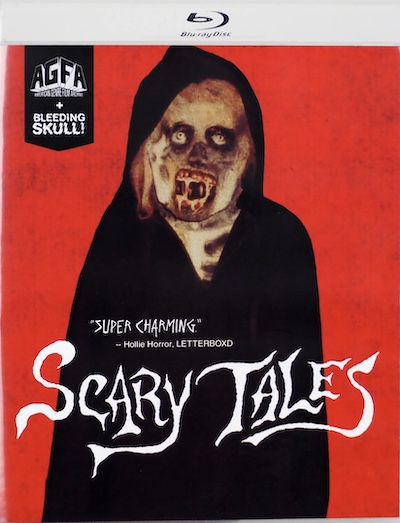
  • Doug Ulrich & Al Darago – Scary Tales (1993)

    1991-2000Al DaragoDoug UlrichHorrorUSA

    SCARY TALES proves that the films of John Waters and Don Dohler aren’t the only genre miracles from Baltimore. A shot-on-video horror anthology that plays out like a public access version of CREEPSHOW, this is what happens when Satanic necklaces, bloodthirsty slashers, and DUNGEONS & DRAGONS-styled live action role playing collide with cool dads, neon lightbulbs, and dungeon synthesizers. AGFA and Bleeding Skull! are thrilled to present this charming, gore-filled dreamscape that has been meticulously pieced together from its original S-VHS master tapes.Read More »

  • Ingmar Bergman – De fördömda kvinnornas dans AKA The Condemned Women Dance (1976)

    Ingmar Bergman1971-1980PerformanceShort FilmSweden

    Quote:
    “Described as a play for dancers rather than a ballet, De fordomda kvinnornas dans focuses on four women moving in a narrow closed room. They represent ‘generational’ women, i.e., women who live by performing a role imposed upon them by other women of many generations ago. Two of the dancers are damned souls come alive. The third is Death and the fourth a child, born free but forced into the role playing pattern. Ingmar Bergman and Donya Feuer got the idea for the dance play during the shooting of TrollflojtenRead More »

  • Steven Cantor & Peter Spirer – Blood Ties: The Life and Work of Sally Mann (1994)

    1991-2000DocumentaryPeter SpirerShort FilmSteven CantorUSA

    Blood Ties: The Life and Work of Sally Mann is a 1994 short documentary film directed by Steven Cantor and Peter Spirer. It was premiered at the 1994 Sundance Film Festival and was nominated for an Academy Award for Best Documentary Short.

    The documentary looks at some of the controversy surrounding Sally Mann’s book Immediate Family, which contains non-sexual photographs of her pre-adolescent children in various states of dress. Some religious groups had accused her of making child pornography, and the film focuses on Mann’s defense of her art. Filmmaker Cantor followed up this short with a full-length documentary about Mann in 2005: What Remains: The Life and Work of Sally Mann.Read More »

  • Patricia Rozema – I’ve Heard the Mermaids Singing (1987) (HD)

    1981-1990ArthouseCanadaComedyPatricia Rozema

    Scatterbrained Polly gets a job as a secretary in Gabrielle’s art gallery. Polly aspires to be a professional photographer, and idolizes Gabrielle for her artistic ability. When Gabrielle rekindles an old romantic relationship with the younger painter Mary, Polly becomes jealous, and discovers Gabrielle is not who she claims to be.Read More »

  • Gregory J. Markopoulos – Sorrows (1969)

    1961-1970ExperimentalGregory J. MarkopoulosShort FilmUSA

    Quote:
    Sorrows, US expatriate director Gregory J. Markopoulos’ 1969 film, shares his earlier films’—Bliss (1966) and Gammelion (1968)—fascination with significant structures and the lives of those who lived in or constructed them.

    In the case of Sorrows, the mansion, Villa Tribschen, filmed from the outside and inside, viewed from a cold, frigid landscape, and within with the warmth of furniture, sculpture, art, and windows which provided natural light from all four sides of the house on each level, was built by King Ludwig of Bavaria—most often described as the “mad” king—for the composer Richard Wagner.Read More »

  • Hugh Burnett – Warsaw Ghetto (1965)

    1961-1970Amos Vogel: Film as a Subversive ArtDocumentaryHugh BurnettUnited KingdomWar

    From Amos Vogel’s Film as a Subversive Art:
    This secret Nazi film – unforgettable documentary of a vanquished world – was photographed just before the Ghetto’s total destruction and either never completed or not intended for public release. For once, the Nazis – albeit unintentionally – revealed the truth about an event, though it was a truth distorted by their presence; the only Jews who did not know that they were being photographed were the dead; the others, depending on degree of desperation, indifference, or nearness of death, attempted to smile or otherwise co-operate with the photographer/director (representative of unlimited power over life or death), an obscene spectacle difficult to bear. Read More »

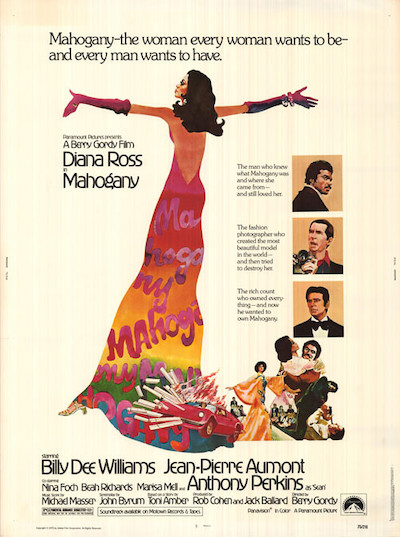
  • Berry Gordy & Tony Richardson – Mahogany (1975)

    1971-1980Berry GordyCampDramaTony RichardsonUSA

    Tracy (Diana Ross), an aspiring designer from the slums of Chicago puts herself through fashion school in the hopes of becoming one of the world’s top designers. Her ambition leads her to Rome spurring a choice between the man she loves or her newfound success.Read More »

  • Maria Klonaris – Selva. Un portrait de Parvaneh Navaï (1983)

    1981-1990ArthouseExperimentalFranceMaria Klonaris

    Trance dances and out of body projection. In front of the camera, Parvaneh Navaï becomes a mediator who enters in contact with and immerses into the energies of Nature, while her own energy radiates and echos in the forest (“selva”). The camera amplifies and expands her presence, transforming the forest into an imaginary space. The camera becomes a painter’s brush.Read More »

Back to top button