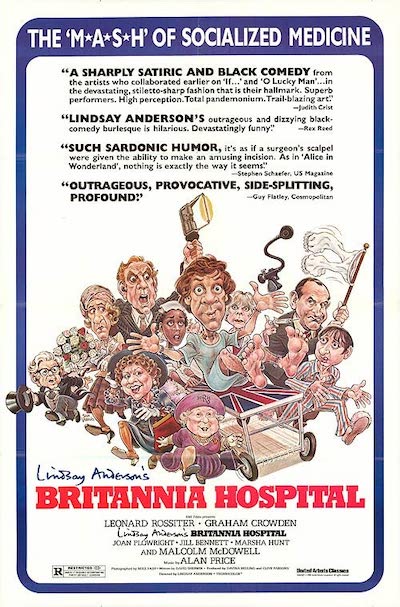
Quote: Britannia Hospital, an esteemed English institution, is marking its gala anniversary with a visit by the Queen Mother herself. But when investigative reporter Mick Travis arrives to cover the celebration, he finds the hospital under siege by striking workers, ruthless unions, violent demonstrators, racist aristocrats, and African cannibal dictator and sinister human experiments.Read More »
Rebellious young Werther is passionately, but hopelessly, in love with Lotte. Although he knows that she is married to somebody who can offer her a secure future, Werther tries to be near her. Lotte cannot decide between these two men. She eventually rejects Werther, who does not survive her decision. Based on the novel by Goethe. Director Egon Günther and set designer Helga Schütz make cameo appearances. —DEFA Film LibraryRead More »
Part of DVD release Die “Oberhausener” – Provokation der Wirklichkeit (Provoking Reality) Edition Filmmuseum 69
Oberhausen Manifesto 1962: 28.2.1962
The collapse of conventional German film has finally removed the economic basis for a mentality that we reject. This gives the new kind of film the chance to come to life. German short films by young filmmakers, directors and producers have in recent years received a large number of prizes at international festivals and gained the recognition of international critics. These works and their successes show that the future of German film lies with those who have proven that they speak a new film language.Read More »
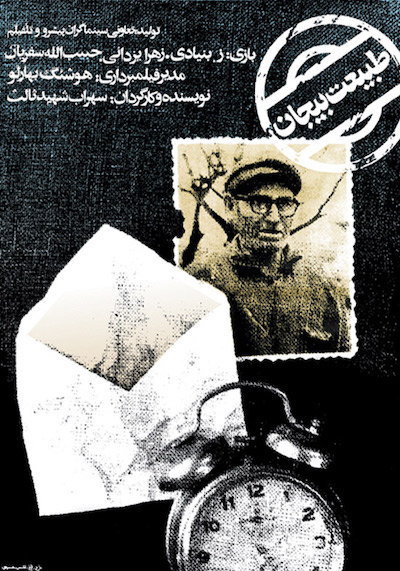
PLOT An aging rail worker, living a mononously quiet life with his wife, is asked to retire. The second of the two austere-looking, deliberately paced films Shaheed Saless made in Iran proved to be one of the turning points of Iranian cinema in the 70s.Winner of numerous prizes at the Berlin Film Festival in 1974, including the Silver Bear for Best Director, STILL LIFE examines the lot in life of an old man who guards a railroad crossing and his wife, who brings in a meager income weaving carpets. After 30 years in the same job, the man is forced into retirement by the arrival of the new guard. Finally, he is forced to a bleak epiphany of society’s indifference to his fate.Read More »
Paul Boyer (Gérard Blain), a jazz pianist in Paris, has lots of free time during the day, and spends it happily with his baby boy, Marc. But money is tight, and so, at his wife’s prompting, Paul takes a chance on running counterfeit dollars to New York for a big payoff. Caught at customs, he spends nine years in an American jail and returns home to find her remarried to a wealthy man and his own paternal rights revoked. The rest of the film—directed by Blain with the harrowing calm of an intimate confession—follows Paul in his obsessive, desperate, coldly calculated effort to see his son again. Though the story is part thriller, part family melodrama, part spiritual journey, part social drama, Blain purges it of all genre artifice: the purity of his method and his sentiments suggests the fresh, primal artistry of the early silent cinema. Released in 1973. In French. — Richard BrodyRead More »
Quote: An optically-printed canvas which explores the interior feel of world moving with inherent fluidity through a medium of wind and water. It presents an impressionistic portrait of unnatural forces that collide.Read More »
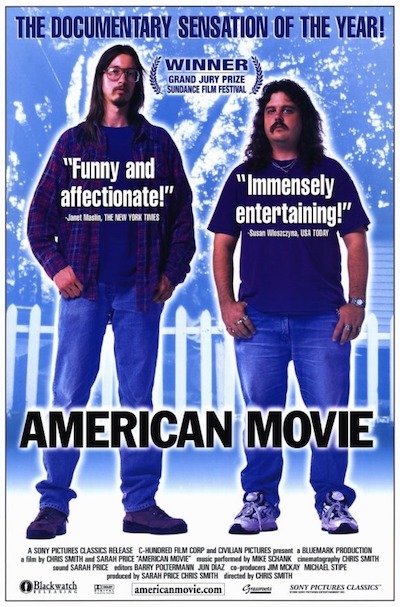
Quote: On the northwest side of Milwaukee, Mark Borchardt dreams the American dream: for him, it’s making movies. Using relatives, local theater talent, slacker friends, his Mastercard, and $3,000 from his Uncle Bill, Mark strives over three years to finish “Covan,” a short horror film. His own personal demons (alcohol, gambling, a dysfunctional family) plague him, but he desperately wants to overcome self-doubt and avoid failure. In moments of reflection, Mark sees his story as quintessentially American, and its the nature and nuance of his dream that this film explores.Read More »
Quote: Hitchcock’s long-standing fear of the police is what originally attracted him to a newspaper account of a family man wrongly identified as an armed robber. The Wrong Man pays scrupulous attention to such things as the details of police procedure and the eventual apprehension of the real culprit – before the conviction of the wrongly accused man (Fonda), but after the stress has driven his wife (Miles) to mental breakdown. The result is Hitchcock’s most sombre film, unrelieved by his usual macabre humour; the black-and-white photography and the persecuted Fonda’s sharply chiselled features lend an impressive documentary feel. It’s not generally rated among the master’s best works, largely because of the intractability of the source material (or Hitchcock’s unwillingness to dramatise the events). But there’s still plenty here for Hitchcockophiles: a Jesuitical strain (the man happened to be a devout Catholic), a complicity of guilt (as the wife irrationally comes to blame herself); and it’s pure noir.Read More »
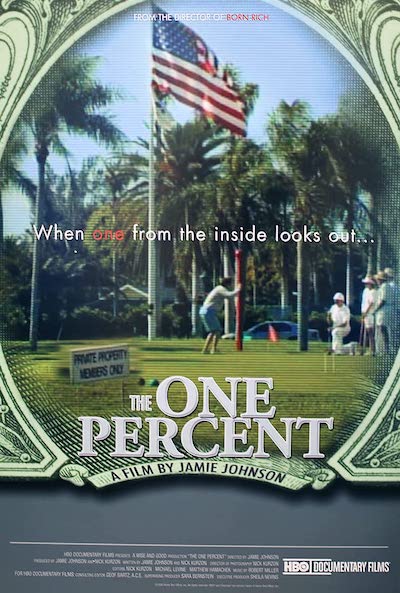
Quote: In this hard-hitting but humorous documentary, director Jamie Johnson takes the exploration of wealth that he began in Born Rich one step further. The One Percent, refers to the tiny percentage of Americans who control nearly half the wealth of the U.S. Johnson’s thesis is that this wealth in the hands of so few people is a danger to our very way of life. Johnson captures his story through personal interviews with Robert Reich, Adnan Khashoggi, Bill Gates Sr., and Steve Forbes, during which both Johnson’s and his subjects’ knowledge and humor shine. And he’s not afraid to butt heads with Milton Friedman, the economist who coined the term “the trickledown effect.” Read More »