War

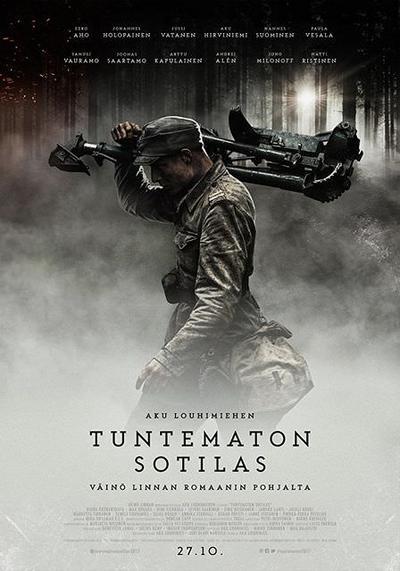
  • Aku Louhimies – Tuntematon sotilas AKA The Unknown Soldier (2017)

    2011-2020Aku LouhimiesDramaFinlandWar

    29f7c043f76a2bde437fd0d52a185152

    Synopsis:
    A film adaptation of Väinö Linna’s best selling novel The Unknown Soldier (1954) and the novel’s unedited manuscript version, Sotaromaani.

    The film’s setting is based on the unit Väinö Linna served in during the Continuation War, Infantry Regiment 8 (Finnish: Jalkaväkirykmentti 8). It follows a fictional Finnish Army machine gun company in the Karelian front from mobilisation in 1941 to armistice in 1944. The soldiers of the company are sympathetic but realistic portraits of men from all over Finland with widely varying backgrounds. Their attitude is relaxed, disrespectful of formalities, and business-like, even childish and jolly, throughout the story despite the war and the losses the company suffers. The film also occasionally shifts to the homefront.Read More »
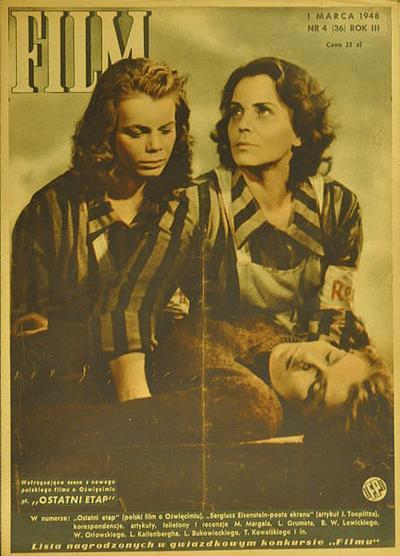
  • Wanda Jakubowska – Ostatni etap AKA The Last Stage (1948)

    1941-1950DramaPolandThe Female GazeWanda JakubowskaWar

    Martha Weiss, a Jew, is sent to Auschwitz concentration camp with her family. On the first day of their arrival Martha is, by a coincidence, chosen as an interpreter, but her entire family is killed. Waiting for the Red Army to deliver them from the prison camp, the film depicts Martha and her friends’ struggling life under the tyranny of camp guards and equally bad ‘capos’, administrative personnel chosen from among the prisoners.Read More »

  • Anne Pick & William Spahic – Iris Chang: The Rape of Nanking (2007)

    2001-2010Anne Pick and William SpahicCanadaDocumentaryWar

    Free Image Hosting at www.ImageShack.us

    29f7c043f76a2bde437fd0d52a185152

    In July 1937 the Japanese Imperial Army, which already controlled a large section of northeastern China, launched an undeclared war against the Republic of China. Five months later, on December 13, its troops entered the capital city of Nanking and began raping and murdering its citizens in an orgy of violence that has few parallels in modern history.

    Tens of thousands of Chinese prisoners-of-war were machine gunned en masse. An estimated 20,000 women were raped. Countless defenseless civilians; men, women and children were killed on the streets or in their homes. A British reporter who was on the scene compared the Japanese troops to Attila and the Huns. Writer George Will described the mass slaughter, which became known as “The Rape of Nanking” as “perhaps the most appalling single episode of barbarism in a century replete with horror.”Read More »

  • Andrzej Wajda – Popiól i Diament AKA Ashes and Diamonds (1958)

    1951-1960Andrzej WajdaDramaPolandWar

    As WWII and the German occupation ends, the Polish resistance and the Russian forces turn on each other in an attempt to take over leadership in Communist Poland.Read More »

  • Gillo Pontecorvo – La battaglia di Algeri AKA The Battle of Algiers (1966) (HD)

    1961-1970AlgeriaDramaGillo PontecorvoWar

    29f7c043f76a2bde437fd0d52a185152

    Quote:
    A film commissioned by the Algerian government that shows the Algerian revolution from both sides. The French foreign legion has left Vietnam in defeat and has something to prove. The Algerians are seeking independence. The two clash. The torture used by the French is contrasted with the Algerian’s use of bombs in soda shops. A look at war as a nasty thing that harms and sullies everyone who participates in it.Read More »

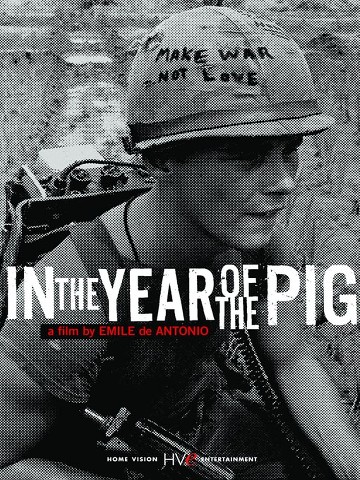
  • Emile de Antonio – In the Year of the Pig [+Extras] (1968)

    USA1961-1970DocumentaryEmile de AntonioWar

    29f7c043f76a2bde437fd0d52a185152

    Plot Synopsis [AMG]
    Documentary filmmaker Emil DeAntonio’s In the Year of the Pig was financed by New York society matron Mrs. Orville Schell; her fund-raising dinners earned her an executive producer credit on the completed film. An extremely radicalized view of the still-raging war in Vietnam, Pig was so unabashedly provocative that it earned DeAntonio the tireless scrutiny of FBI head J. Edgar Hoover (whose file on the filmmaker inspired yet another DeAntonio production of 1990, Mr. Hoover and I). The film’s highlight is an interview with the late general George S. Patton, adroitly re-edited to make it seem as though Patton (who died in 1945) is characterizing the boys in Nam as “a bloody good bunch of killers.” Bracketed between his Rush to Judgment (based on the highly suspect findings of JFK-conspiracy theorist Jim Garrison ) and his America is Hard to See (a chronicle of the Eugene McCarthy Presidential campaign), DeAntonio’s In the Year of the Pig is an amalgam of the best and worst elements of those two offerings. The film says what needs to be said, but it often ends up preaching only to the converted.Read More »

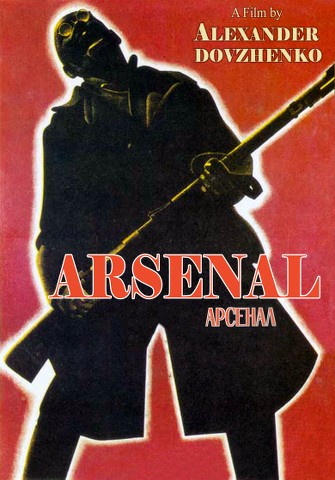
  • Aleksandr Dovzhenko – Arsenal (1928)

    1921-1930Aleksandr DovzhenkoDramaUSSRWar

    29f7c043f76a2bde437fd0d52a185152

    Set in the bleak aftermath and devastation of the World War I, a recently demobbed soldier, Timosh, returns to his hometown Kiev, after having survived a train wreck. His arrival coincides with a national celebration of Ukrainian freedom, but the festivities are not to last as a disenchanted.

    In Arsenal, Alexander Dovzhenko, perhaps the most radical of the Soviet directors of the silent period, altered the already extended conventions of cinematic structure to a degree greater than had even the innovative Sergei Eisenstein in his bold October. The effect of this tinkering with the more or less accepted proprieties of motion picture construction produced a work that is actually less a film than it is a highly symbolic visual poem. For example, in a more linearly structured piece like October, the metaphors, allusions, and analogies that arise through the construction of the various montages replace rather than comment on essential actions within the film. In Arsenal, however, the symbolism is so purposely esoteric, with seemingly deliberate barriers established to block the viewer’s perception, that the relationship of individual symbols or sequences to the various actions of the film is not immediately clear.Read More »

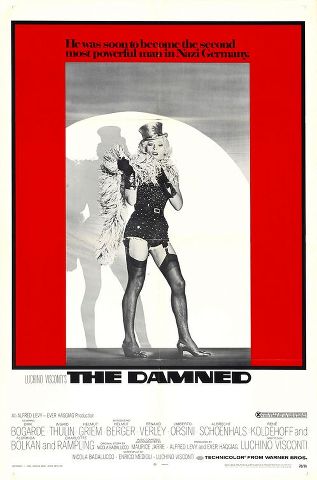
  • Luchino Visconti – La Caduta Degli Dei (Götterdämmerung) aka The Damned (1969)

    1961-1970DramaItalyLuchino ViscontiWar

    29f7c043f76a2bde437fd0d52a185152

    The Damned has often been regarded as the first of Visconti’s films described as “The German Trilogy”, followed by Death in Venice (1971) and Ludwig (1973). Henry Bacon (1998) specifically categorizes these films together under a chapter “Visconti & Germany”. Visconti’s earlier films had analyzed Italian society during the Risorgimento and postwar periods. Peter Bondanella’s Italian Cinema (2002) depicts the trilogy as a move to take a broader view of European politics and culture. Stylistically, “They emphasize lavish sets and costumes, sensuous lighting, painstakingly slow camerawork, and a penchant for imagery reflecting subjective states or symbolic values,” comments Bondanella.Read More »

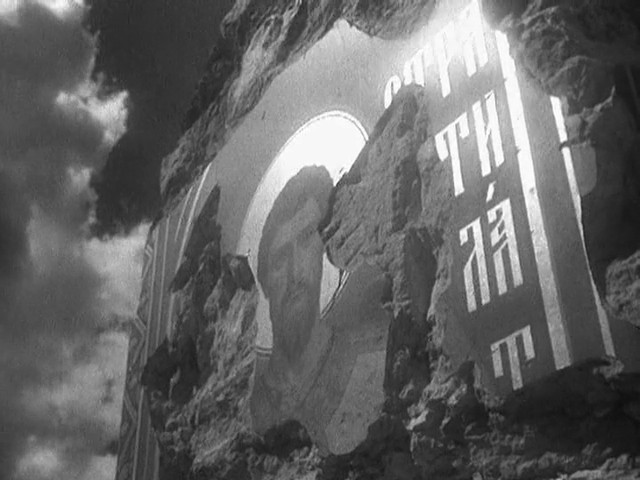
  • Aleksandr Dovzhenko & Yuliya Solntseva – Pobeda na Pravoberezhnoi Ukraine i izgnaniye nemetsikh zakhvatchikov za predeli Ukrainskikh sovietskikh zemel AKA Victory in Soviet Ukraine (1945)

    Documentary1941-1950Aleksandr DovzhenkoUSSRWarYuliya SolntsevaYuliya Solntseva and Aleksandr Dovzhenko

    29f7c043f76a2bde437fd0d52a185152

    Describes the Russian attack against the Germans, which drove them away from the Dneiper river, and finally out of Ukraine.Read More »

Back to top button