USSR

  • Sergei Yutkevich & Lev Oskarovic Arnstam – Ankara – serdtse Turtsii aka Ankara: The heart of Turkey (1934)

    1931-1940DocumentaryPoliticsSergei YutkevichSergei Yutkevich and Lev Oskarovic ArnstamTurkeyUSSR

    29f7c043f76a2bde437fd0d52a185152

    Ankara – serdtse Turtsii aka Ankara-The heart of Turkey is a Soviet documentary made for the 10th anniversary of the new Turkish Republic in the year 1934.

    The story starts over a pastoral view of Turkey, we see some country people going to the new capital : Ankara. Same time, there is Soviet ships passing thru Bosphorus, Istanbul. Soviet military and diplomatic people reach Ankara by train as young turks and scooters. We watch the city by the air… Some archeological views… The new city, the young people, some folkloric plays, modern buildings, gymnasium, modern art school, university studies and finally 10th anniversary stadium ceremony…Read More »
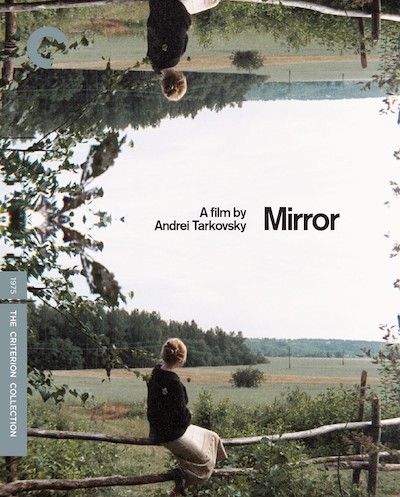
  • Andrei Tarkovsky – Zerkalo AKA The Mirror [+Extras] (1975)

    1971-1980Andrei TarkovskyArthouseDramaUSSR

    SYNOPSIS
    With Zerkalo (The Mirror), legendary Russian filmmaker Andrei Tarkovsky crafts perhaps his most profound and compelling film. What started off for Tarkovsky as a planned series of interviews with his own mother evolved into a lyrical and complex circular meditation on love, loyalty, memory, and history. Time shifts and generations merge as a single extraordinary actress (Margarita Terekhova) plays the narrator’s former wife as well as his mother. Tarkovsky’s memories as well as those of his mother are intermingled as a dark, sumptuous, and dreamlike pre-World War II Russia is evoked, accompanied throughout by the voice of Tarkovsky’s father reading his own elegiac poetry. The spectacle of nature and its ubiquitous and ever-shifting presence is captured by Tarkovsky’s camera as if by magic–the family cabin nestled deep in the verdant woods, a barn on fire in the middle of a gentle rainstorm, a gigantic wind enveloping a man as he walks through a wheat field–all creating indelible images with deep if mysterious emotional resonance. As the timeline shifts between the narrator’s generation and his mother’s, newsreel footage of Russian wars, triumphs, and disasters are juxtaposed with imagined scenes from the past, present, and future, crafting a silently lucid cinematic panopticon of memory, history, and nature. (Rotten Tomatoes)Read More »

  • Andrei Tarkovsky – Segodnya uvolneniya ne budet (Сегодня увольнения не будет) AKA There Will Be No Leave Today (1958)

    Drama1951-1960Andrei TarkovskyThrillerUSSR

    Quote:
    During earthworks, the utility crew discovers a German ammunition depot left over from the war. 30 tons of explosives lay in the ground for 15 years. According to the instructions, it is impossible to demine – it is dangerous to touch them. But it is also impossible to blow up – there are residential areas around. The case is entrusted to the group of Captain Galich. By 10 a.m. the next day, the entire population is evacuated to the outskirts of the city, and in the ominous pit, seven people begin a game with death.Read More »

  • Sergei M. Eisenstein – Bronenosets Potyomkin AKA Battleship Potemkin [2005 Restored Version] (1925)

    1921-1930PoliticsSergei M. EisensteinSilentUSSR

    29f7c043f76a2bde437fd0d52a185152

    The Battleship Potemkin (1925), accompanied by a new arrangement of Edmund Meisel’s orchestral score, which Eisenstein himself authorized for the film’s Berlin premiere in 1926. The Battleship Potemkin was recognized from the start as a landmark work both for its innovative use of montage and for its sheer power as propaganda. In particular, the “Odessa steps” sequence is arguably the single most famous and widely quoted passage in the history of film. But in a sense The Battleship Potemkin has been the victim of its own effectiveness. Reissued over the years in various censored and reedited versions, Eisenstein’s great vision has not been seen for several decades in anything like what the director likely intended. This new version, overseen by the film archivist and historian Enno Patalas, attempts to reconstruct, as closely as possible, the film as it was presented in Moscow during its initial release.Read More »

  • Sergei Parajanov – Tini zabutykh predkiv aka Shadows of Forgotten Ancestors (1965)

    1961-1970ArthouseGeorgiaSergei ParajanovUSSR

    A timeless Carpathian story – the young Ivan falls in love with the daughter of his father’s killer among the Hutsul people of Ukraine.Read More »

  • Sergei Parajanov – Kiev Frescos (1966)

    1961-1970ArthouseGeorgiaSergei ParajanovUkraineUSSR

    LINK

    A lyrical portrait of life in a contemporary Armenian village following the devastation of an earthquake and the fall of communism.

    Quote:

    Kievski Freski Dir Sergei Paradjanov (Kiev Frescos) 1966. 35mm. 13 mins
    Paradjanov assembled this “film collage” from the rushes and tests that remained unscathed after the Soviet authorities halted the production of Kiev Frescos and ordered the negative to be destroyed.

    ——

    When the Soviet authorities were imposing on a multi-national country the artificial conception of a “homogeneous Soviet people”, Paradjanov was defending those nations’ very diversity and uniqueness. Through films and documentaries (both by Paradjanov and others), this programme attempts to trace Paradjanov’s creative journeys through Ukraine, Armenia and Georgia.

    Soon after the Soviet authorities stopped the shooting of Kiev Frescos (Kievski Freski) in 1966, Sergei Paradjanov left Dovchenko film studios in Kiev for Armenfilm in Yerevan. There he started work on a feature length homage to Sayat Nova, the pseudonym of the Haroutine Sayadian (Tblissi, 1712 – 1795), an Armenian poet and bard, who wrote in Armenian, Georgian and Azerbaijani.Read More »

  • Andrei Tarkovsky – Sculpting in Time (1989)

    1981-1990Andrei TarkovskyBooksUSSR

    Quote:

    This extraordinary book is not just about filmmaking, it’s about all art…about life, faith, inner exploration and the Russian soul. It contains exquisite poetry, mostly written by his father, Arseniy Tarkovsky, and detailed descriptions of the making of several of his films as well as photos of them that are eerie, mystical, and incredibly beautiful. Tarkovsky is the master of making us see the wonder of creation in the most mundane subjects. He brings us one step closer in our journey towards the light. From page 43: “The allotted function of art is not, as is often assumed, to put across ideas, to propagate thoughts, to serve as an example. The aim of art is to prepare a person for death, to plough and harrow his soul, rendering it capable of turning to good”.Read More »

  • Sergei Yutkevich – Lenin v Polshe AKA Lenin in Poland (1966)

    Drama1961-1970Sergei YutkevichUSSR

    29f7c043f76a2bde437fd0d52a185152

    From wikipedia:
    Lenin in Poland (Russian: Ленин в Польше, translit. Lenin v Polshe) is a 1966 Soviet drama film directed by Sergei Yutkevich. Yutkevich won the award for Best Director at the 1966 Cannes Film Festival.

    From Moscow international FIlm Festival:
    Historical war movie about the events of the first world war in August 1914, when Lenin was in POLAND(at a place called Poronino, the Polish Carpathian mountains). It was there, on the former Austro-Hungarian territory, that the future leader was thrown in prison as a subject of the enemy state. The authors of the movie give the viewer a chance to follow the main character’s train of thought, to compare the foresight and the reality.Read More »

  • Ideya Garanina – Koshka, kotoraya gulyala sama po sebe AKA The Cat Who Walked by Herself (1988)

    1981-1990AnimationIdeya GaraninaUSSR


    29f7c043f76a2bde437fd0d52a185152

    Quote:
    Virtually unknown nowadays, even in its home country of Russia, The Cat Who Walked by Herself is an endearing children’s film directed by Ideya Garanina and produced at the Soyuzmultfilm studio. It is based upon Rudyard Kipling’s short story “The Cat that Walked by Himself,” which was first published in 1902. As far as I’ve been able to tell, the film uses a variety of animation techniques, including puppetry, stop motion and traditional animation, blending it all into an interesting tale of the origin of the civilised human and his millenia-long partnership with several species of domesticated animal. The story is narrated by a seemingly omniscient cat, who reminds a young child of an agreement struck long ago by the Cat and the Woman. The voice of the feline (whom, having absolutely no knowledge of Russian, I have been unable to identify) is a brilliant narrator, her voice at once carrying a sense of quiet arrogance, pride, dignity and everlasting knowledge.Read More »

Back to top button