Quote:
Winter is never-ending in Aleksei Guerman’s impenetrable film ”Khroustaliov, My Car!,” a nearly two-and-a-half hour absurdist nightmare of life in the Soviet Union during the final days of Stalin’s rule. Snow falls in almost every scene of this starkly grim, black-and-white movie, which follows the triumph, fall from grace and hasty rehabilitation of a hulking Red Army general and brain surgeon named Yuri Glinshi (Yuri Tsourilo). Processions of black government vehicles are forever materializing like ominous phantoms through the curtains of snow that drift over a dilapidated town decorated with gleaming white statues of the beady-eyed, mustached Soviet dictator.Read More »
USSR
-
Aleksey German – Khrustalyov, mashinu! AKA Khrustalyov, My Car! (1998)
1991-2000Aleksey GermanArthouseDramaUSSR -
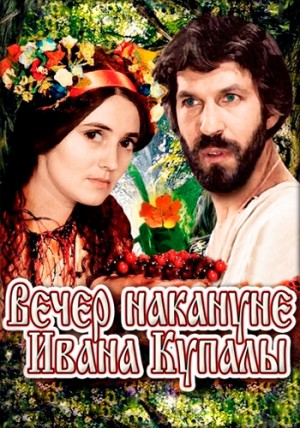
Yuri Ilyenko – Vecher nakanune Ivana Kupala AKA The Eve of Ivan Kupala (1968)
1961-1970ArthouseHorrorUSSRYuri IlyenkoBanned by the Soviet authorities, Vecher nakanune Ivana Kupala (The Eve of Ivan Kupalo) is widely held to be one of the masterpieces of Ukrainian Poetic Cinema. Adapted from a short story of Gogol, which had its roots in Ukrainian folklore, the film depicts an almost Faustian pact, in which Piotr makes an unholy deal with Bassaruv in order that he may win the hand of Pidorka from her father. The director Yuri Ilyenko brings the same rich, vivid imagery that he lent to Parajanov’s Shadows of Forgotten Ancestors where he worked as the cinematographer. The film often makes difficult first viewing for unaccustomed viewers due to its hallucinatory nature, but its lucid tapestry renders it a mandatory experience.Read More »
-
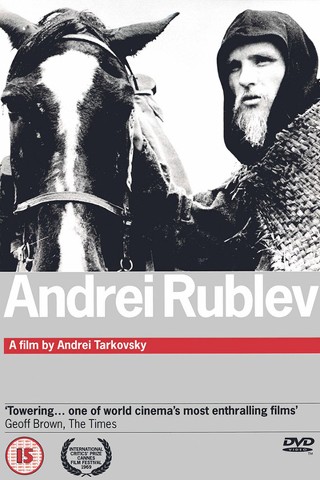
Andrei Tarkovsky – Andrey Rublyov (1966)
1961-1970Amos Vogel: Film as a Subversive ArtAndrei TarkovskyArthouseEpicUSSRQuote:
Widely recognized as a masterpiece, Andrei Tarkovsky’s 205-minute medieval epic, based on the life of the Russian monk and icon painter, was not seen as the director intended it until its re-release over twenty years after its completion. The film was not screened publicly in its own country (and then only in an abridged form) until 1972, three years after winning the International Critics Prize at the Cannes Film Festival. Calling the film frightening, obscure, and unhistorical, Soviet authorities edited the picture on several occasions, removing as much as an entire hour from the original.Presented as a tableaux of seven sections in black and white, with a final montage of Rublev’s painted icons in color, the film takes an unflinching gaze at medieval Russia during the first quarter of the 15th century, a period of Mongol-Tartar invasion and growing Christian influence. Commissioned to paint the interior of the Vladimir cathedral, Andrei Rublev (Anatoli Solonitsyn) leaves the Andronnikov monastery with an entourage of monks and assistants, witnessing in his travels the degradations befalling his fellow Russians, including pillage, oppression from tyrants and Mongols, torture, rape, and plague. Faced with the brutalities of the world outside the religious enclave, Rublev’s faith is shaken, prompting him to question the uses or even possibility of art in a degraded world. After Mongols sack the city of Vladimir, burning the very cathedral that he has been commissioned to paint, Rublev takes a vow of silence and withdraws completely, removing himself to the hermetic confines of the monastery.
Read More » -
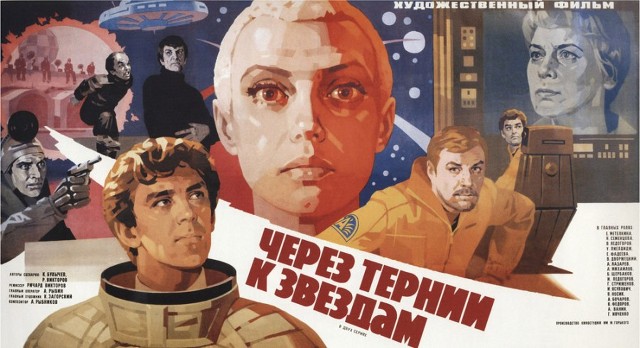
Richard Viktorov – Cherez ternii k zvyozdam AKA Per Aspera Ad Astra (1981)
1981-1990Richard ViktorovSci-FiUSSRQuote:
To the Stars by Hard Ways was first released in 1985, and the print being screened at Fantasia is the newly restored version that was shorn of 20 minutes and re-edited by the director’s son Nikolai Viktorov in 2001. Once given the Mystery Science Theatre treatment in a truncated version known as Humanoid Woman, To the Stars by Hard Ways has gained a cult-classic status among Russian youths who were attuned to the film’s blend of pop social commentary and stunning visual alchemy. The latter is a result of a varied cinematic style which incorporates poetic touches of Tarkovskian influenced naturalism (“earthy, organic” set design), shifting colour patterns (between sepia, monochromatic blue and saturated nature imagery), and simple yet inventive in-camera special effects (slow motion, reverse, dissolves, mirror shots etc.). To the Stars by Hard Ways functions marvelously well on multiple levels — as a trippy science-fiction social critique of environmental neglect, as a campy treat of mod visuals and Star Trek-influenced human and alien characters, and as a retro Communist propaganda piece. Even with these at times radical shifts in tone, the film remains a genuinely moving existential space opera.
Read More » -
Dziga Vertov – Kazakhstan – Frontu! (Тебе Фронт! ) AKA Tebe Front! (1942)
1941-1950DocumentaryDziga VertovUSSR
The film was shot in 1942 in Kazakhstan. Unfortunately the image and sound quality is not so good.
Read More » -
Yakov Protazanov – Otets Sergiy AKA Father Sergius (1917)
1911-1920DramaSilentUSSRYakov ProtazanovOne of the few pre-Revolution Russian feature films to survive, Father Sergius is an elaborate picturization of a Tolstoy novel. Ivan Mozzhukin plays a young, libertine officer who thinks nothing of committing casual sins while in the service of the Czar. He comes to regret his misdeeds as he grows older, his past debaucheries manifesting themselves in his wizened face and desiccated body. He wanders up and down the countryside, searching for redemption. Director Feodor Protazanov emphasized the high and low points of Mozhukin’s life by filming in the actual palaces and private clubs described by Tolstoy in his novel. The overall theme of corruption in high places automatically resulted in Father Sergius being banned by the Czarist censors, though the film found a more receptive audience once the government passed into the hands of the revolutionaries. ~ Hal Erickson, All Movie Guide
Read More » -
Yakov Protazanov – Bespridannitsa AKA The bride without a dowry (1937)
1931-1940DramaUSSRYakov Protazanov
From allmovie: Filmed in 1937 (in fact: 1936), the Russian film “Without Dowry” was released in America in 1946, one year after the death of its director, Yakov Protazanov. Produced on a far-less epic scale than most Protazanov films, this is a merciless satire of the Russian dowry system in particular and the Czarist regime in general. The heroine (Nina Alisova) is promised in marriage to a bureaucrat (Victor Balikhin), who is interested only in receiving the girl’s dowry. Maintaining a gently comic tone throughout most of the proceedings, the story dovetails almost imperceptibly into tragedy. The musical score is based upon Tchaikovsky’s 5th, with a few Russian folk songs woven in.
Read More » -
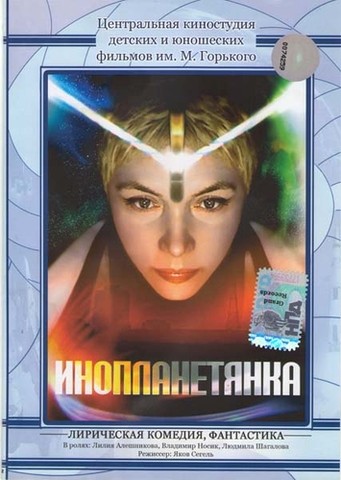
Yakov Segel – Inoplanetyanka AKA Extraterrestrial Girl (1984)
1981-1990ComedySci-FiUSSRYakov SegelExtraterrestrial Girl visited Earth.
Inventor Blinkov in love with her. His love is awakened in her new emotions and feelings.
She realized that Blinkov can not live in a different world.
And she leaves the Earth with sadness and loneliness.
Read More » -
Yakov Protazanov – Chelovek iz restorana aka The Man From Restaurant (1927)
1921-1930DramaSilentUSSRYakov Protazanov
Based on story by Ivan Shmelev.
The movie action starts very close before February democratic revolution in Russia in 1917.
Fate is cruel to waiter of capital city restaurant Skorohodov: his son dies on front, his wife perishes from grief, his daughter is excluded from grammar school because of lack of money to pay tuition.
Skorohodov decides to rent one of rooms in his poor apartment to a decent young man named Sokolin who is working as a courier in war industry committee .
The lodger and a girl fall in love with each other and soon decide to get married.
In meantime the father appoints his daughter as a violiinist in restaurant orchestra.
But rich factory owner Karasev rudely molests young blonde violinist and through blackmail expects to make her his mistress.
Read More »