

Quote:
Song of revolutionary hero, Valentin, sung by Jose Santollo Nasido en Santa Cruz de la Soledad; Chapala, Jalisco, Mexico.Read More »
Quote:
Song of revolutionary hero, Valentin, sung by Jose Santollo Nasido en Santa Cruz de la Soledad; Chapala, Jalisco, Mexico.Read More »

Quote:
A masterpiece of experimental film and a projection of the surrealist vision into cinema by its outstanding artists. Described by Richter as “part Freud, part Lewis Carroll,” it is a fairy tale for the subconscious based on the game of chess. This chess-sonata is played by a host of artists including Paul Bowles, Jean Cocteau, Julian Levy, Jacqueline Matisse, Jose Sert, Yves Tanguy, Marcel Duchamp, Max Ernst and Alexander Calder. “What interested me is the poetry of images, the melody and rhythm of forms and colors” (Hans Richter).Read More »

Description: While it rolled in and out of theaters quickly during its brief release in 1978 and hasn’t gained much of a reputation since, Straight Time was one of Dustin Hoffman’s best films of the 1970s, and seen today it still stacks up as one of the finest performances he’s ever given onscreen. Hoffman is a fascinating bundle of misdirected energy and guy-wire tension as Max Dembo, an ex-con whose efforts to go straight seem doomed to fail, though his own impulses hardly keep him on the straight and narrow. Hoffman is perfectly natural and compelling as a blue-collar criminal, and he’s lucky to have a superb supporting cast. M. Emmet Walsh has never been better as Earl Frank, a duplicitous parole officer, and Theresa Russell delivers an absorbing and ultimately heart-breaking turn as Jenny, a girl who falls in love with Dembo; Gary Busey, Harry Dean Stanton, and Sandy Baron are similarly at the top of their form here. Ulu Grosbard’s direction (he took over from Hoffman, who began the project but changed his mind about directing after a few days of shooting) is lean, intelligent, and atmospheric, and the screenplay (by Jeffrey Boam and Edward Bunker, based on Bunker’s novel No Beast So Fierce) manages to make Dembo’s story tragic and believable without ever asking the audience to forgive or forget his complicity in his crimes. Straight Time is an overlooked and understated masterwork, and well worth searching out on home video.Read More »

A New York City narcotics detective reluctantly agrees to cooperate with a special commission investigating police corruption, and soon realises he’s in over his head, and nobody can be trusted.Read More »
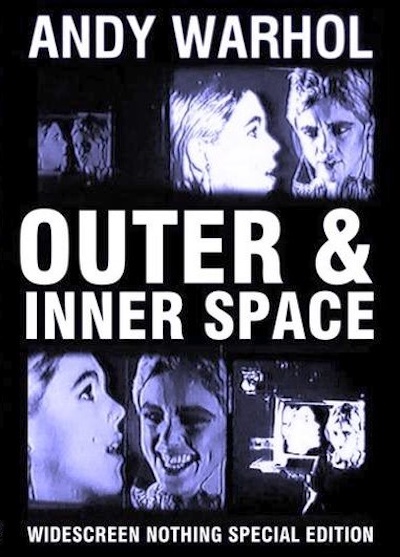
FILM; A Pioneering Dialogue Between Actress and Image
By J. HOBERMAN
ANDY WARHOL has so become his own trademark — and is so much a one-name synonym for the culture of celebrity — that it can be a shock to realize just how brilliantly original he was as a visual artist. A case in point: The double-screen video-based film installation ”Outer and Inner Space” at the Whitney Museum (through Nov. 30), which places his glamorous, doomed superstar Edie Sedgwick in a dialogue with her own video-taped image.Read More »

Color/Sound/95 mins at 24 fps
(filmed late July 1967)
Tom Baker/Bettina Coffin/Stephanie Graves/Cynthia May/
Ivy Nicholson/Nico/Valerie Solanis/Ingrid Superstar/Ultra Violet
Tom Baker: “The first time I sensed impending danger was during a scene with Ivy Nicholson. She had stipulated that she would not appear on camera with me in the nude. Shortly after the scene began I walked out of the frame and removed the towel I was wearing in order to put on my pants. Clad only in unlaundered bikini underwear, Ivy exploded in an emotional fury and stormed out of the room in tears, claiming she had been betrayed. I was talking with Warhol, who was very much perplexed by Ivy’s behaviour since, as he casually pointed out, ‘Ivy’ll cut her wrists for me…’ My third scene was with Valerie Solanis. I felt no personal threat from Valerie. Just the opposite. I found her intelligent, funny, almost charming, and very, very frightened.” (POP273)Read More »
Will Sloan, UltraDogme.com wrote:
It’s cliché to observe that Andy Warhol’s filmography resembles the evolution of cinema itself. Warhol begins, as did Edison and Lumière, with silent films that invite us to wonder at a single visual idea (Sleep, Kiss, Eat). Quickly he introduced sound, color, movie stars, and more conventional visual grammar until finally arriving at Andy Warhol’s Bad (1976), which is so close to a “real movie” that Warhol himself had barely anything to do with it. Warhol made Vinyl (1965) at around the midpoint of his stylistic evolution, after his incorporation of sound but before Paul Morrissey’s domesticating influence. I like much of Warhol’s cinema on both sides of this dividing line, but Vinyl for me represents a beautiful moment when the evolution broke down. What if, after cinema’s birth, the medium had developed an entirely different visual language?Read More »

Quote:
A suspected robot and his family are tormented and ridiculed by small-minded townsfolk and harassed by an angry Bulgarian.
Quote:
“A weirdly touching parable of human obsolescence…a strange funny, very smart film,” or so said Andy Markowitz of the Baltimore City Paper (which also named it “Film of the Year” in 2002). This film features many cast members who would later be seen in THE GUATEMALAN HANDSHAKE and a portion of its breakdancing scene appears in David Gordon Green’s film, SNOW ANGELS.Read More »

Taken from NY Mag
His 2003 short My Josephine is a lovely, impressionistic look at an Arab man and woman who work in a laundromat, washing American flags for free. That may make it sound like a Message Movie, but it’s not. Told from the perspective of the lovelorn male in this relationship, this is a quiet, unassumingly lyrical film, shot with the kind of detail that reveals both the director’s understanding of human nature and his keen eye for evocative imagery.Read More »