Silent

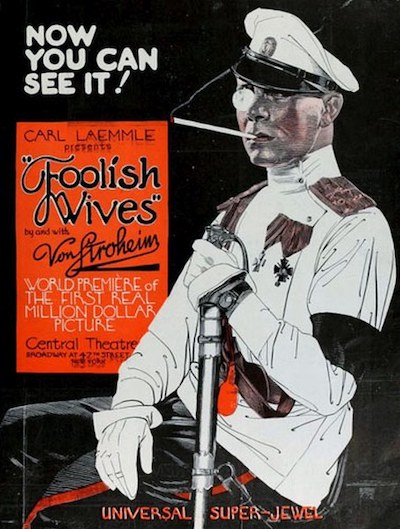
  • Erich von Stroheim – Foolish Wives (1922)

    Drama1921-1930Erich von StroheimSilentUSA

    As artistically brilliant as it is gleefully perverse, Foolish Wives is Erich von Stroheim’s epic-scale account of an American diplomat’s wife (Mrs. Dupont) who falls under the spell of a phony Russian Count (von Stroheim). With his trademark eye for visual metaphor and gritty detail, von Stroheim infuses the artistocratic splendor of Monte Carlo (rebuilt in all its majesty on the Universal backlot) with an air of moral depravity. The result is a Grimm’s fairy tale romance that is no less fascinating today than it was 80 years ago.Read More »

  • Rudi Bach – Pantoffelhelden (1912)

    1911-1920ComedyGermanyRudi BachSilent

    Quote:
    After reading a pamphlet urging everyone to go to war, Werner falls into disagreement with his future father-in-law. A number of friends dress up as soldiers and give the father-in-law a letter in which he is summoned by the army. At his border post he is captured by ‘the enemy’.Read More »

  • D.W. Griffith – Heart Beats of Long Ago (1911)

    Drama1911-1920D.W. GriffithSilentUSA

    Biograph Films advertisement, 1911 wrote:
    A Story of the Fourteenth Century — This story takes place at a time when there existed among the nobility of Europe feuds between the great houses, and in this case the daughter of one house has given her heart to the son of the master of the rival domain. He braves everything to see his sweetheart…Read More »

  • D.W. Griffith – The Birth of a Nation (1915)

    Drama1911-1920D.W. GriffithSilentUSA

    The Birth of a Nation (originally called The Clansman) is a 1915 American silent film directed by D. W. Griffith and based on the novel and play The Clansman, both by Thomas Dixon, Jr. Griffith also co-wrote the screenplay (with Frank E. Woods), and co-produced the film (with Harry Aitken). It was released on February 8, 1915. The film was originally presented in two parts, separated by an intermission.
    The film chronicles the relationship of two families in Civil War and Reconstruction-era America: the pro-Union northern Stonemans and the pro-Confederacy Southern Camerons over the course of several years. The assassination of President Abraham Lincoln by John Wilkes Booth is dramatized.Read More »

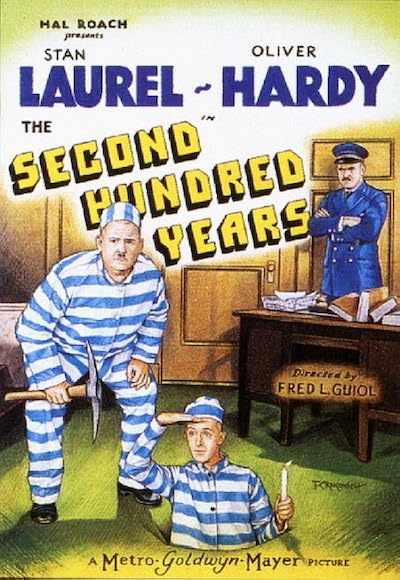
  • Fred Guiol – The Second 100 Years (1927)

    1921-1930ComedyFred GuiolSilentUSA

    Quote:
    Thrown in prison for a hundred years, Little Goofy and Big Goofy finally break free, posing as an anarchic duo of undercover painters. Soon, the boys wind up in a private party as visiting French dignitaries; however, who are they kidding?Read More »

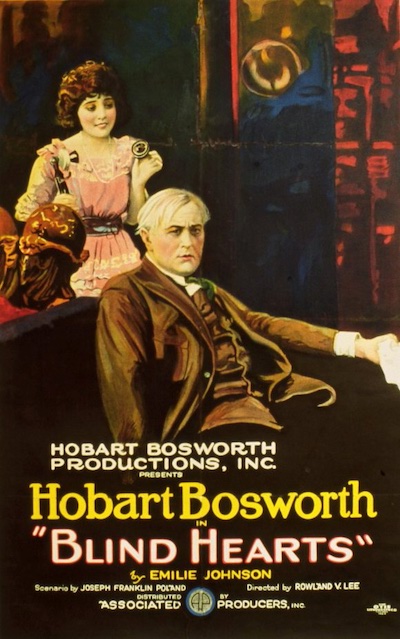
  • Rowland V. Lee – Blind Hearts (1921)

    1921-1930DramaRowland V. LeeSilentUSA

    In 1898 friends John Thomas and Lars Larson travel to the Yukon with their wives to make their fortunes. While in Alaska Thomas’ wife gives birth to a boy, and Larson’s wife has a girl, Julia. However, Larson spots a birthmark on his daughter’s shoulder that resembles one on Thomas’ shoulder, and he begins to suspect that he may not actually be the girl’s father. Over the next 20 years the two become millionaires, but Larson’s wife dies. Julia and Thomas fall in love and wish to marry, but Larson is determined to oppose it. Complications ensue (imdb)Read More »

  • Clyde Bruckman – Call of the Cuckoo (1927)

    1921-1930Clyde BruckmanComedySilentUSA

    Mishaps befall a new home owner located next door to an insane asylum.Read More »

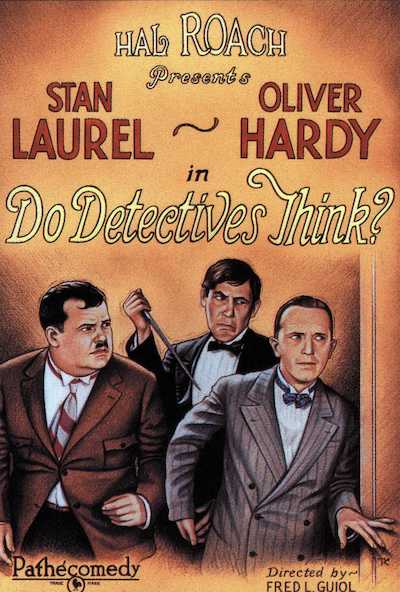
  • Fred Guiol – Do Detectives Think? (1927)

    1921-1930ComedyFred GuiolSilentUSA

    Quote:
    An escaped convict is out to kill the judge who sentenced him. Two inept detectives are hired to guard the judge.Read More »

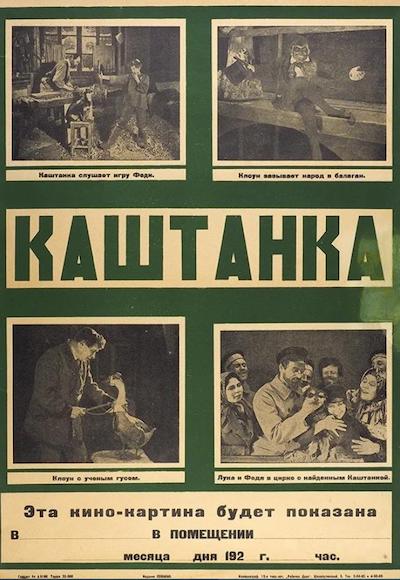
  • Ivan Pravov & Olga Preobrazhenskaya – Kashtanka (1926)

    1921-1930DramaIvan PravovOlga PreobrazhenskayaSilentSoviet silent cinemaUSSR

    Quote:
    Mariann Lewinsky (Il Cinema Ritrovato 2020): “Kashtanka by Olga Preobrazhenskaya, print 1995, a film of winter, of night and snow, of children and animals, a film about loss, a masterpiece”, read my viewing notes from 2012. My Prague colleagues had it screened for me because they knew I was interested in colour in silent cinema, and they knew a tinted Soviet silent film to be a rare item. I had never heard the name of the director. My encounter with her work was enhanced by the shock of discovering that a major director who had reached international audiences with Baby ryazanskie and Tikhiy Don (The Quiet Don) around 1930 could disappear without a trace from official film history. In 2013, Il Cinema Ritrovato dedicated a retrospective to her.” Mariann Lewinsky (Il Cinema Ritrovato 2020)Read More »

Back to top button